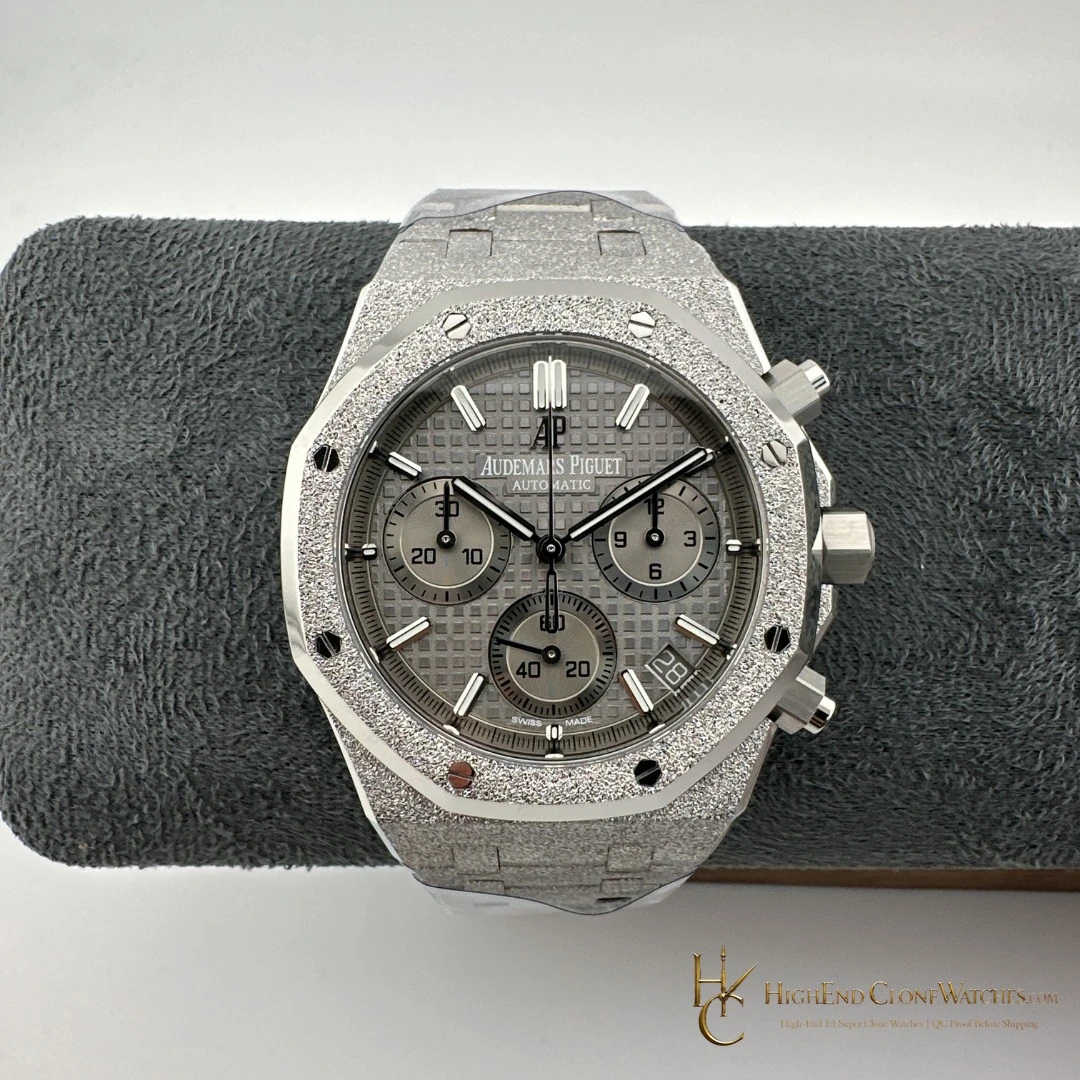
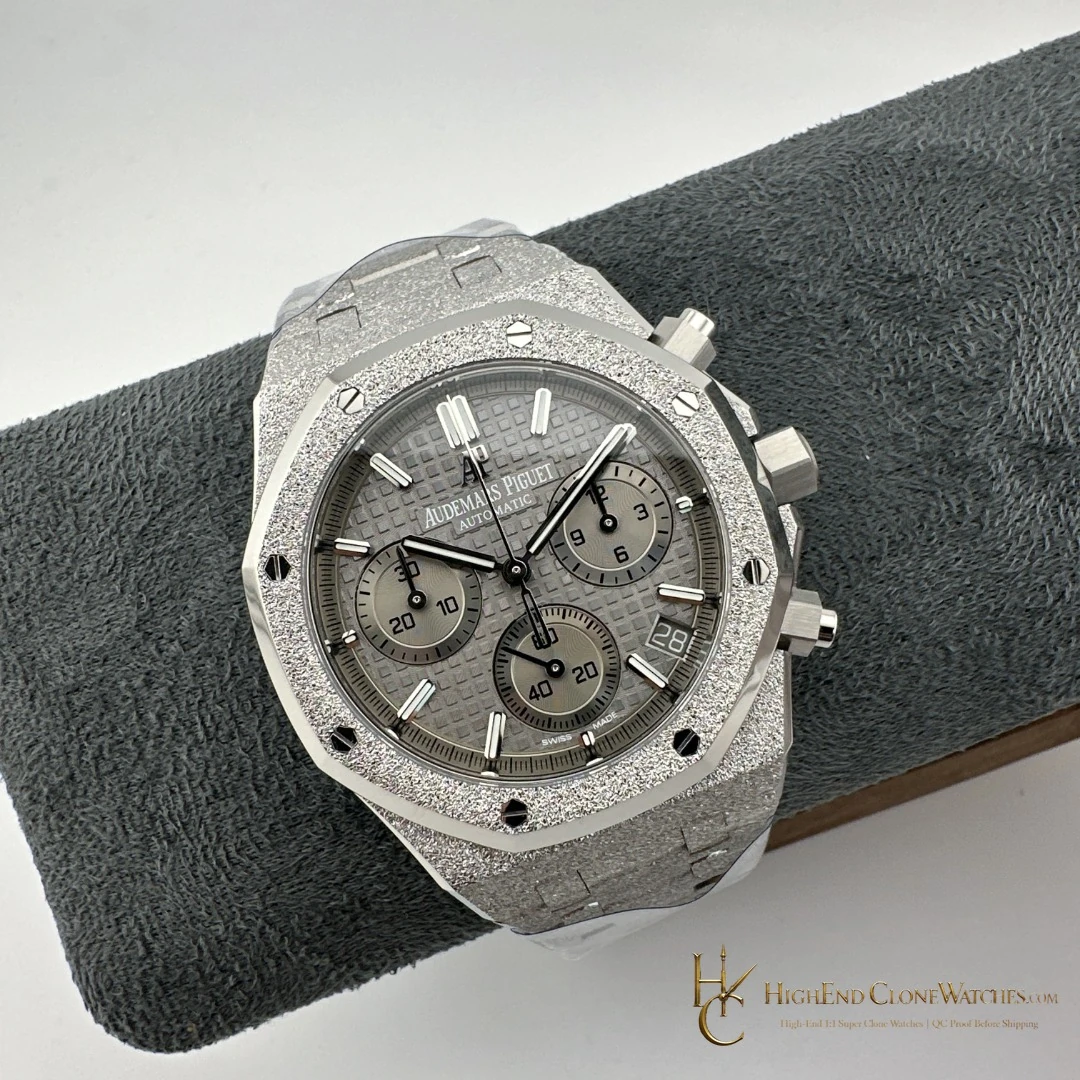
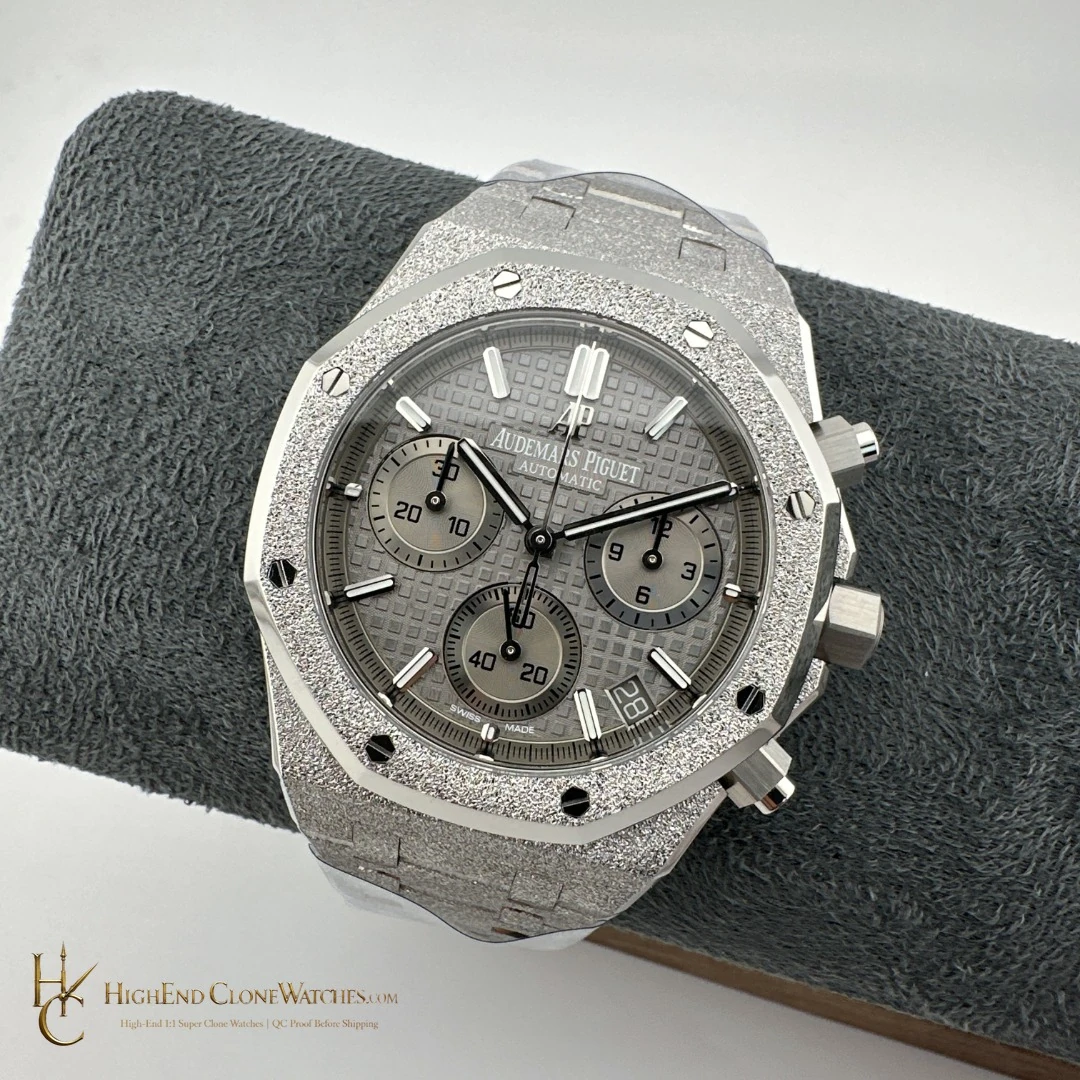
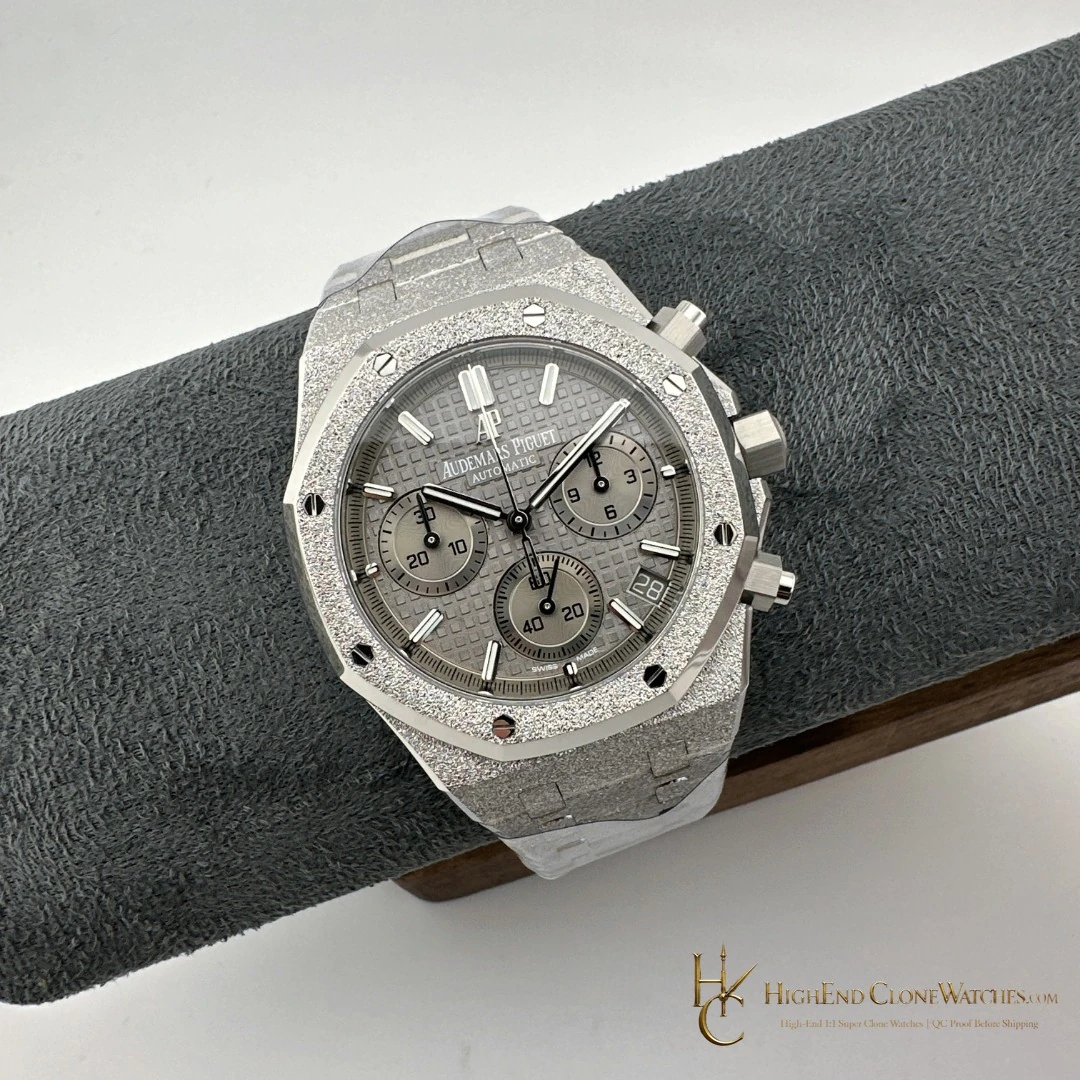
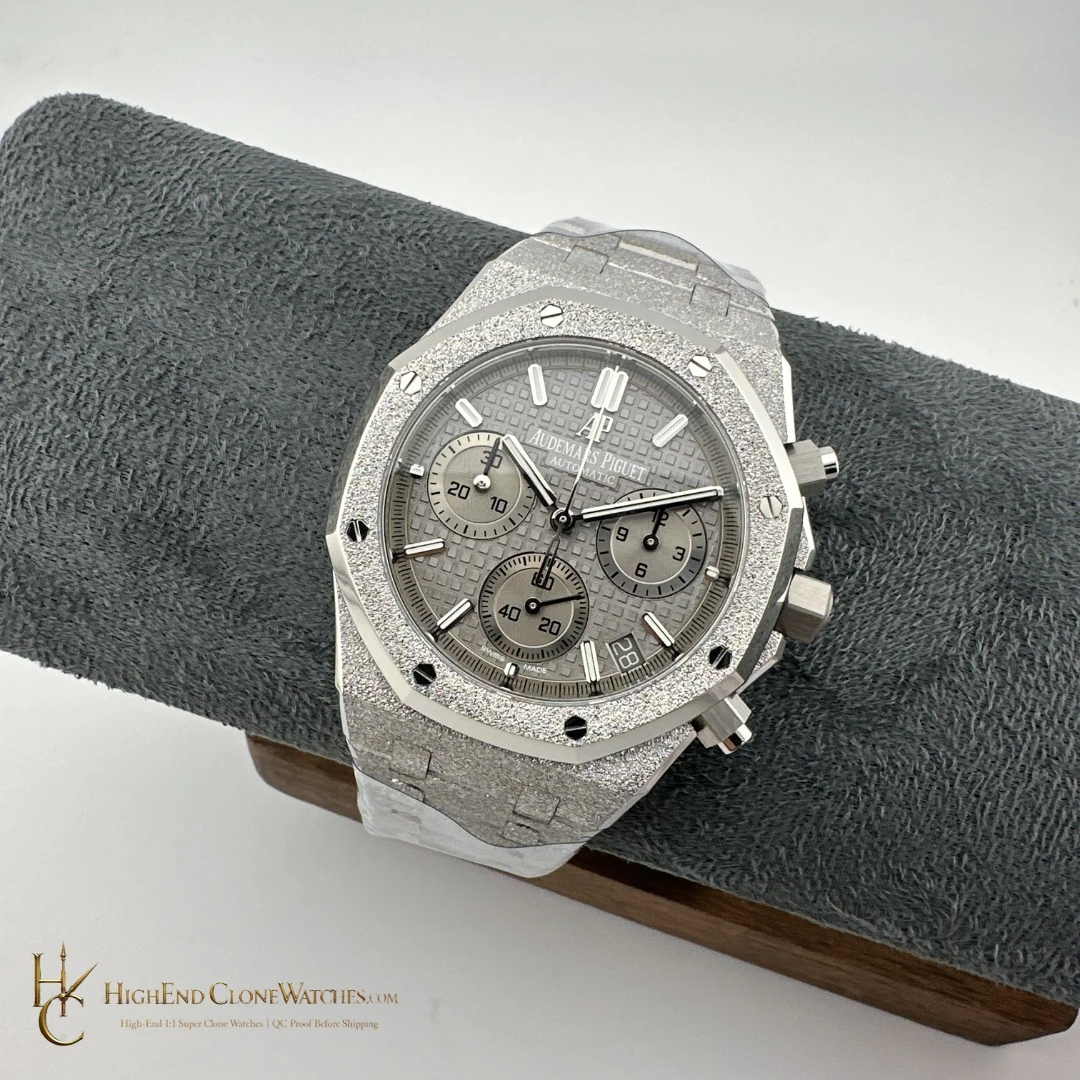
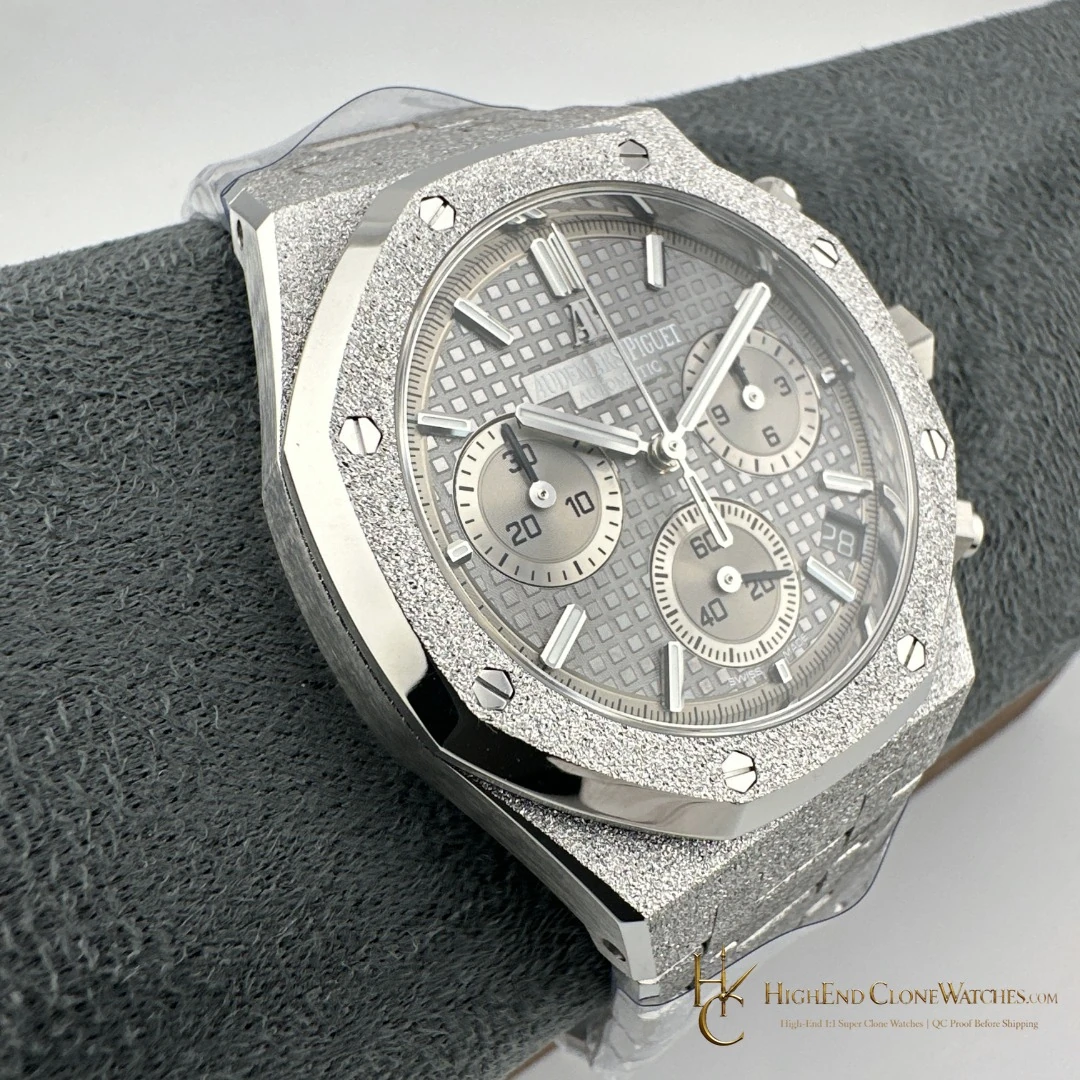
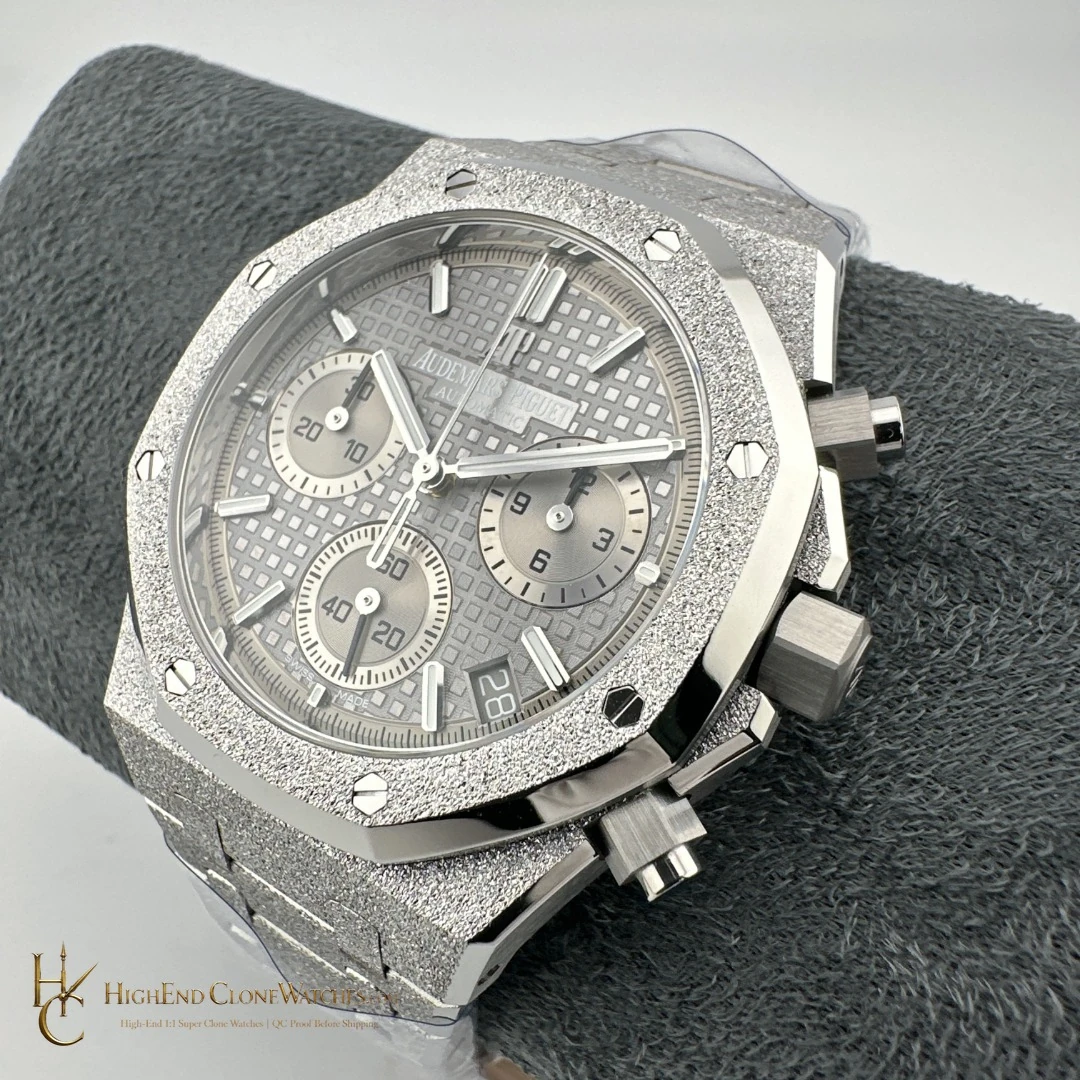
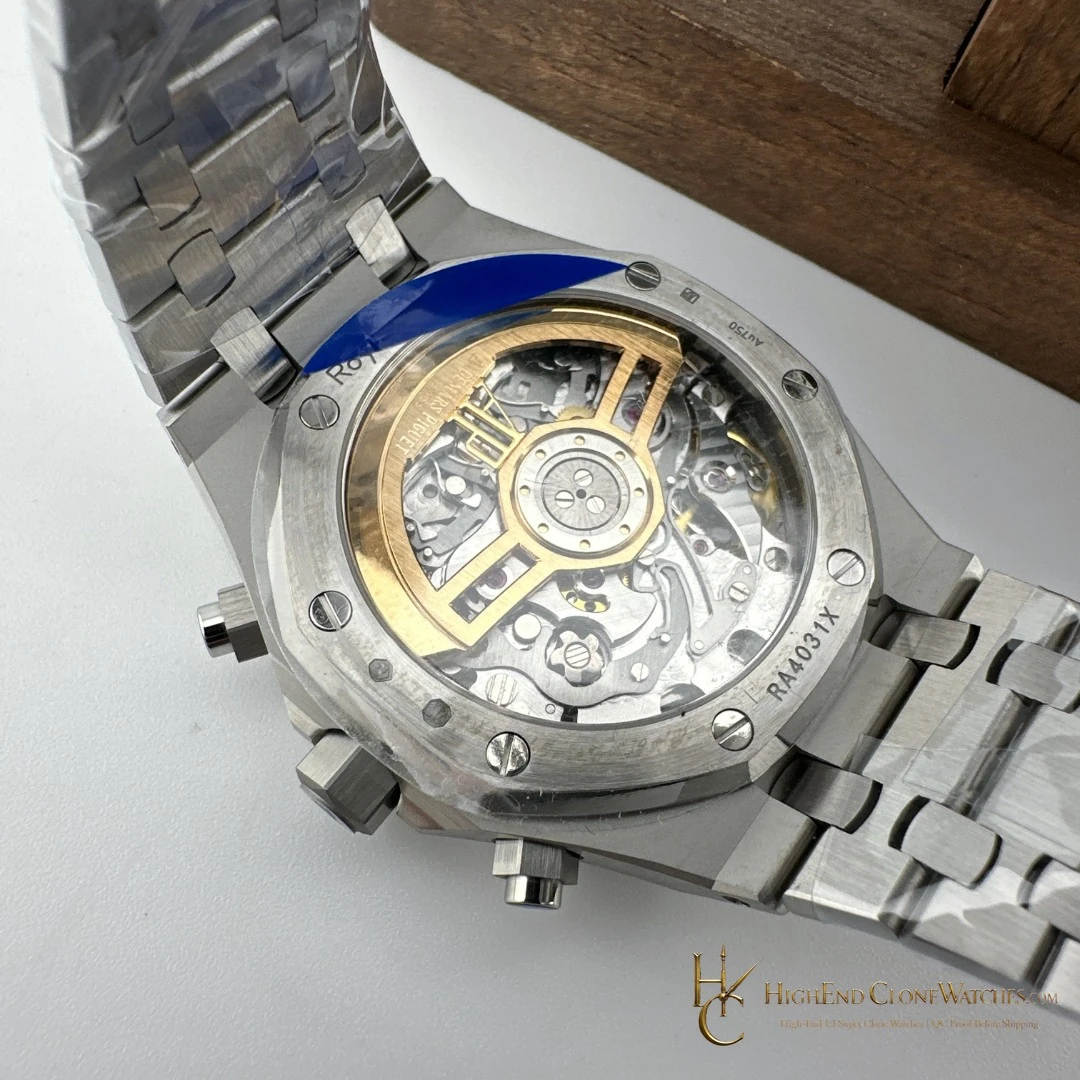
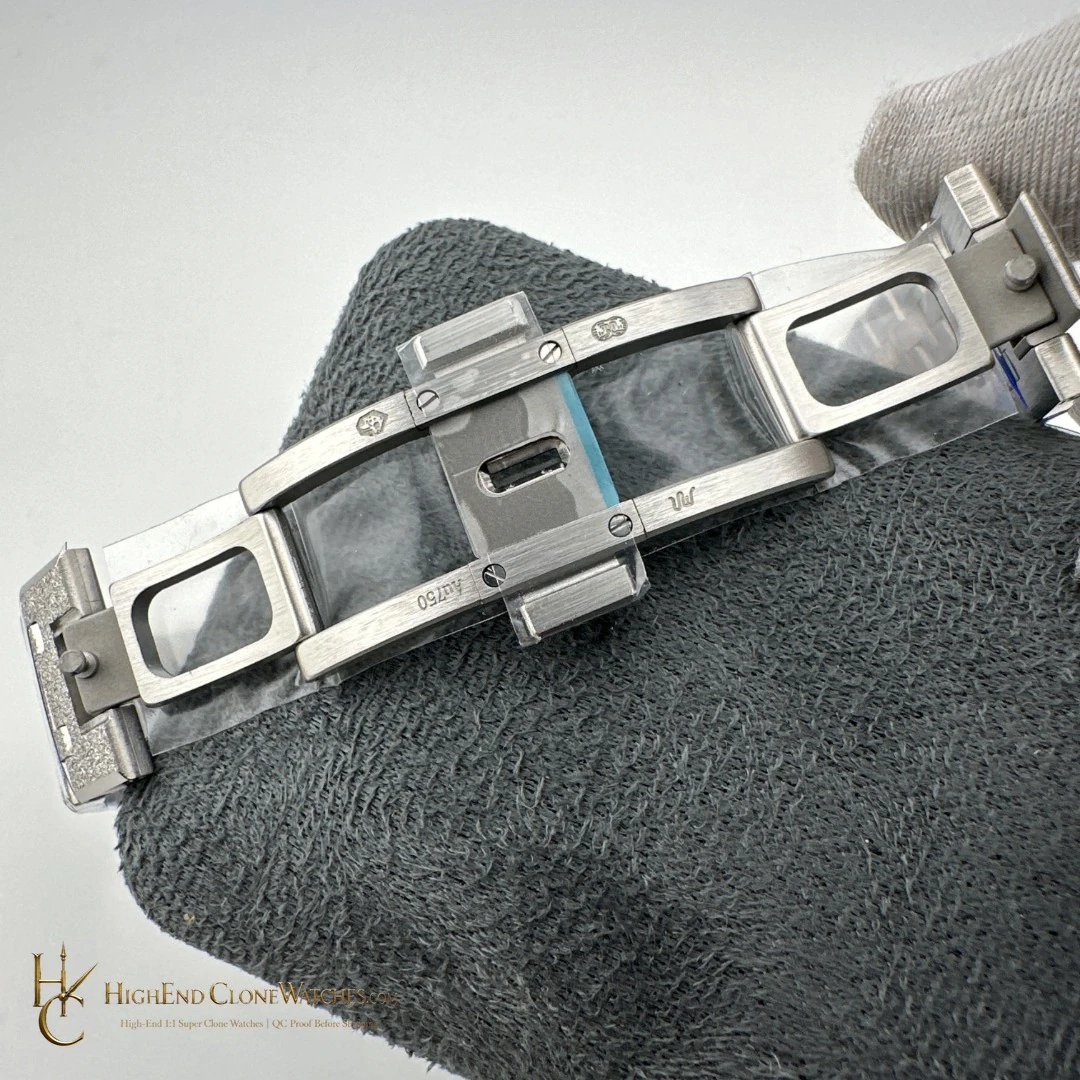
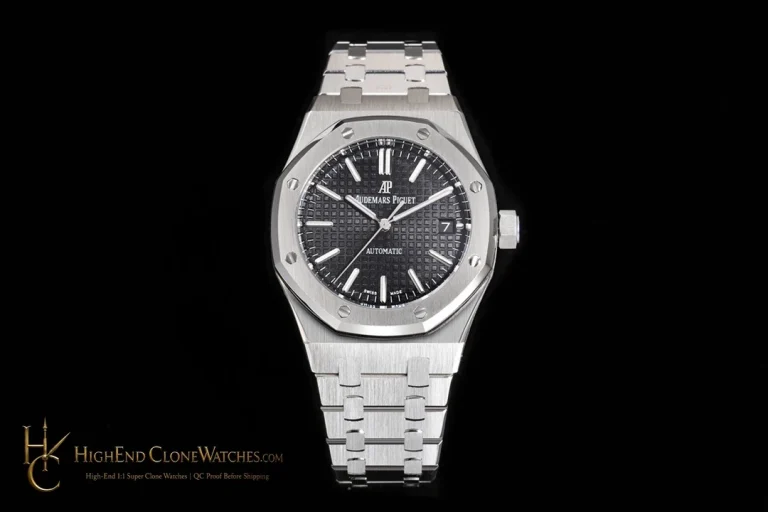
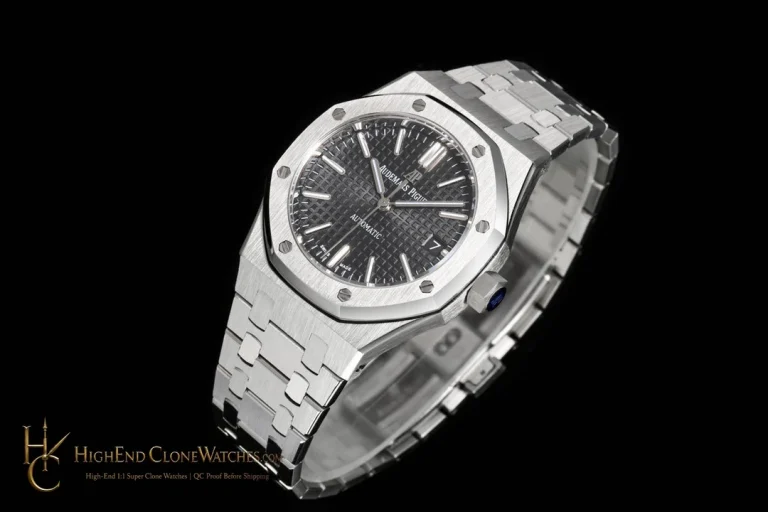
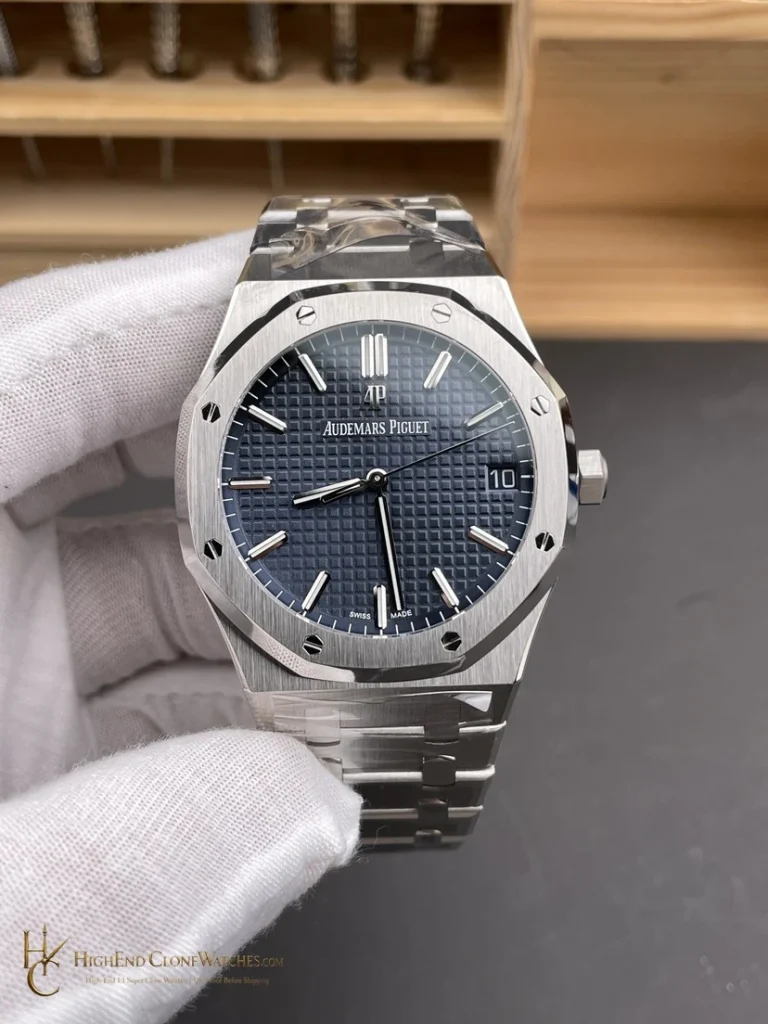
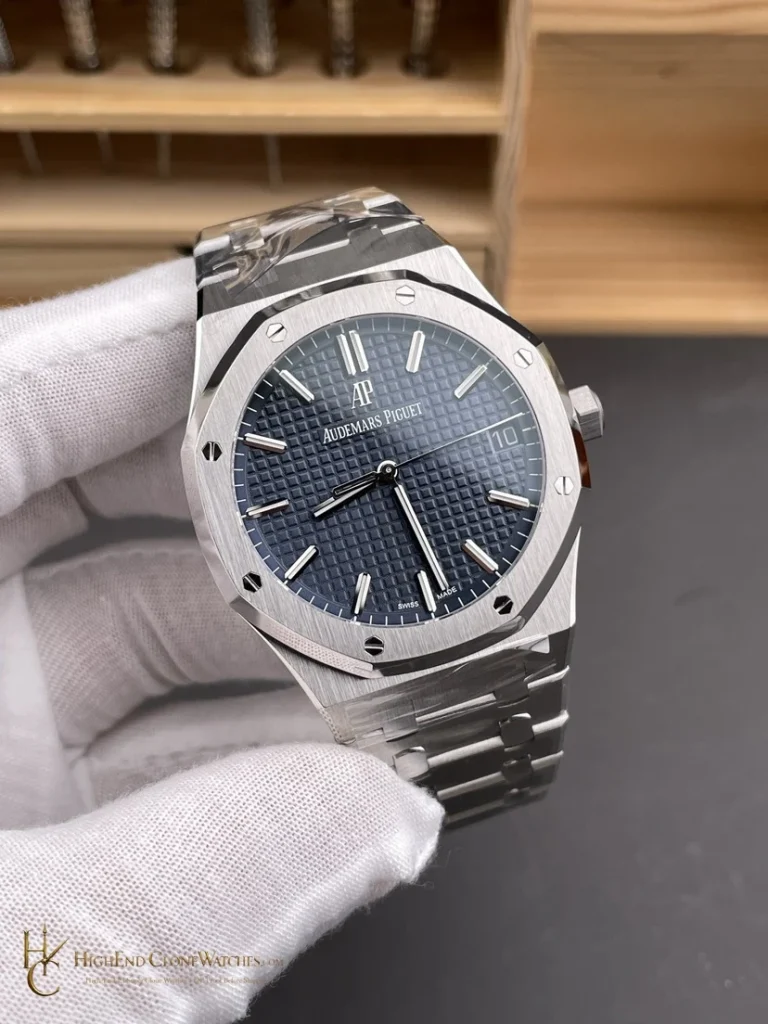
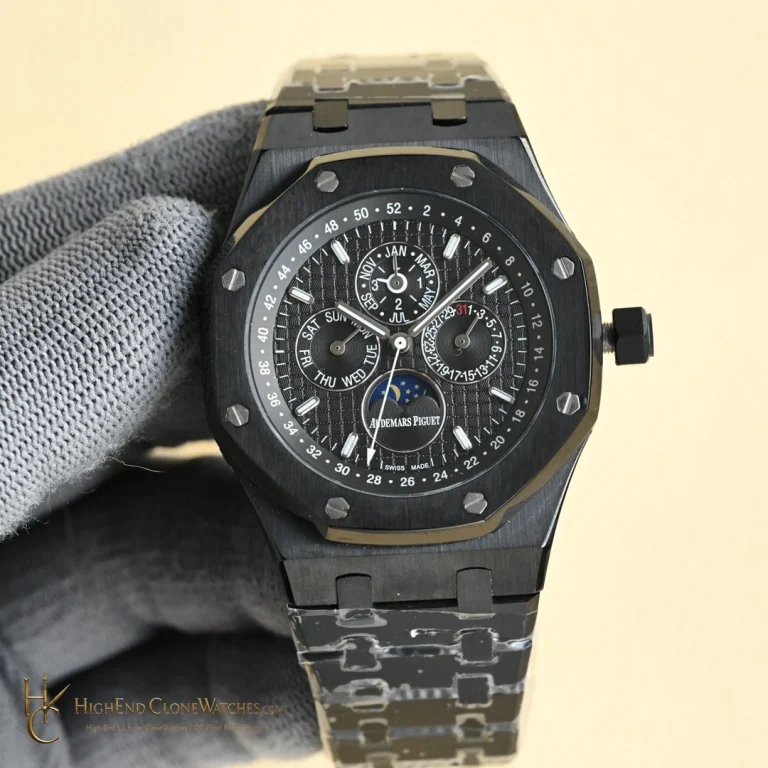
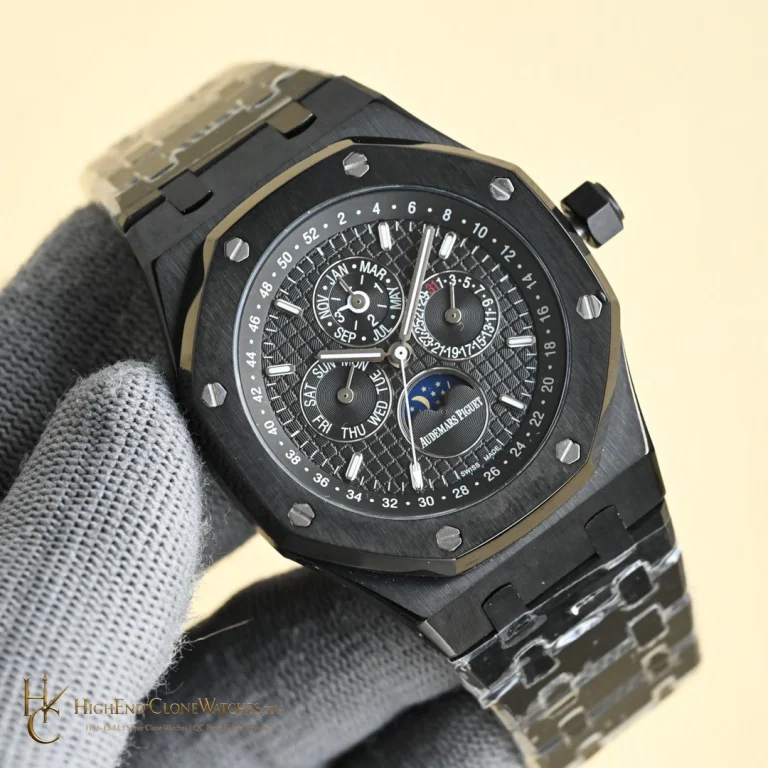
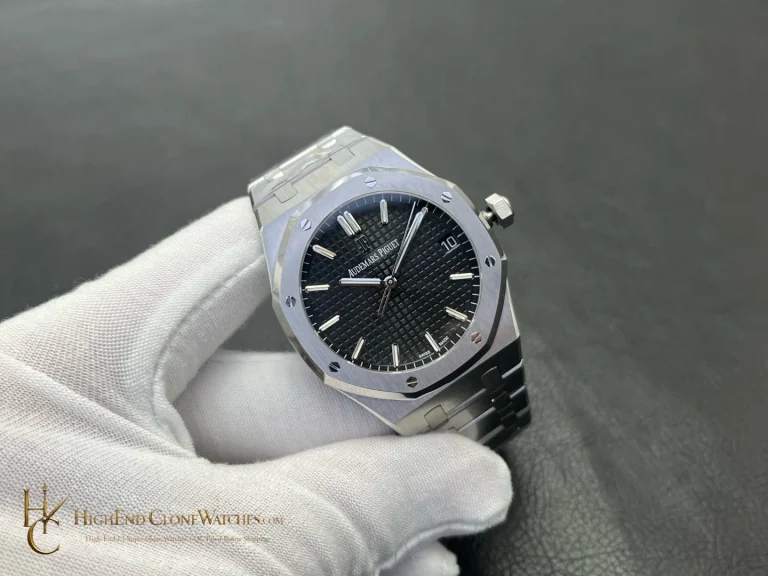
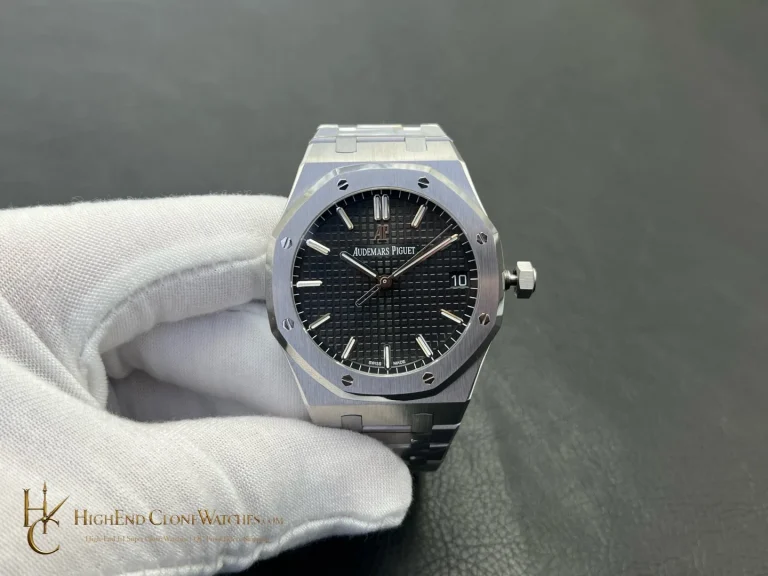
Before dispatch, request straight-on and angled proof of the gray dial, chronograph hand reset, pusher response, bezel screw alignment and first bracelet links. Those views show whether the frosted finish remains consistent while the darker registers stay legible. They also give a practical record of the exact watch prepared for shipment.
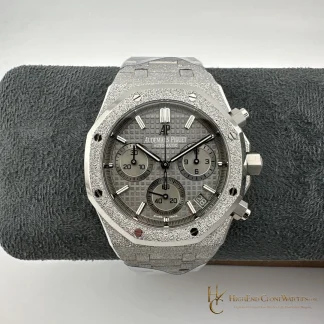
The gray palette is intentionally controlled: the dial, registers and frosted exterior stay within one family, but the surface grain prevents the watch from reading flat. That makes it a strong choice for close-up inspection and for buyers who notice case finishing before they decide on color. The chronograph layout still gives the dial useful structure, so the finish does not turn the watch into a purely decorative piece.
The gray palette is intentionally controlled: the dial, registers and frosted exterior stay within one family, but the surface grain prevents the watch from reading flat. That makes it a strong choice for close-up inspection and for buyers who notice case finishing before they decide on color. The chronograph layout still gives the dial useful structure, so the finish does not turn the watch into a purely decorative piece.
The gray palette is intentionally controlled: the dial, registers and frosted exterior stay within one family, but the surface grain prevents the watch from reading flat. That makes it a strong choice for close-up inspection and for buyers who notice case finishing before they decide on color. The chronograph layout still gives the dial useful structure, so the finish does not turn the watch into a purely decorative piece.
The gray palette is intentionally controlled: the dial, registers and frosted exterior stay within one family, but the surface grain prevents the watch from reading flat. That makes it a strong choice for close-up inspection and for buyers who notice case finishing before they decide on color. The chronograph layout still gives the dial useful structure, so the finish does not turn the watch into a purely decorative piece.