$1,150.00 Original price was: $1,150.00.$950.00Current price is: $950.00.
The openworked Royal Oak
An openworked Royal Oak has a fundamentally different job from a black- or white-dial version. The eye is drawn through the dial rather than across it, moving between the visible layers, markers, hands, and rose-gold-tone frame. That makes this 15407OR more expressive before the bracelet is even considered. A conventional 41mm black-dial Royal Oak is the useful alternative when you want a clean graphic face and one strong color contrast. This version is for the buyer who prefers depth, structure, and the changing light inside an open display.
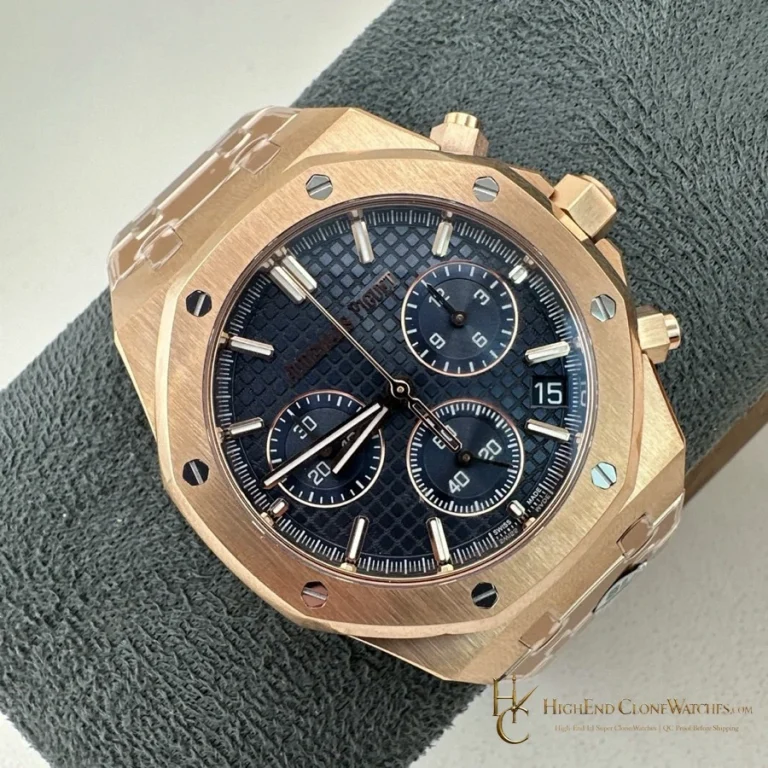
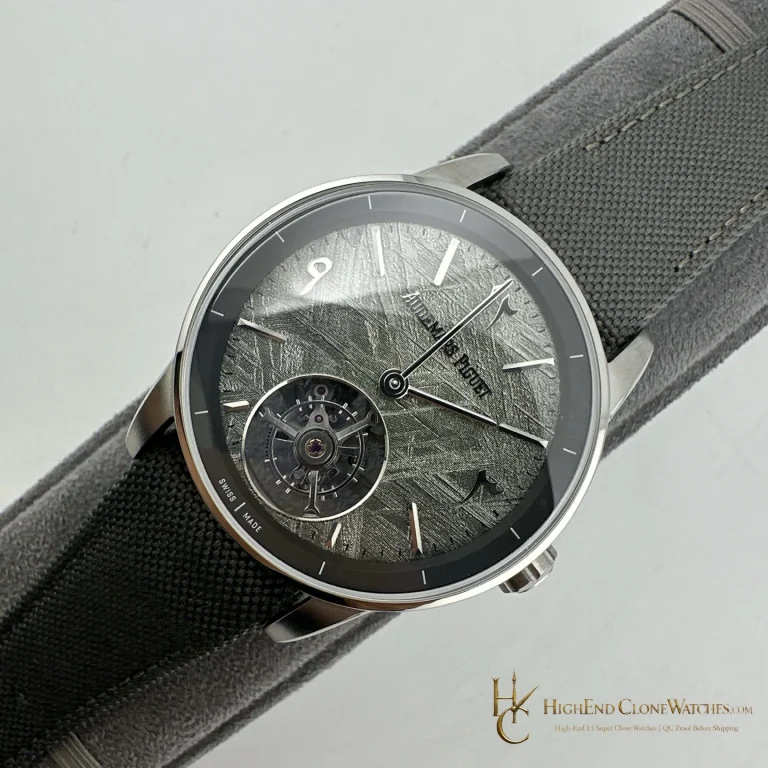
a 41mm rose-gold-tone Royal Oak whose openworked center makes visible depth and layered structure the primary attraction
The Royal Oak 15407OR.OO.1220OR.01 replaces the usual solid dial with an openworked display, making the layered architecture inside the 41mm case part of what you see every time you check the time. Warm rose-gold-toned bridges, hands, bezel, and integrated bracelet create one continuous frame around the exposed center. At a listed 9.7mm thick, it keeps a relatively restrained side profile for such a visually detailed watch. This is the choice for someone who wants the dial to reward close inspection; the product record lists a Clone Calibre 3132 movement.
Confirmed configuration
- Movement
- Clone Calibre 3132
- Bezel
- rose-gold-plated octagonal bezel
- Crystal
- Sapphire with AR coating
- Bracelet
- integrated AP bracelet
The dial is the architecture
The Royal Oak 15407OR.OO.1220OR.01 is not a standard dial watch with a different color. Its openworked center changes the way the whole case is read. Instead of one continuous surface, the eye moves through visible layers, bridges, hands, and hour markers, while the rose-gold-toned octagonal bezel sets a clear boundary around them. The integrated bracelet continues that warm frame out from the case, so the exposed middle does not look isolated. It is a configuration for a buyer who enjoys looking into the layout, not just glancing at a flat dial.
Why openwork changes the wearing experience
With a solid black or white dial, texture and color do most of the work. Here, depth does. The visible structure catches light differently at the center, near the markers, and around the hands, making the watch read differently from one angle to the next. The listed 41mm diameter gives that display enough room to be appreciated, while the listed 9.7mm thickness keeps the side profile relatively contained. It still carries the familiar Royal Oak outline, but the open center gives it a more technical and more ornamental visual role than a conventional three-hand page in the same size.
Openworked display versus a solid black dial
A black-dial 41mm Royal Oak is the right alternative when you want a more immediate, graphic face. Its dial establishes a single dark center and lets the bezel and bracelet create the contrast. This 15407OR asks for more attention. Its visible layers become the center of the design, while the rose-gold-tone case and bracelet act as a surrounding frame. Choose the solid-dial route if you value quick, quiet clarity. Choose this configuration if the appeal is the visible depth and the way the display changes as the watch moves.
QC needs closer-than-usual dial review
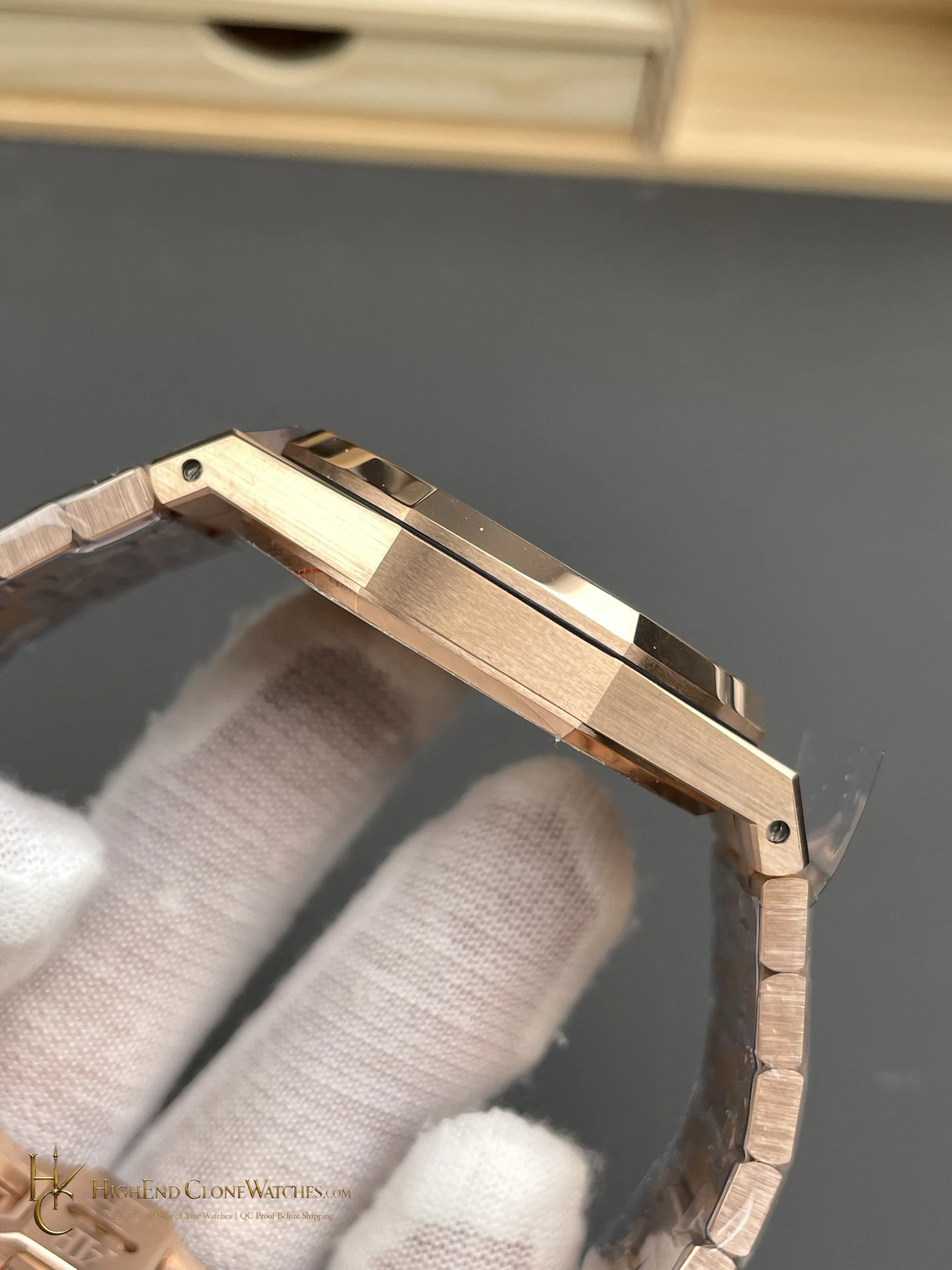
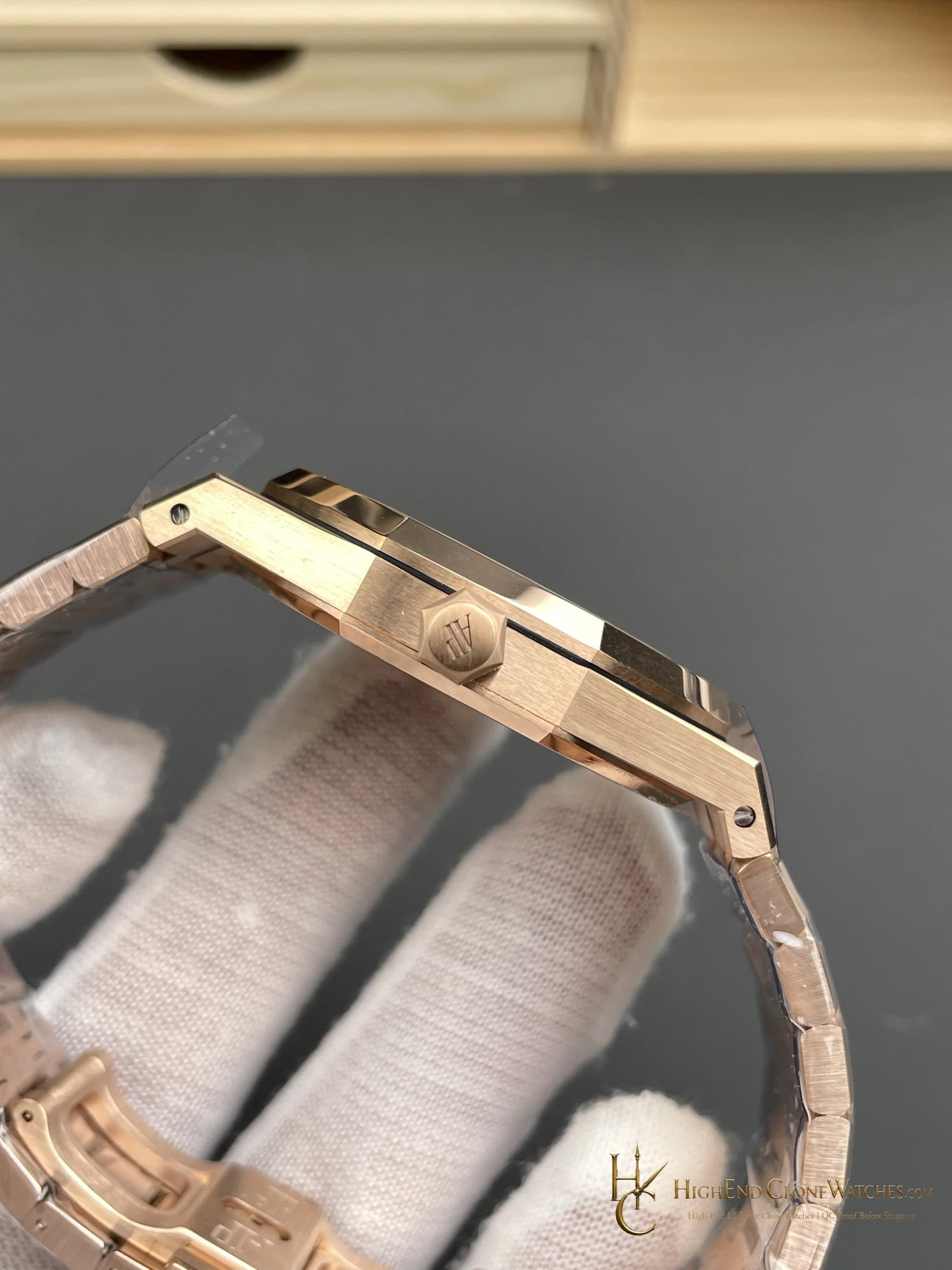
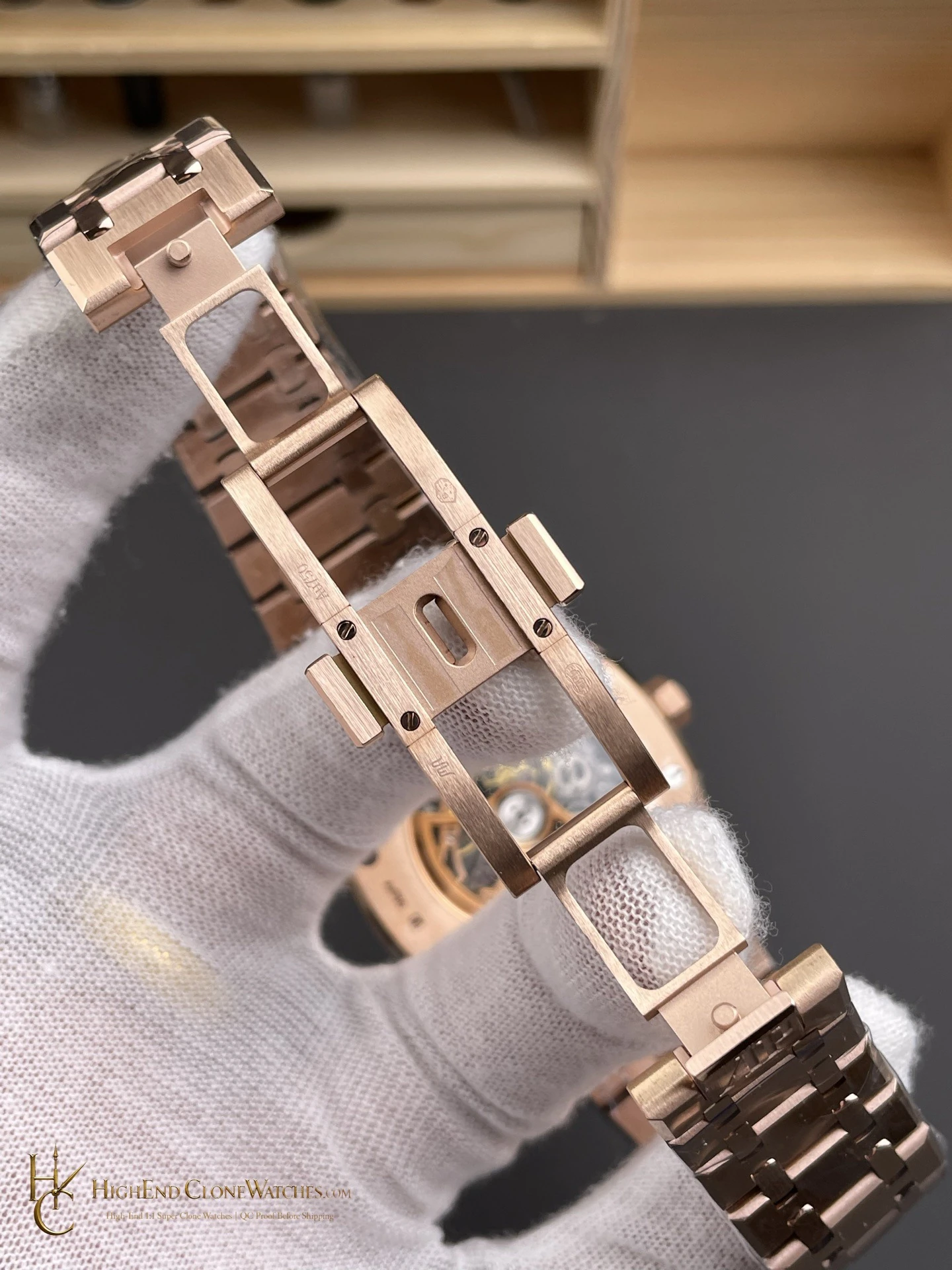
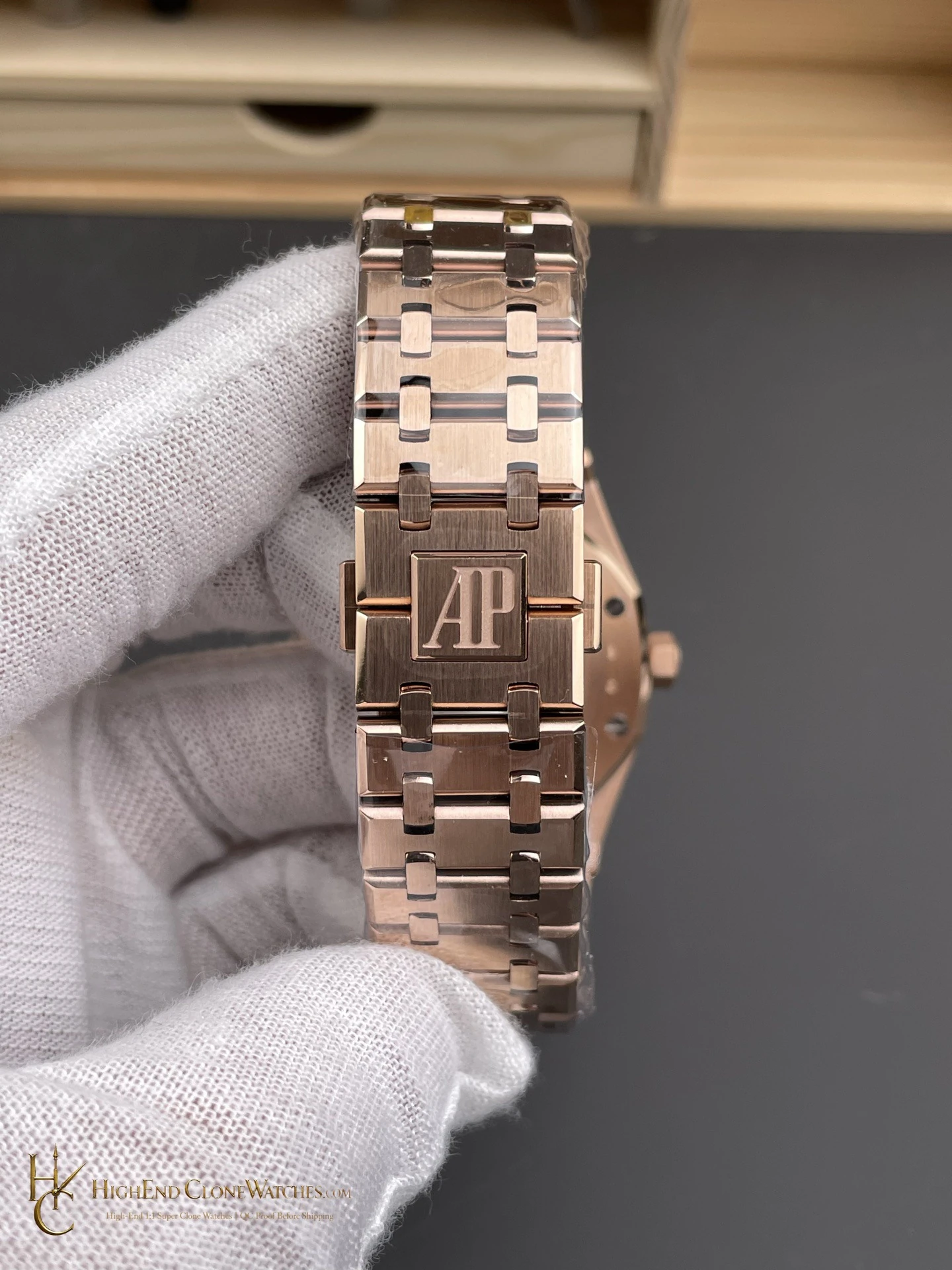
Because so much is on display, inspect the openworked layers before anything else. Ask for straight-on and angled close views so the bridges, marker positions, and hands can be checked for clean alignment and balanced spacing. Then move outward to the octagonal bezel: its brushing, polished chamfers, and screw seating should be consistent around the frame. The bracelet needs the same scrutiny, especially at the first links where it meets the case and at the double-deployant clasp where an uneven close would disrupt the uninterrupted line. The goal is simple: every visible layer should look intentional, since the dial leaves few places for finishing errors to hide.
A different kind of 41mm Royal Oak
This is a decision for visual depth, not a minor variant choice. The openworked center makes the watch more conversational and less anonymous than a solid-dial Royal Oak, while the rose-gold-tone bracelet gives it enough continuity to remain recognizably part of the collection. It makes sense for a buyer who wants the Royal Oak shape but finds a conventional dial too reserved. If the gallery's exposed layers are what hold your attention, the 15407OR has the clearer reason to buy.
Questions to settle before ordering
What makes this 15407OR different from a standard dial Royal Oak?
Its openworked center exposes visible layers beneath the hands and markers, so depth and structure replace a solid dial as the main visual feature.
When is a solid black-dial Royal Oak the better alternative?
Choose a solid black dial when you prefer a cleaner, more graphic face with quick visual clarity. Choose this version when the visible layered display is the main attraction.
Why does QC matter especially on an openworked dial?
The exposed layers leave bridges, markers, hands, and spacing in full view. Review them straight-on and at an angle, then check the bezel finishing, screw seating, first-link transition, and double-deployant clasp.
What movement is listed for this 15407OR.OO.1220OR.01 configuration?
The listed movement is Clone Calibre 3132.
Review the exact configuration before it leaves.
Use model-specific QC proof to confirm the visible details and stated functions that informed your choice.
QC proof before dispatch