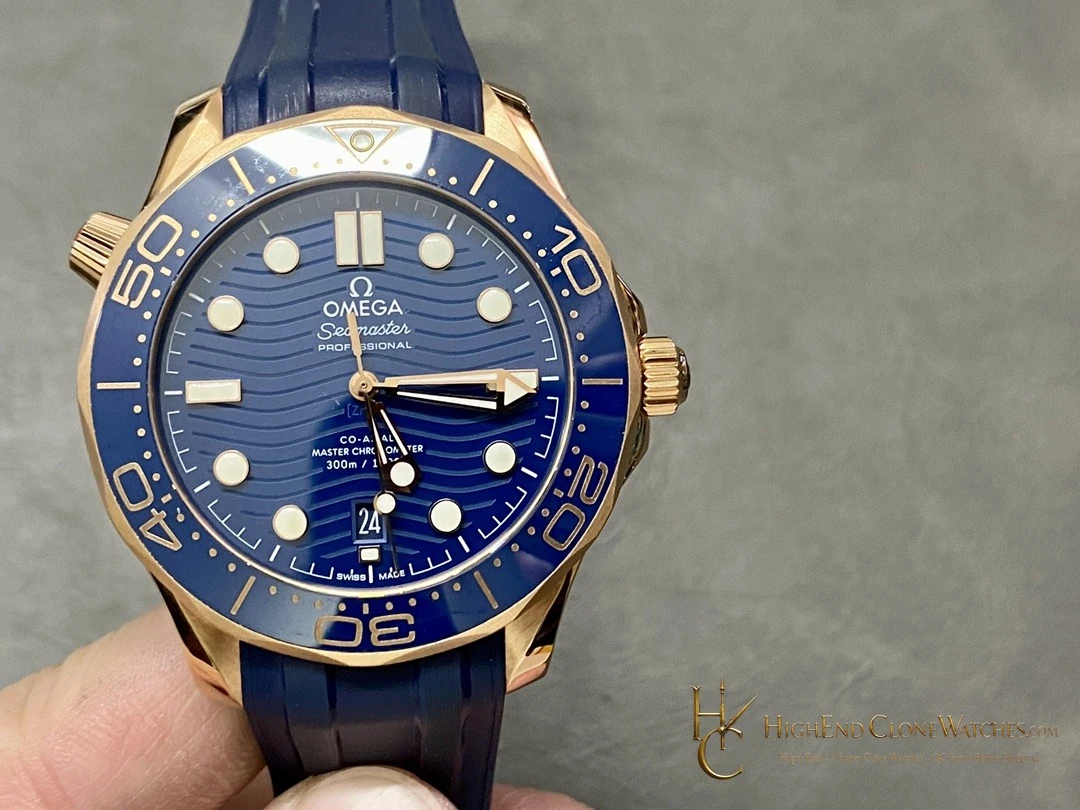
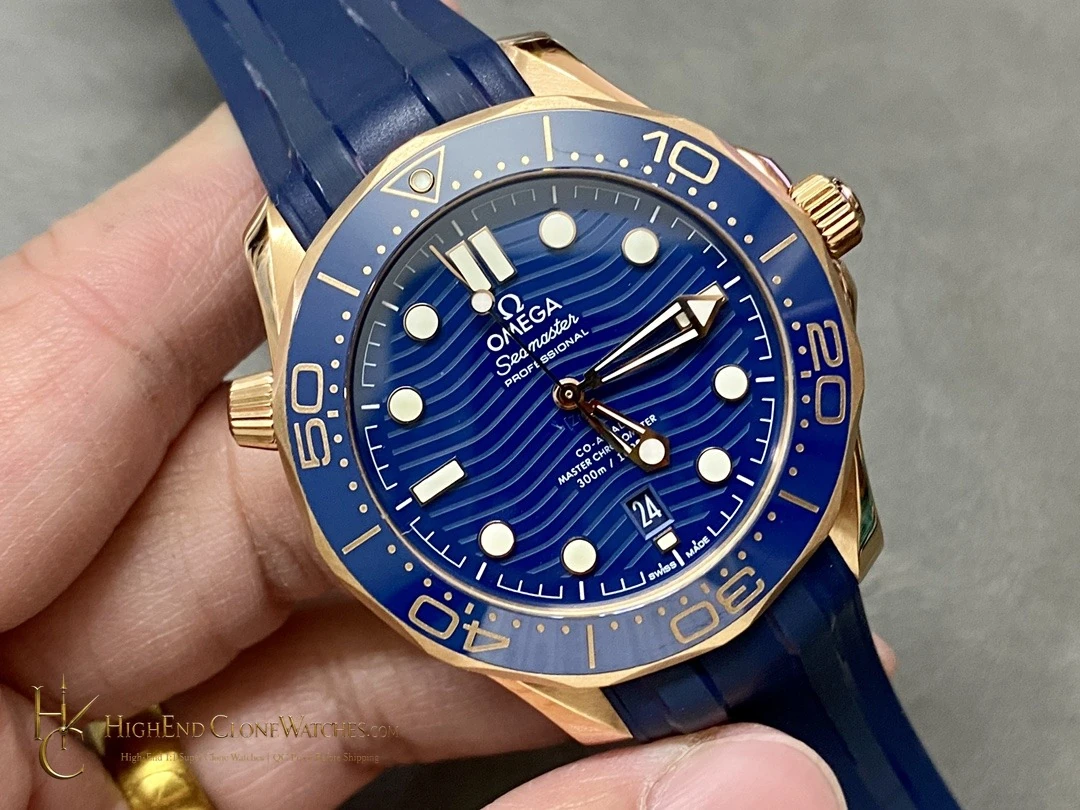
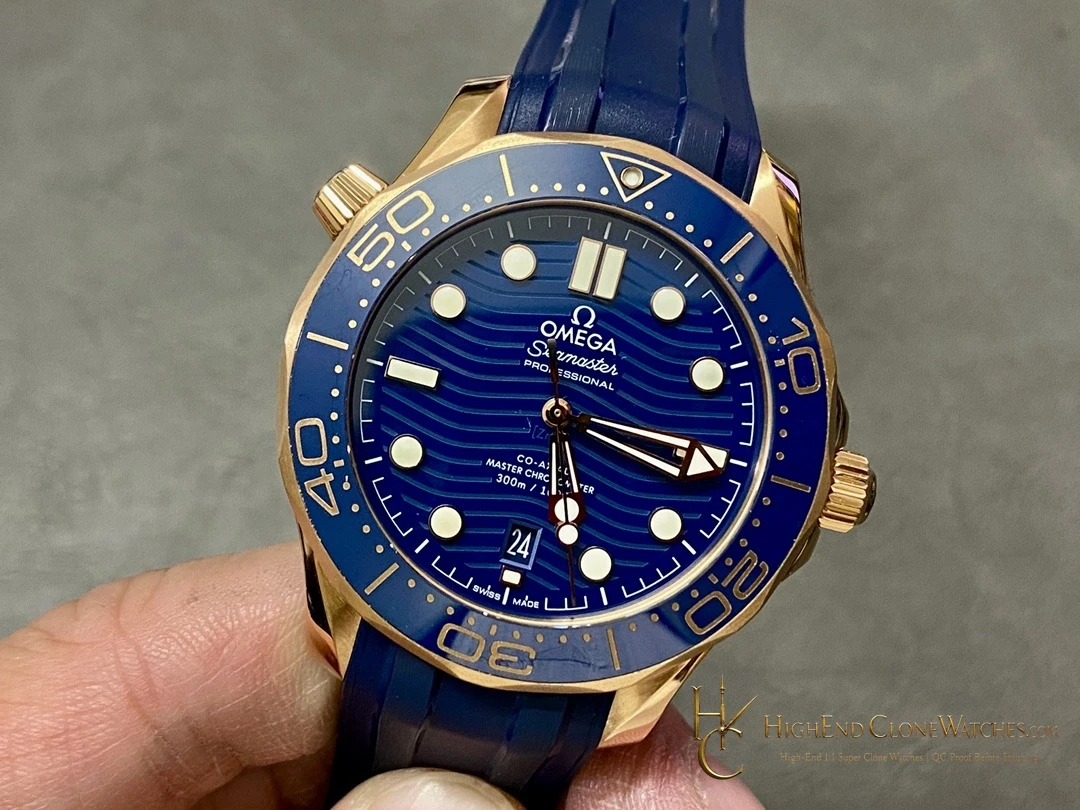
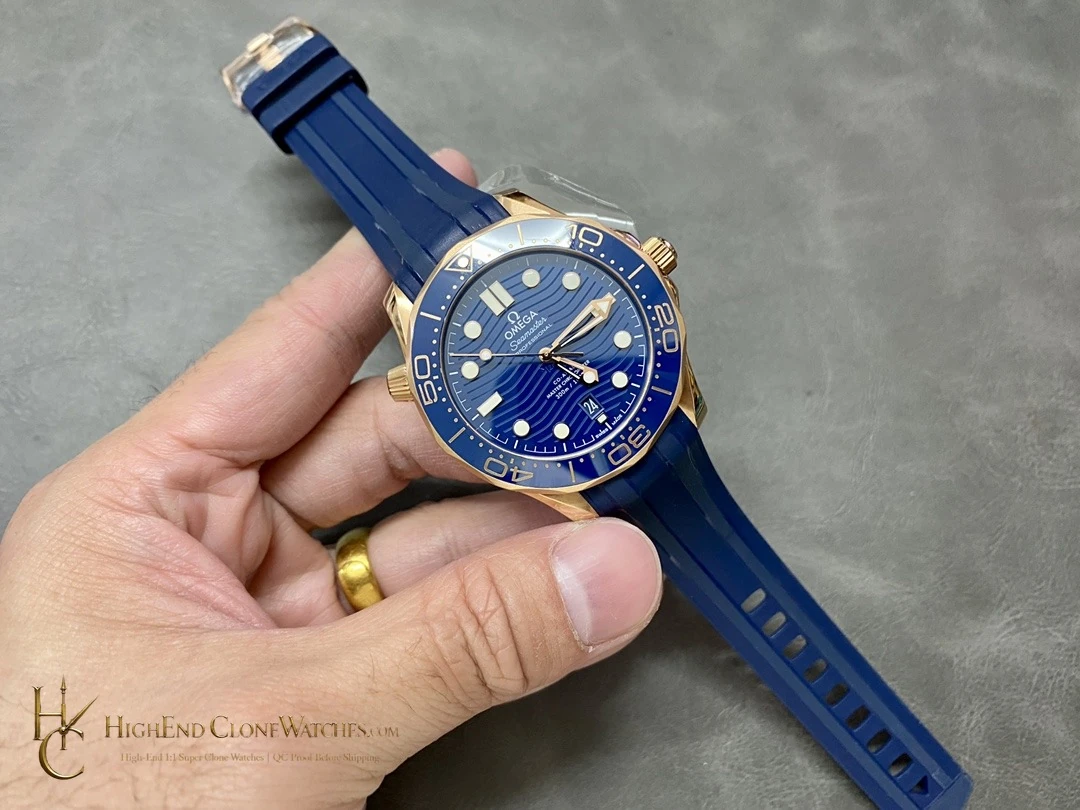
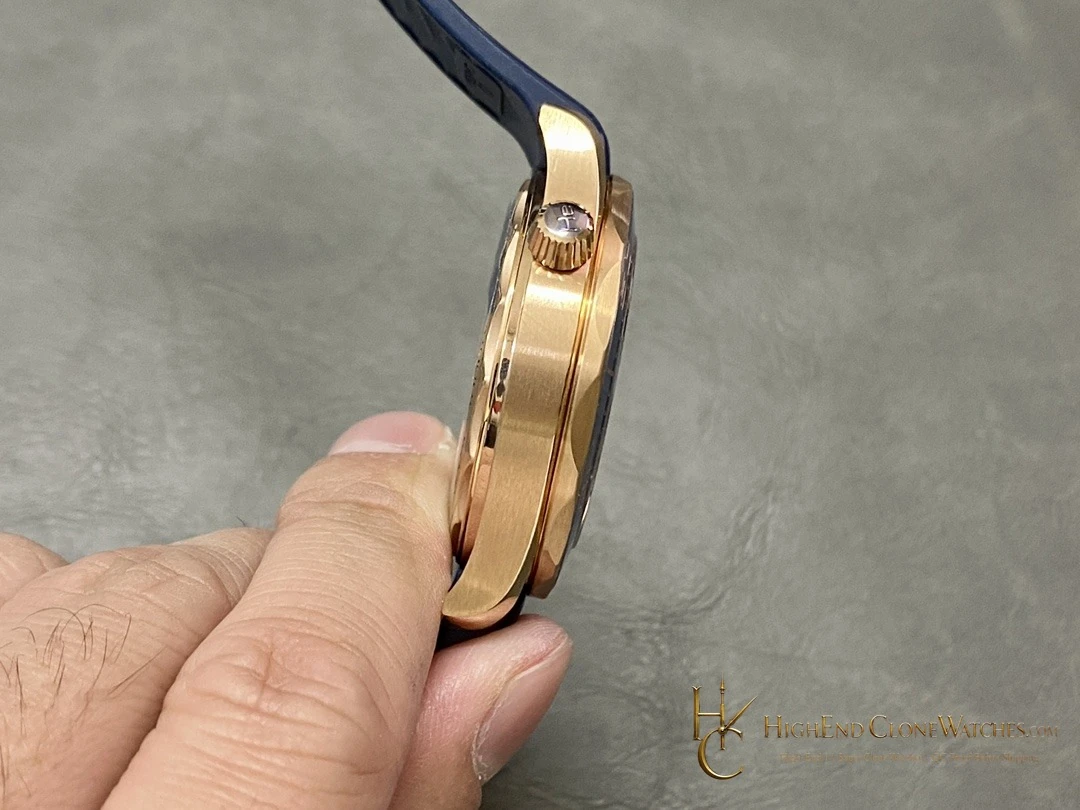
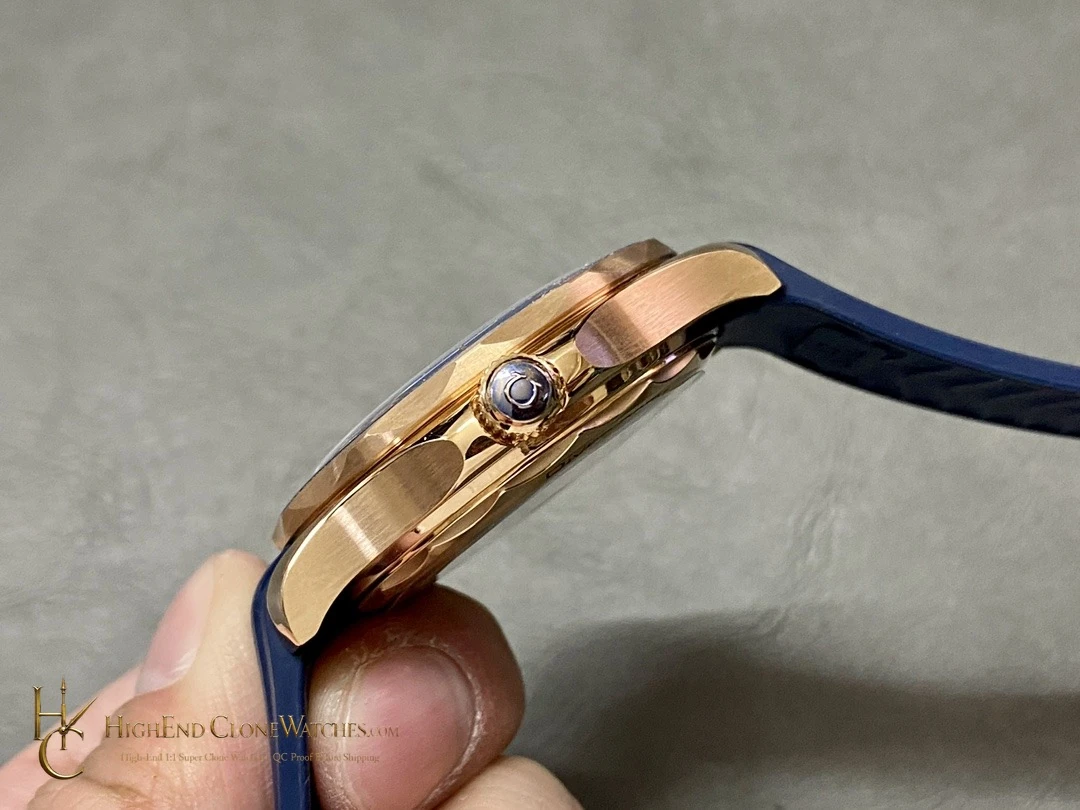
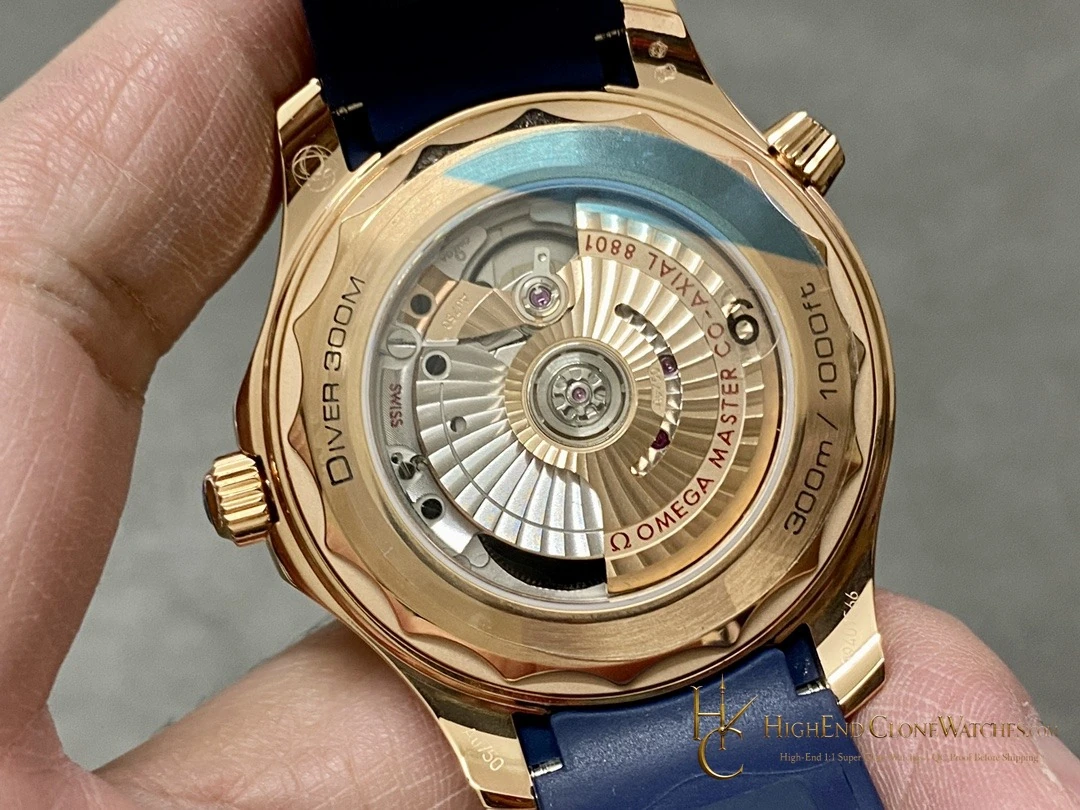
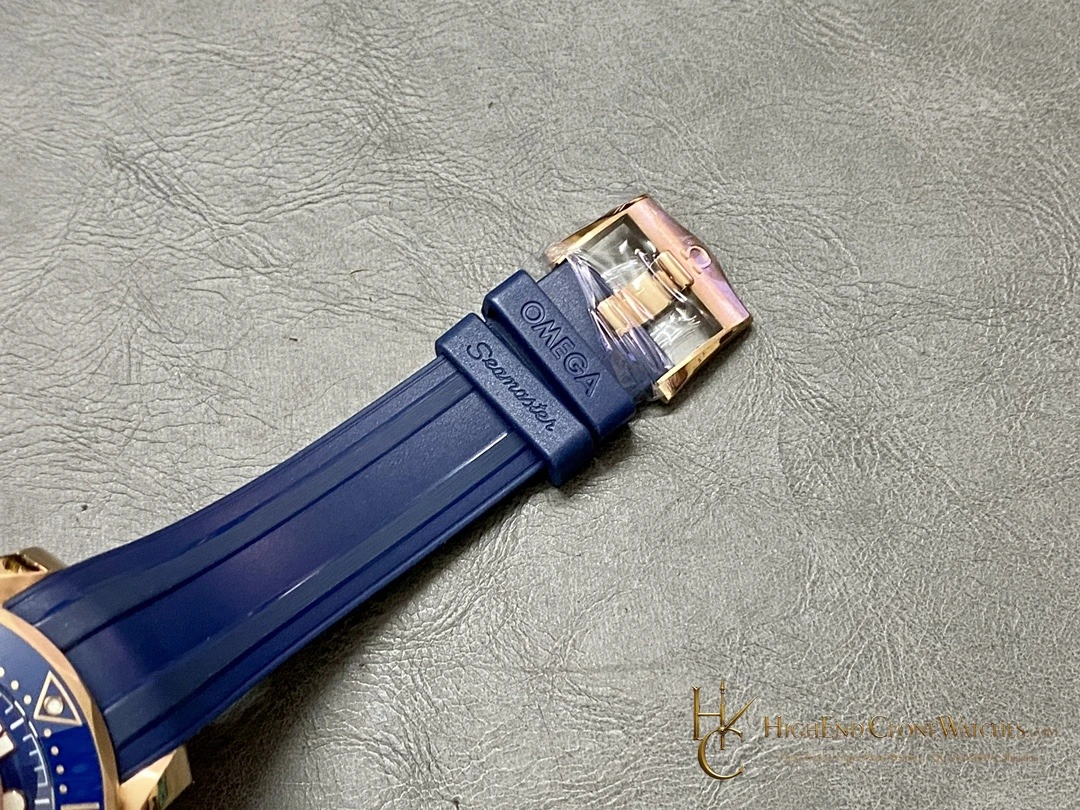
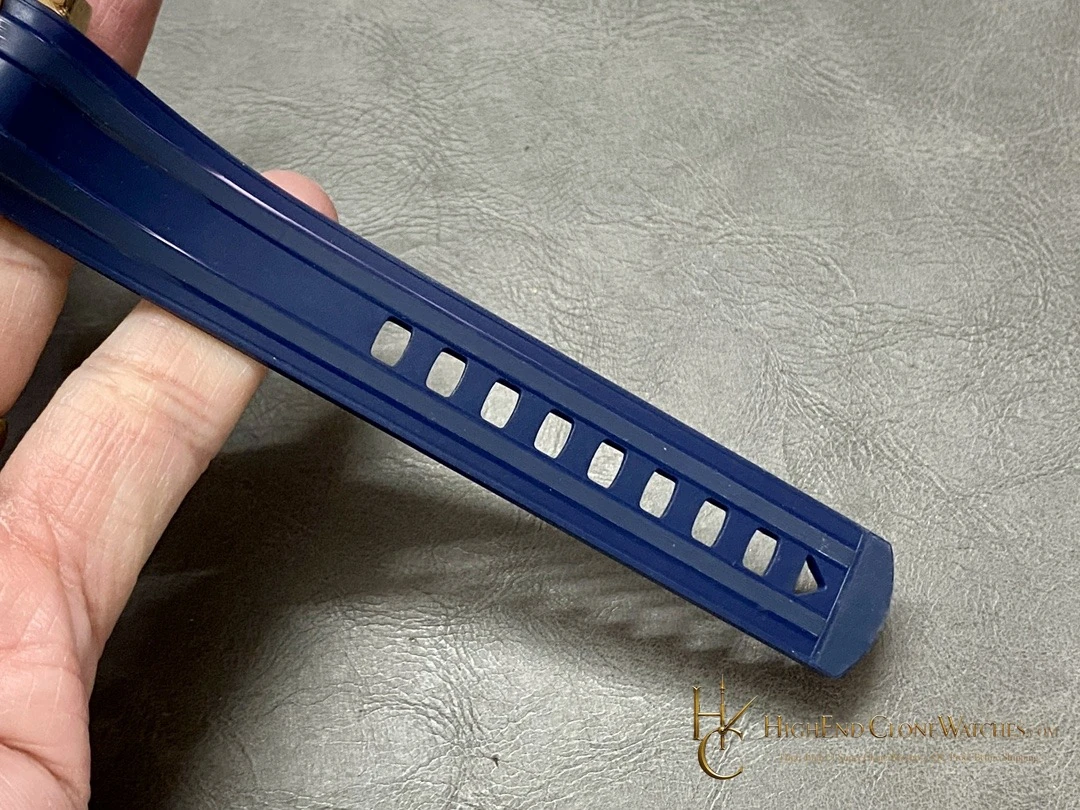
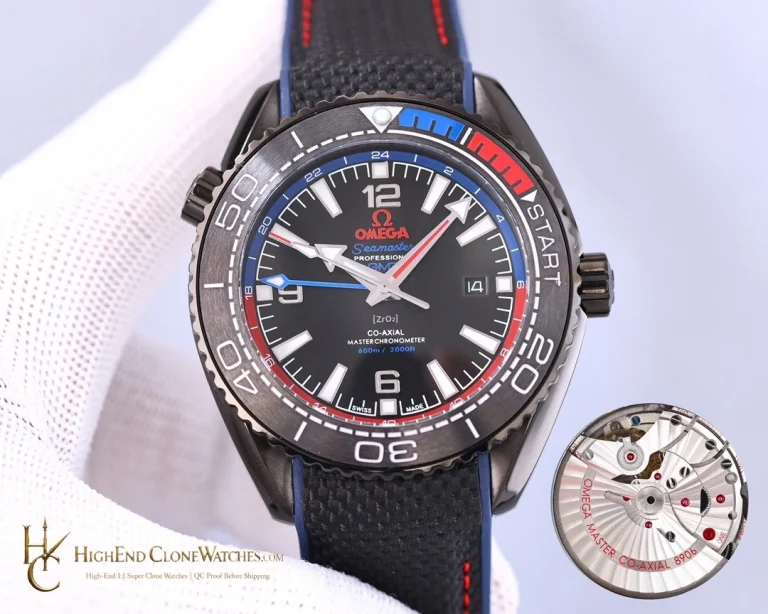
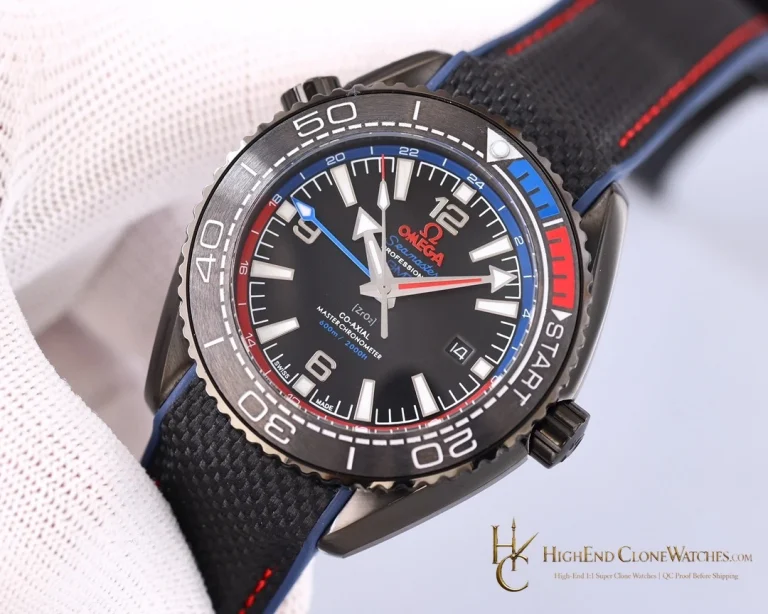
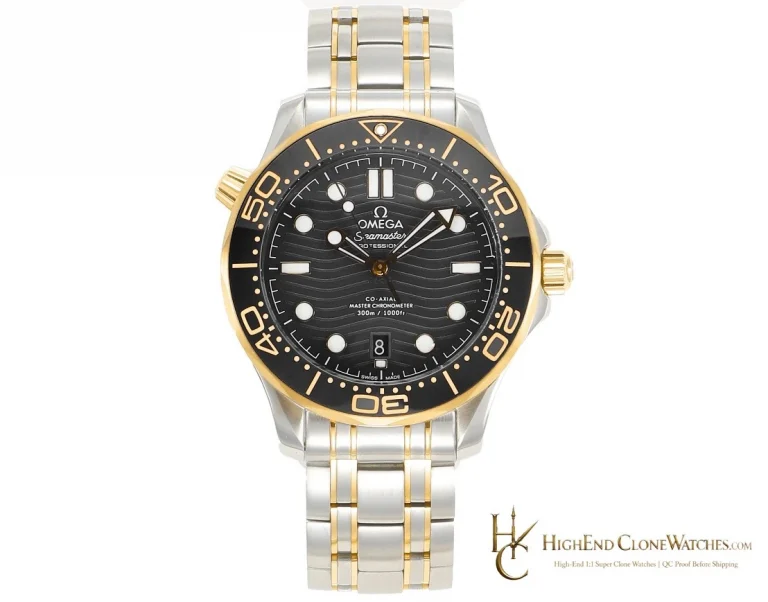
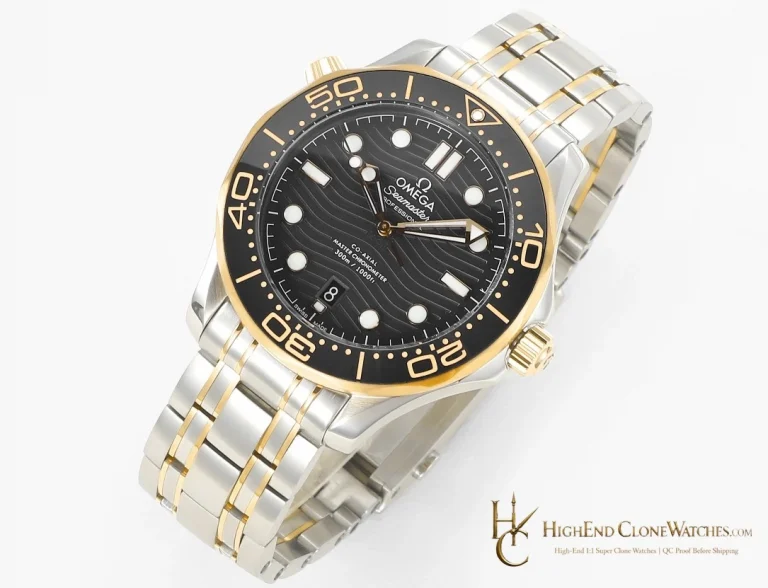
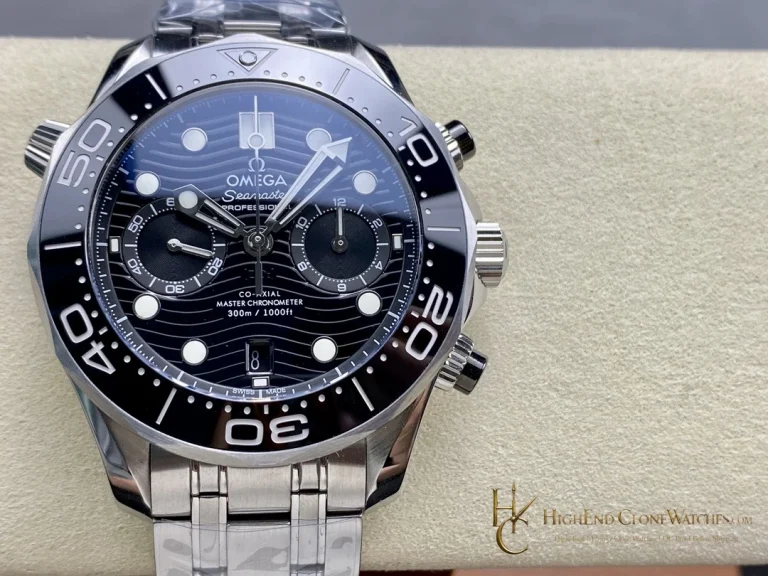
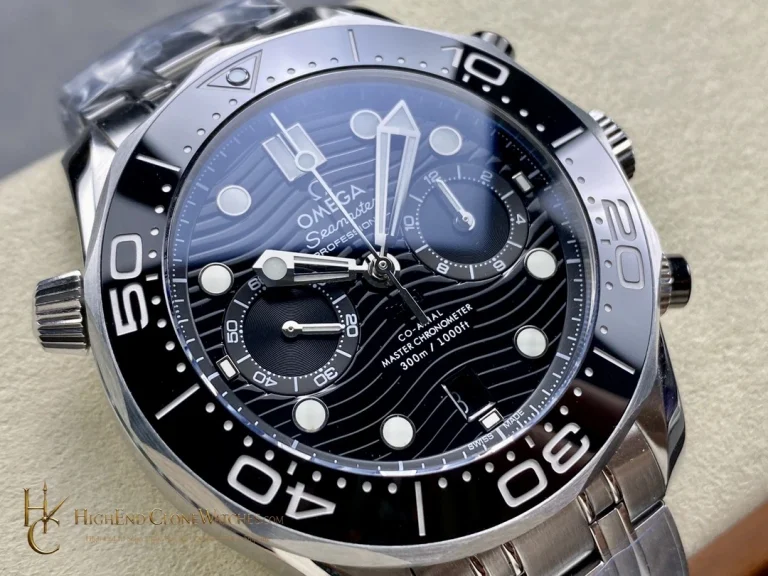
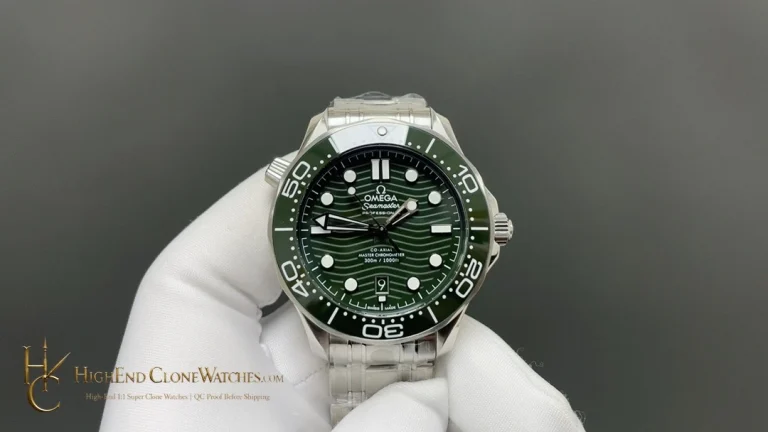
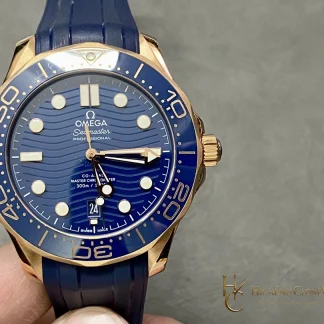
QC for this reference should focus on plating tone, blue dial and bezel, diving-scale alignment, crown action, rubber strap, and clasp seating. Review the dial straight on for even printing, texture, and hand or register alignment. Then inspect the bezel edge and scale under a second angle, followed by the case-to-strap or case-to-bracelet transition. The closure should engage cleanly and the visible surfaces should remain consistent across the full image sequence.
The strongest reason to choose this version is the way its exact visible elements work together: blue ceramic dial and rose-gold-toned diving scale. Buyers comparing nearby Omega references should decide first between the alternative's wearing line and this configuration's defining contrast. That keeps the purchase tied to the reference on the page, not to a generic collection description.
The gallery sequence supports the final decision: use the front view for identity, angled views for surface and proportion, and detail views for the case, strap or bracelet, and closure. Under neutral light, those views should agree on the exact configuration selected for dispatch.
The rose-gold-toned scale brings a warmer contrast to the blue ceramic dial. The warm plated case should be read against the blue dial rather than treated as a generic two-tone finish. Check the color at the lugs, crown, bezel edge, and clasp so the same tone carries through every visible transition. The blue rubber strap keeps the watch sport focused, and its texture should remain clean where it meets the case. This configuration is chosen for controlled warmth, not for a bright jewelry effect, so the final photographs should show the scale, surface, and strap in neutral light. A warm blue Diver is selected for contrast at wrist distance. The blue ceramic face should remain legible beside the rose-gold-toned scale, and the plated accents should look intentional rather than overly bright. Inspect the crown guards, helium valve, lug edges, bezel insert, strap shoulders, and deployment hardware as separate transitions. The 42mm case keeps the silhouette familiar, while the rubber connection makes it more relaxed than a steel bracelet. Neutral photographs are especially useful here because reflected light can exaggerate the apparent warmth of the plating.