
Moissanite-Set Watches: What Makes the Work Look Right
A stone-set watch succeeds through proportion and setting quality. Brightness matters, yet the buyer should also look at stone alignment, row spacing, edge finishing, dial balance, and whether the final watch still reads as a watch rather than a pile of decoration.
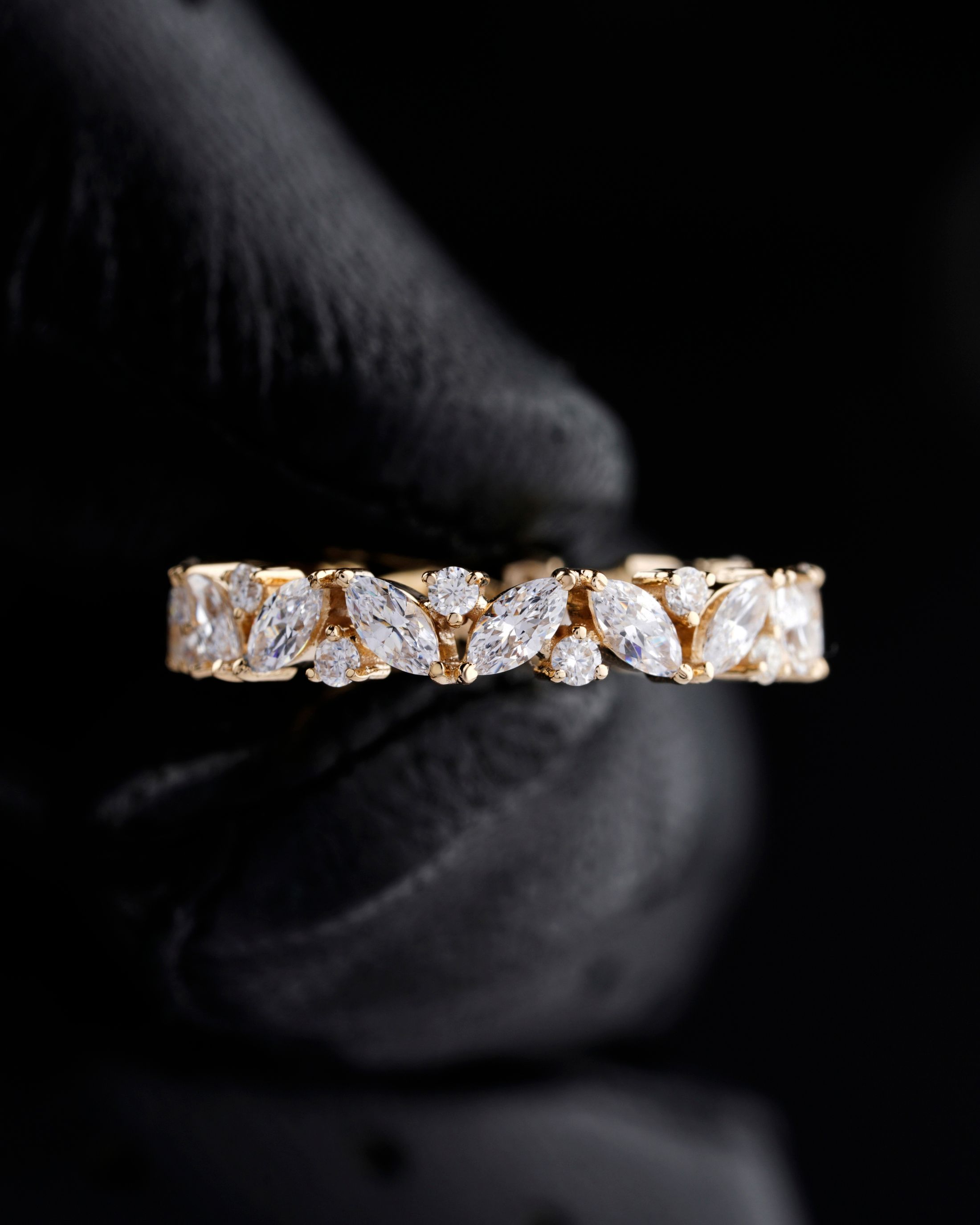
The stones should follow the structure of the watch.
A good stone-set build keeps the case, dial, bracelet, and bezel readable. The setting should support the design instead of hiding every line that made the reference appealing in the first place. Buyers should decide whether they want a restrained bezel treatment, a more visible dial treatment, or a full statement piece before work begins.
The location and finish of the setting decide the character of the watch.
Bezel setting
A bezel should have even rows, consistent spacing, clean edge finishing, and stones that sit at a sensible depth. Uneven placement shows quickly under direct light.
Dial setting
A stone-set dial must still leave hands, markers, text, and date windows legible. The more the dial is covered, the more important balance becomes.
Bracelet or case setting
A bracelet or case treatment creates stronger presence but adds more surfaces that need close inspection and careful handling.
Light behavior
Moissanite produces active flashes under light. Buyers should expect a more expressive jewelry-style effect than the quieter look of a plain steel sports watch.
Comfort and edges
The finished watch should not present obvious rough points around the bracelet, bezel, case, or clasp. Comfort matters as much as the first visual impact.
Decide how much visual presence you actually want.
A bezel-only treatment can keep the original dial and bracelet character visible. A dial treatment changes the face of the watch. A full bracelet or full pavé treatment turns the piece into a more overt jewelry object. These are different choices, not levels on a simple quality scale.
Subtle statement
A bezel treatment can add light return without making the dial difficult to read or changing the basic wearing character of the reference.
Dial-led look
A stone-set dial becomes the focal point. It suits buyers who want visible sparkle and accept that the original dial restraint will be reduced.
Full statement build
Case and bracelet setting create the strongest effect. They also call for the closest QC review and more careful use around impact, storage, and hard surfaces.
Use close proof, then protect the work from hard contact.
A wide image cannot show whether a row is even, an edge is clean, or a stone sits correctly. Ask for close-up media of the exact setting area. Once delivered, treat the watch more carefully than a plain steel piece, especially around impact, chemicals, hard rubbing, and loose storage.
QC angles
Ask for close views of the bezel, dial, bracelet, lugs, clasp, and any area receiving stones. Request a moving-light angle when possible so gaps and uneven rows are easier to see.
Handling
Avoid hard knocks, abrasive surfaces, harsh chemicals, and storage beside other jewelry or watches. A setting can be affected even when the watch itself still appears to run normally.
Support case
If you notice a physical concern on arrival, keep the packaging and document it promptly with clear photos or video before attempting any adjustment.
Choose a stone treatment that keeps the watch wearable, not just conspicuous.
A restrained bezel can suit a buyer who still wants a recognizable daily watch. A full build suits someone buying deliberate visual impact. Both can work, but the intended use should decide the setting area before payment.
Before confirming a stone-set build, decide these points.
- Which area will be set: bezel, dial, bracelet, case, or more than one?
- Does the chosen treatment fit how visible you want the watch to be?
- Will QC include close views of the exact setting areas?
- Do you accept the extra care required after delivery?