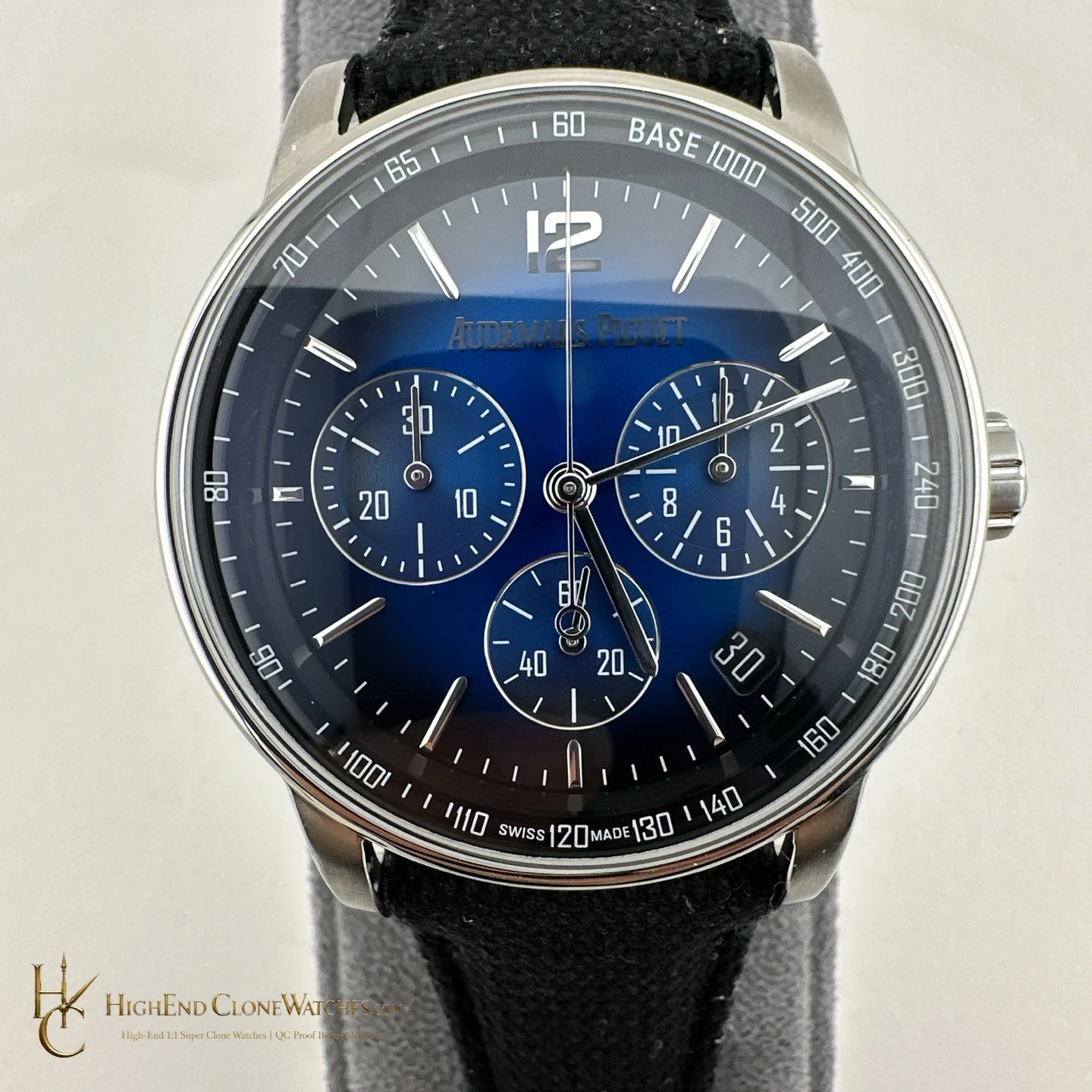
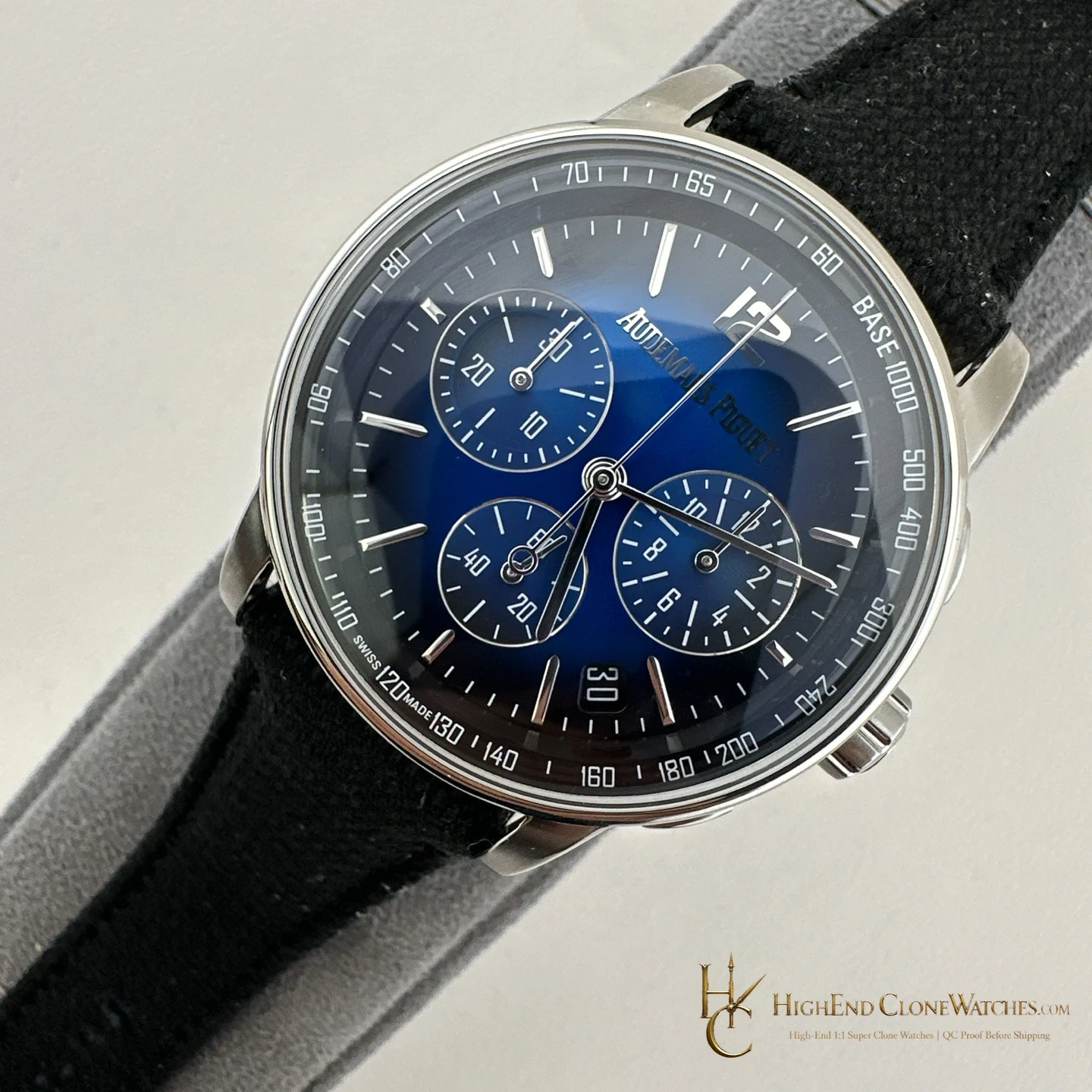
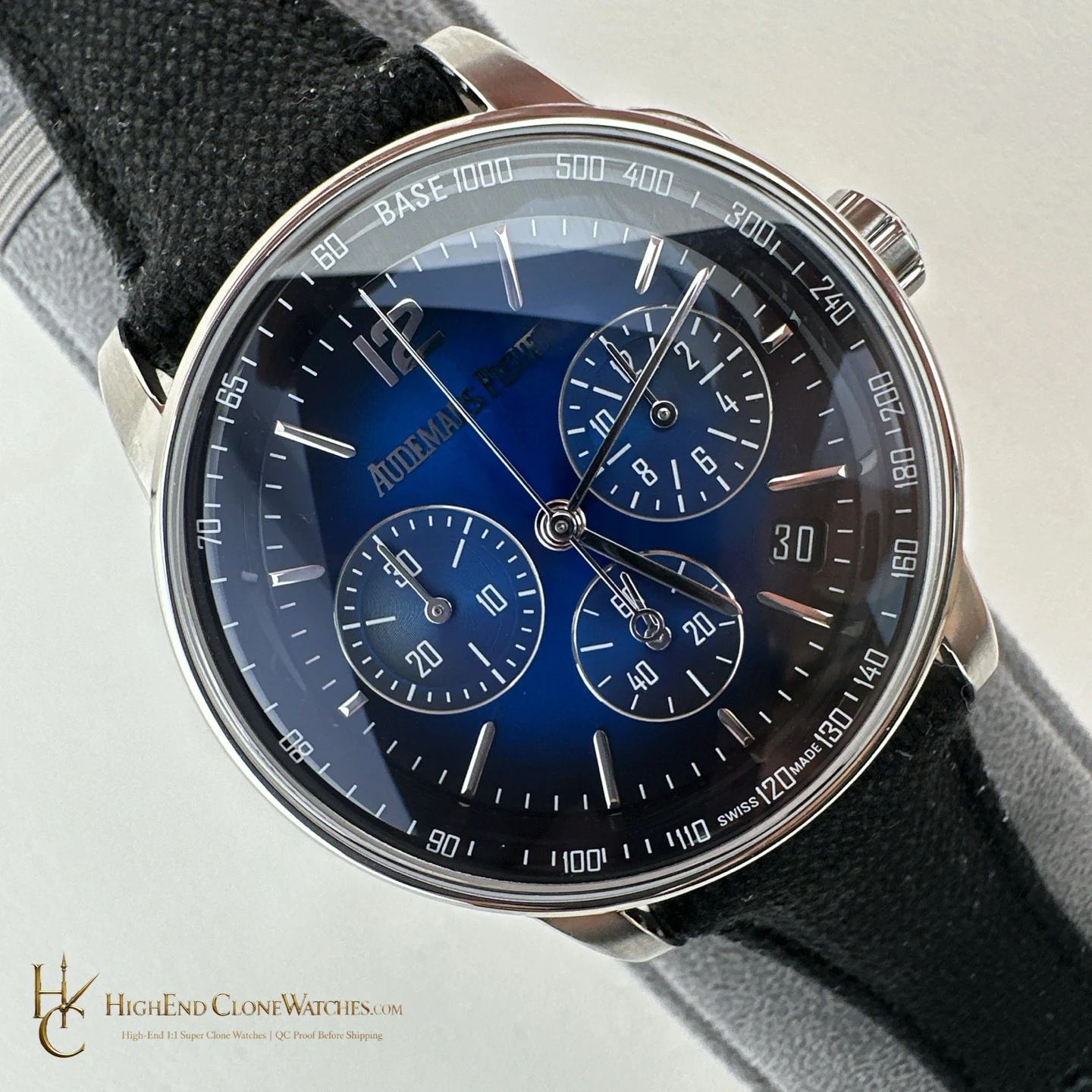
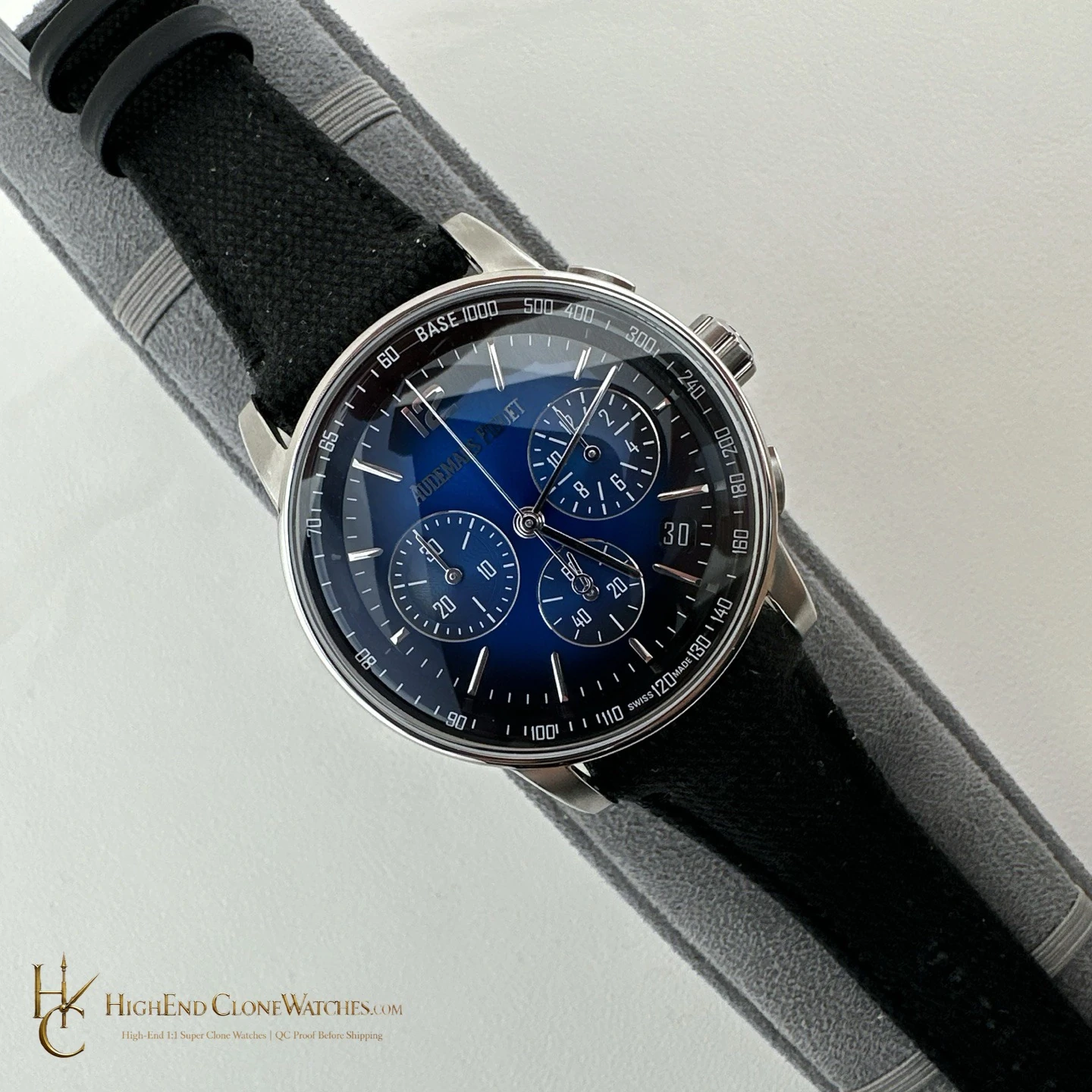
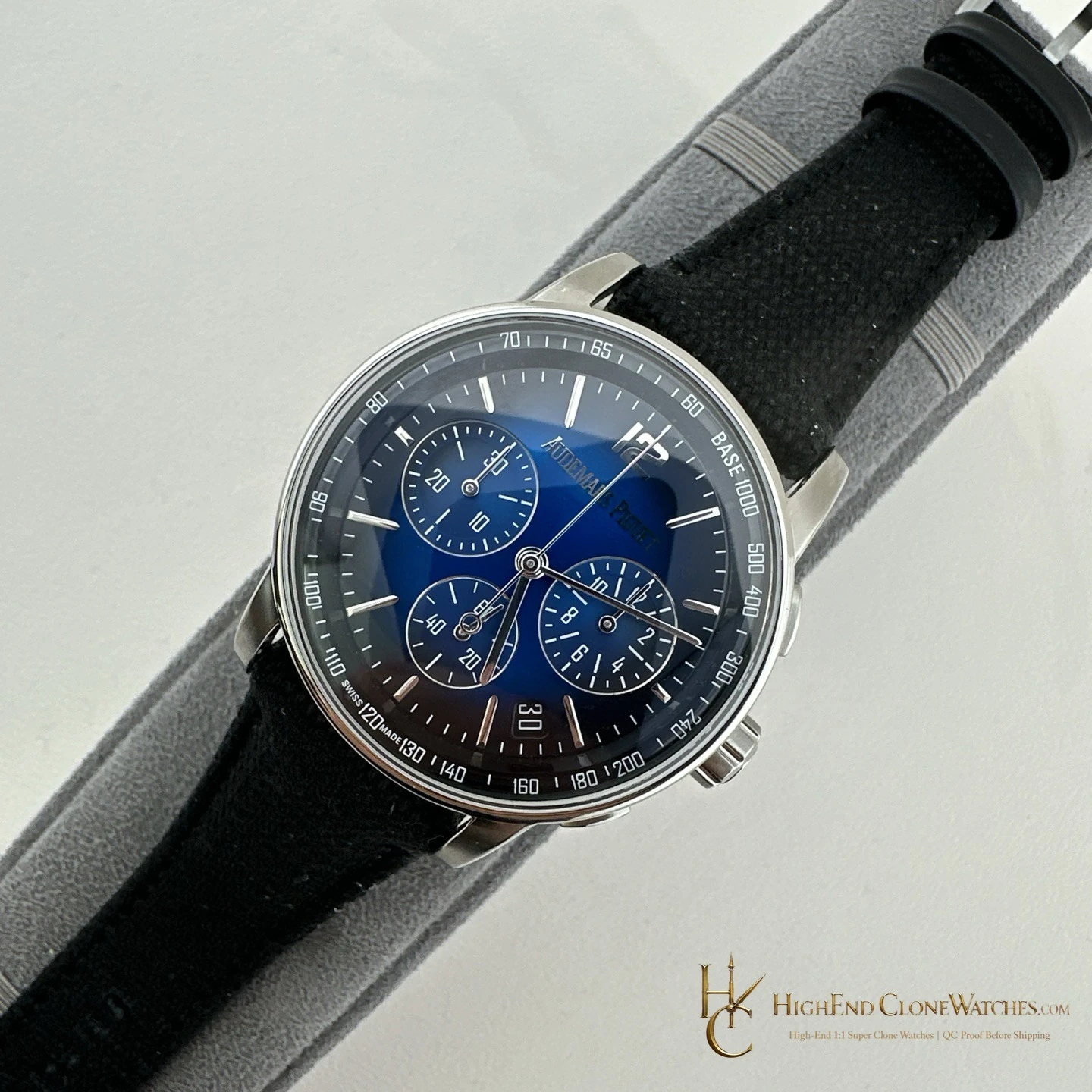
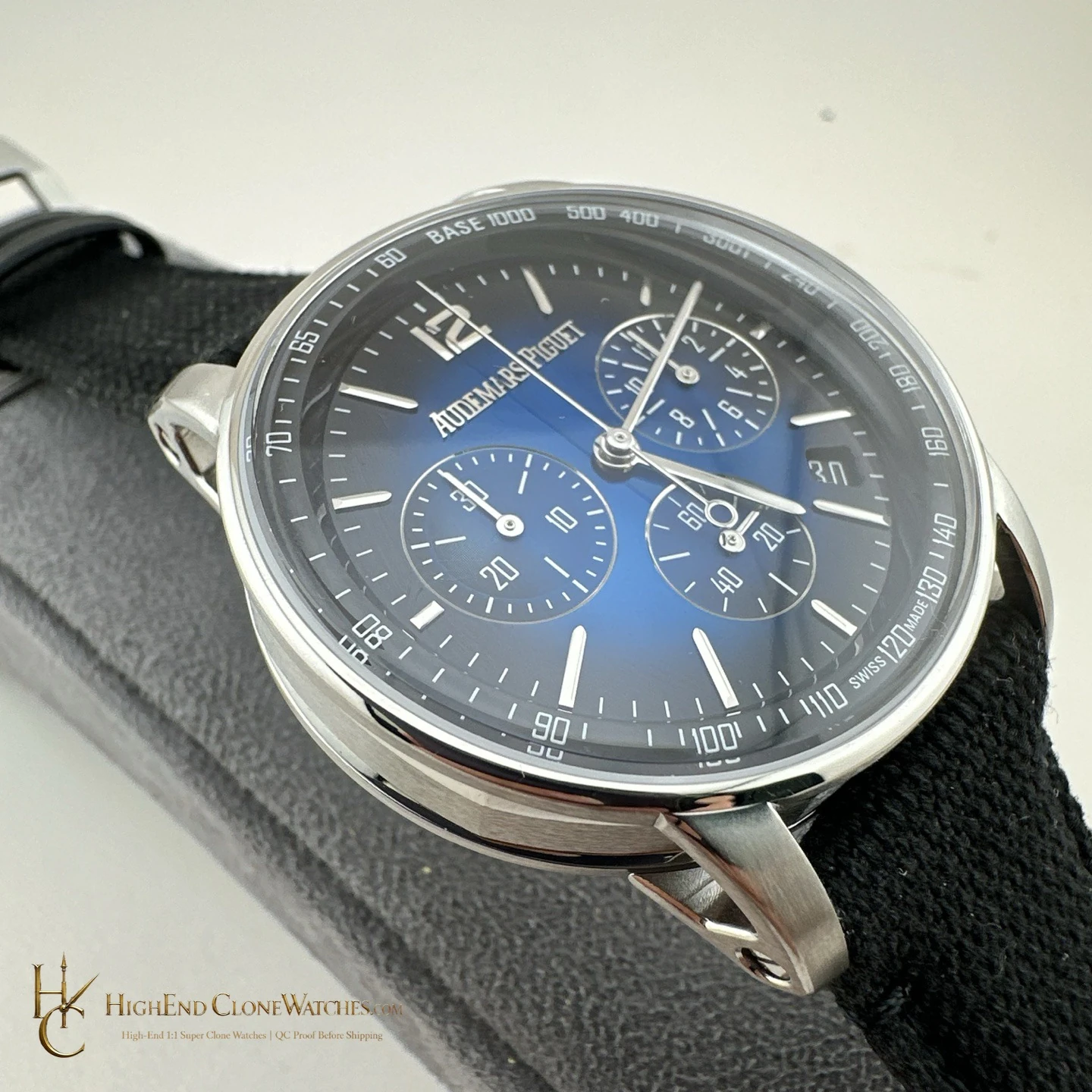
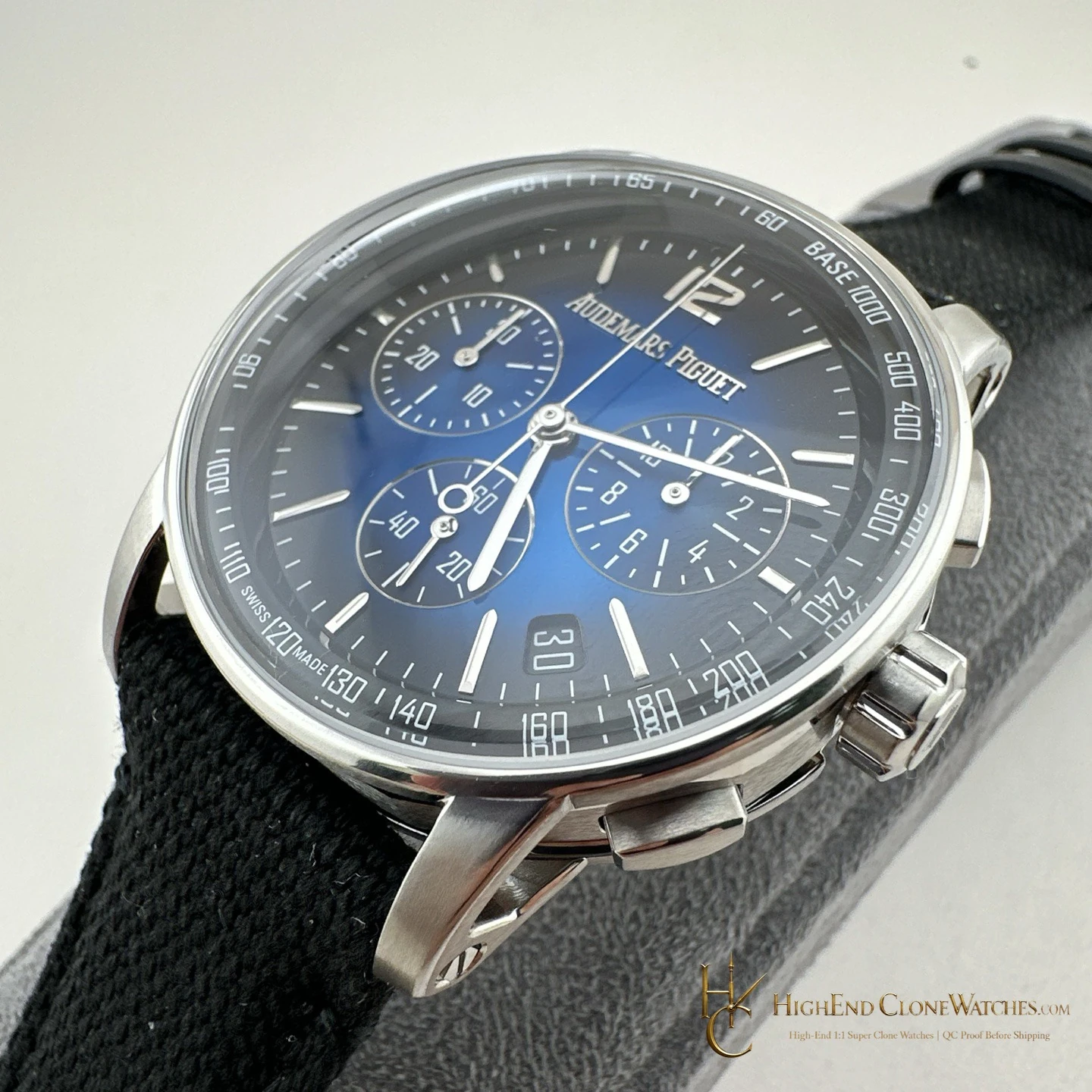
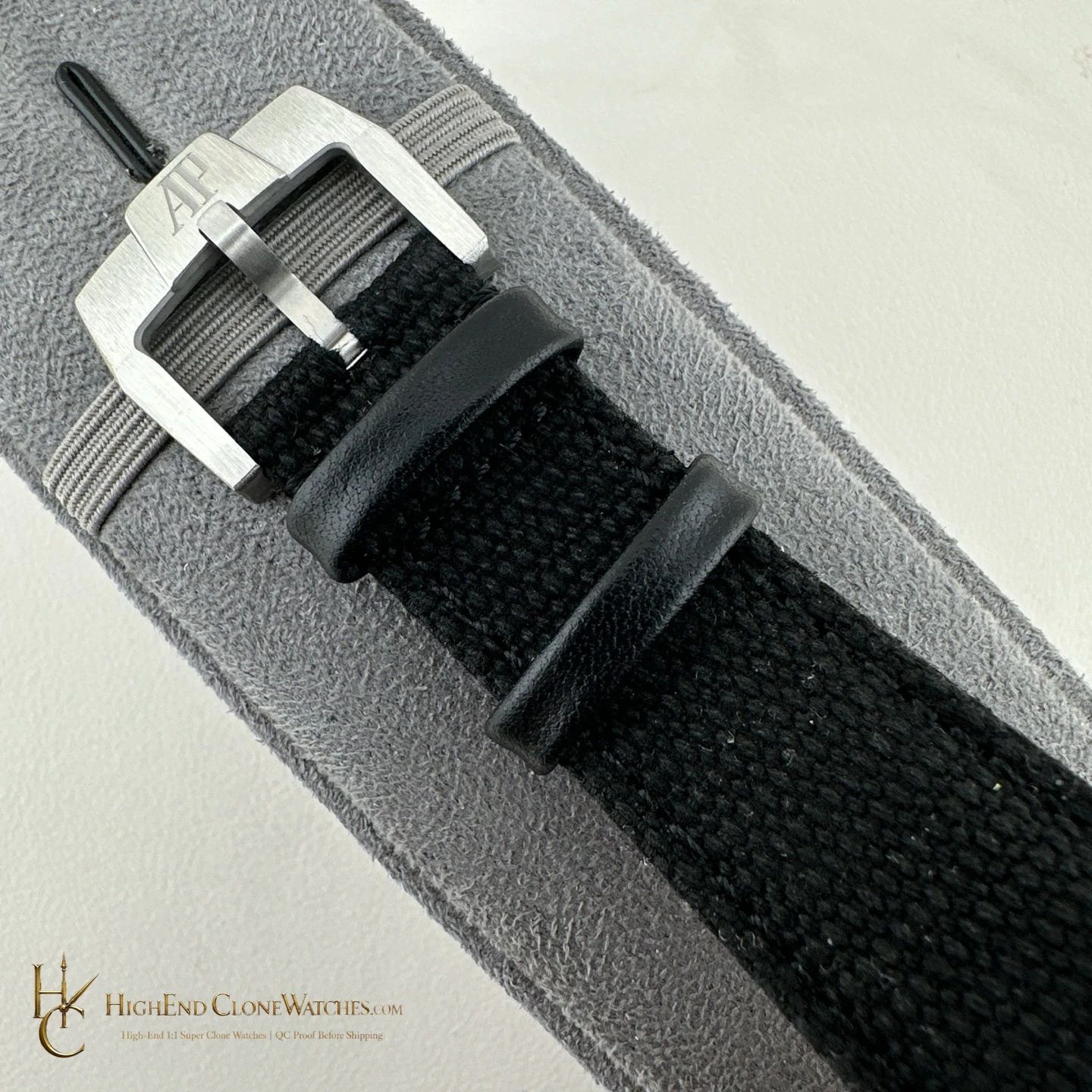
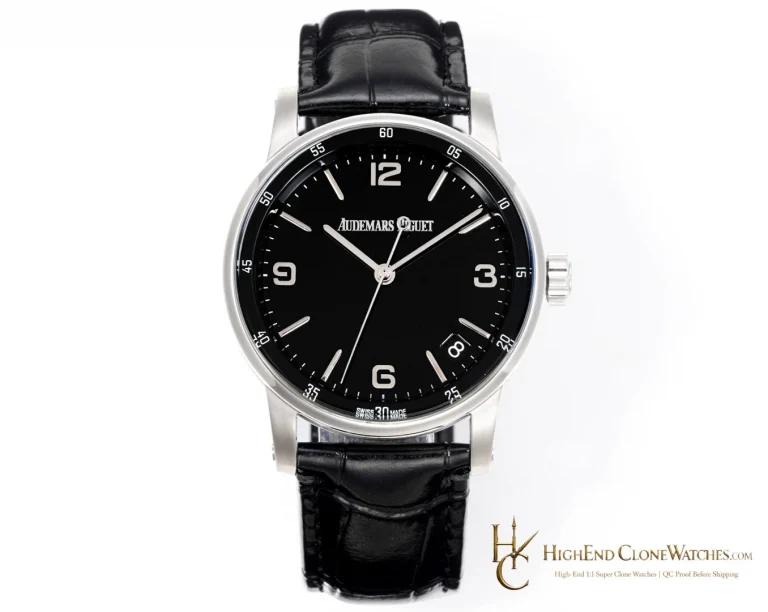
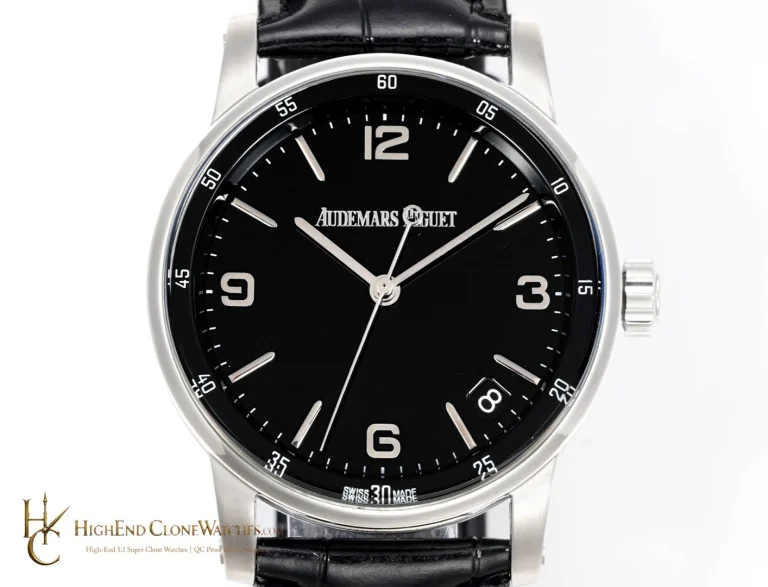
The smoky transition keeps the dial from appearing flat and changes how the registers read under different light. That makes this a closer-look watch: the color is subtle at a distance, while the subdials become more apparent as the wrist moves. The black fabric strap prevents the gradient from turning the whole watch into a bright statement and adds a grounded, tactile counterpoint.
Who should choose it
Select this reference when elapsed-time functionality and visual depth are part of the appeal. Buyers seeking an uncluttered dress watch should stay with a plain Code 11.59 dial. Buyers who want a sportier display but still prefer the collection's rounded case language will find the balance here, especially when strap comfort and a restrained underside matter.
Controls should feel considered
A chronograph is judged through both its front layout and its controls. The subdials need balanced spacing, the central hand should sit cleanly over the dial, and the pushers should align naturally with the case side. The date aperture adds another point of reference. When those elements work together, the smoky gradient reads as a composed instrument rather than decoration. That is the reason to choose this reference over a simpler Code 11.59. The black strap also keeps the display focused on the dial instead of adding another competing surface.
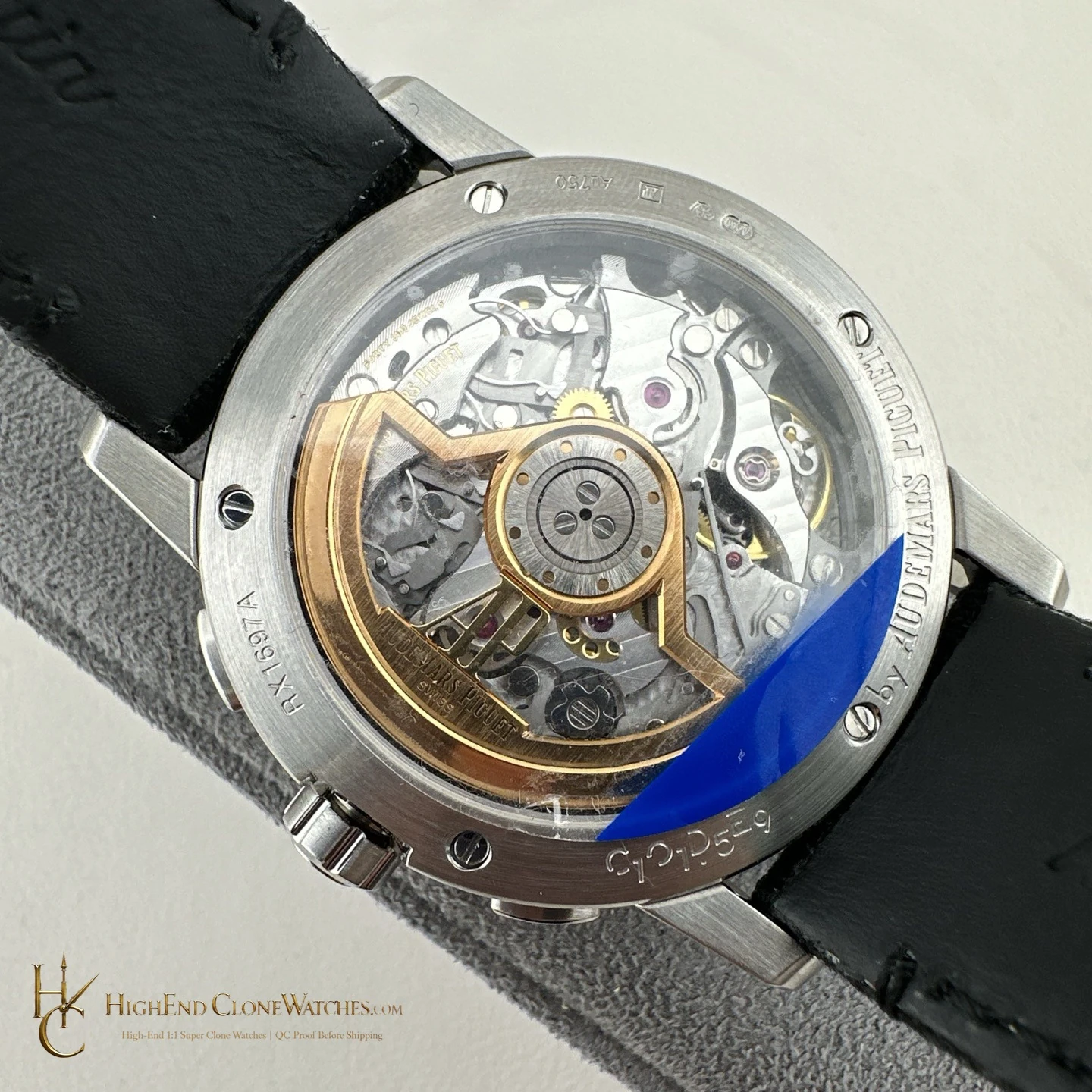
Read the front, crown side and clasp views together before deciding. The most satisfying version of this watch is the one in which the gradient, registers, controls and strap all support the same purposeful chronograph character. That relationship is what gives the reference its lasting interest and keeps the display coherent from every angle.