Audemars Piguet / Royal Oak / Royal Oak Chronograph 26240OR.OO.1320OR.02
Audemars Piguet Royal Oak Chronograph 26240OR.OO.1320OR.02 Black Dial 41mm
$1,849.00 Original price was: $1,849.00.$1,449.00Current price is: $1,449.00.
Black-dial chronograph depth
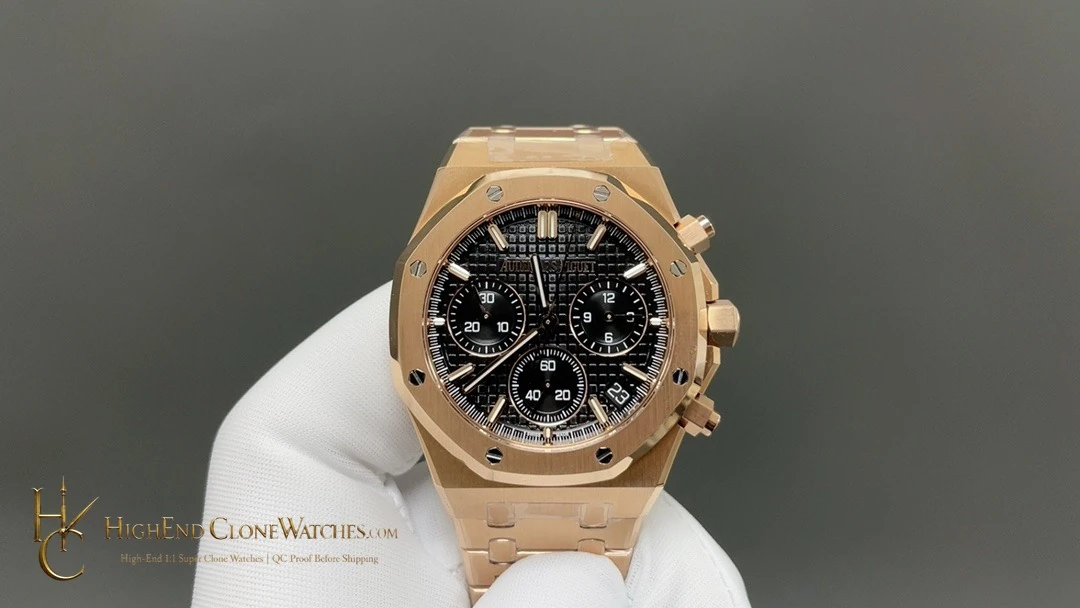
A chronograph changes the Royal Oak's character. Instead of a calm black dial with open space, this 26240OR uses three recessed registers and two pushers to create a more technical face inside the same 41mm family. The black background is important because it keeps that added information structured against the rose-gold-tone bezel and bracelet. Compare it with the black-dial 15500OR when you are deciding whether you want a simple time-and-date layout or an active, multi-register display. The 15500 is cleaner; this configuration is for the buyer who wants the dial complexity to be part of the experience.
a 41mm black-dial rose-gold-tone Royal Oak chronograph whose three recessed registers add controlled visual depth
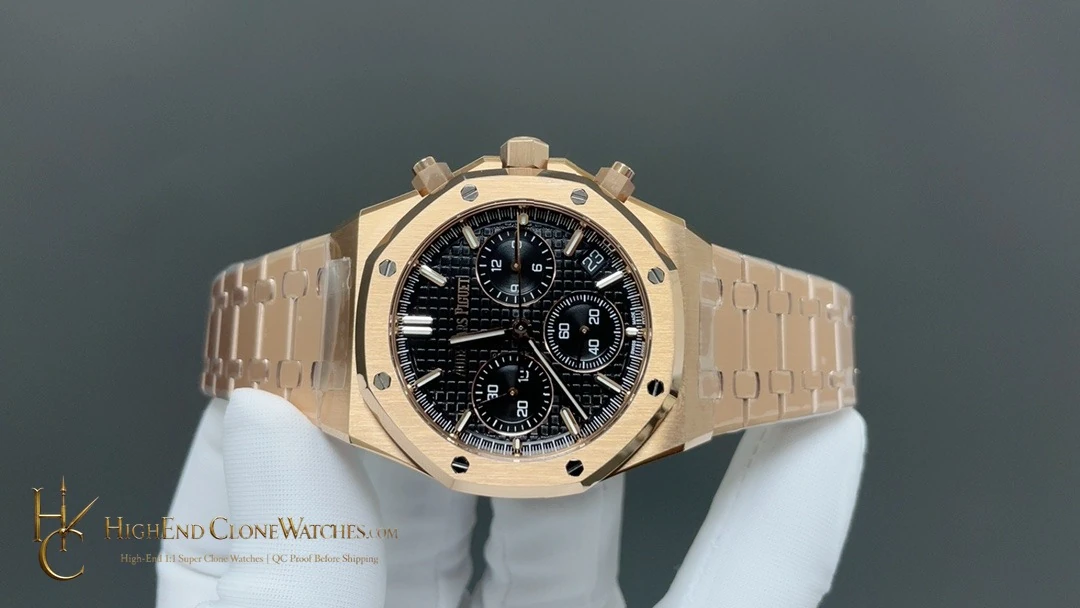
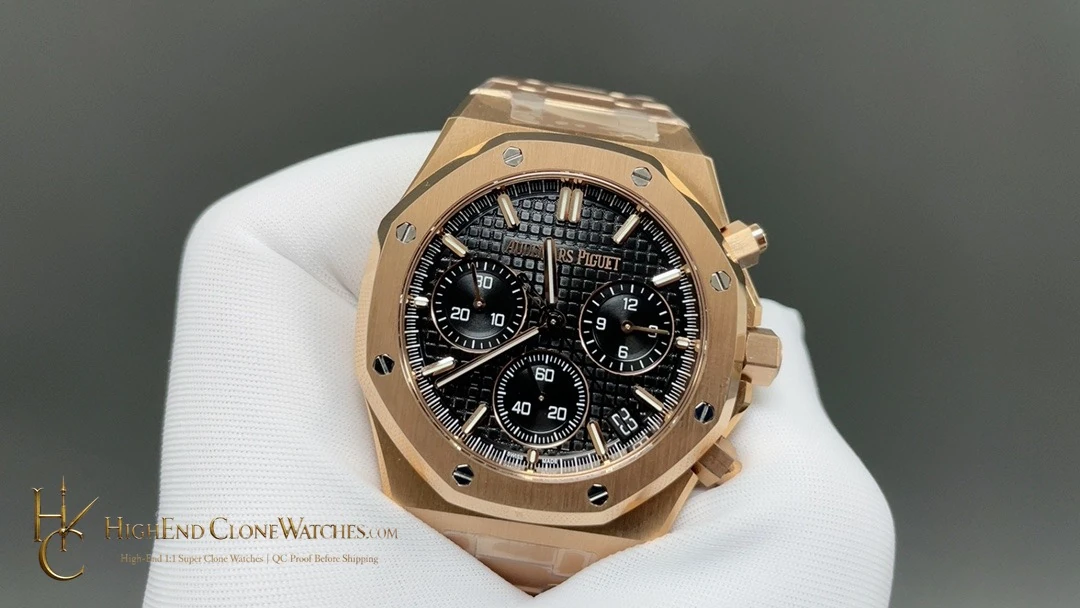
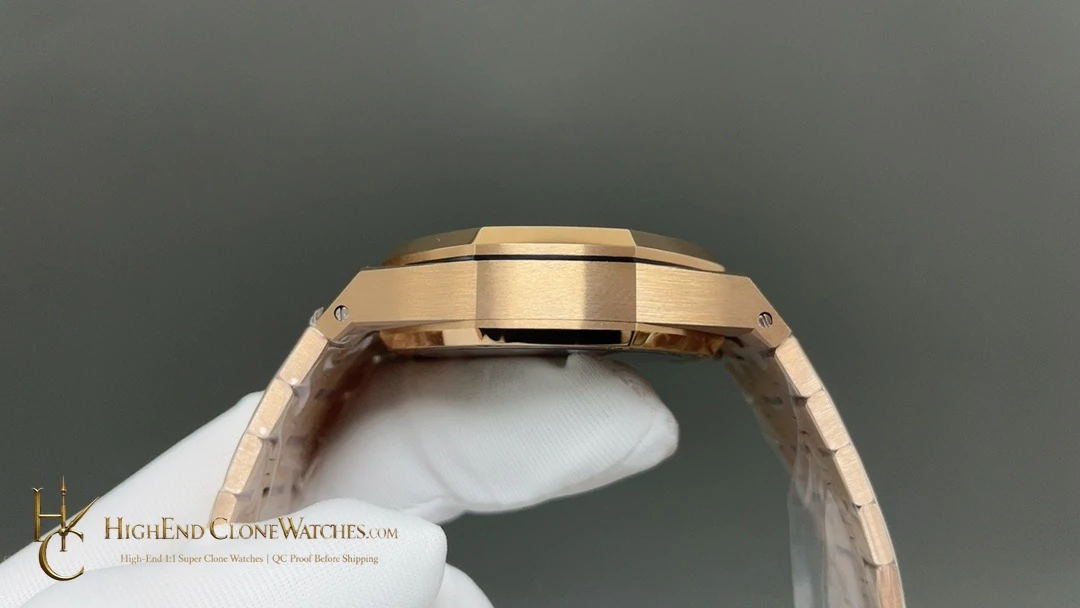
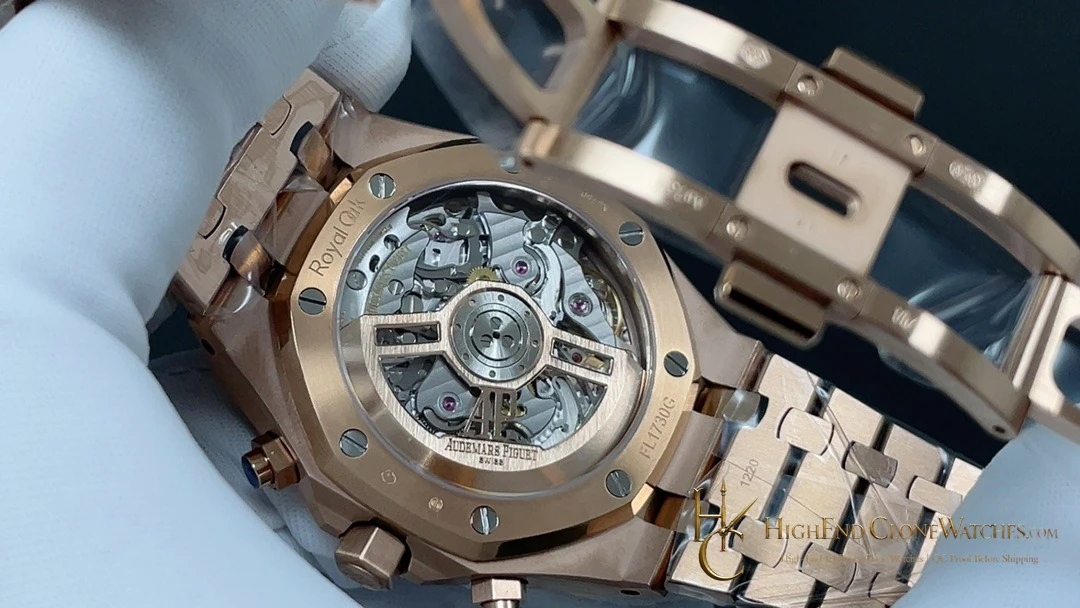
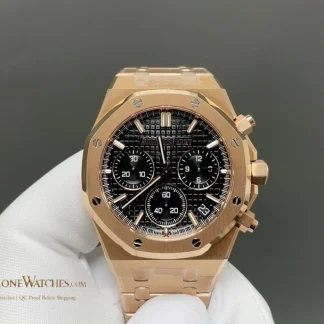
The Royal Oak Chronograph 26240OR.OO.1320OR.02 turns the black Grande Tapisserie dial into a three-register display inside a 41mm rose-gold-plated steel case and matching integrated bracelet. The recessed subdials, two pushers, and date display make this a more information-rich choice than the black-dial 15500OR, while the dark dial keeps the gold-tone case and bracelet from overwhelming the front view. At a listed 12.0mm thick, it has the added visual depth expected of a chronograph. The product record lists a Clone Calibre 4401 movement.
Confirmed configuration
- Movement
- Clone Calibre 4401
- Bezel
- brushed steel with gold plating
- Crystal
- Sapphire with AR coating
- Bracelet
- integrated AP bracelet
Three registers inside a black textured dial
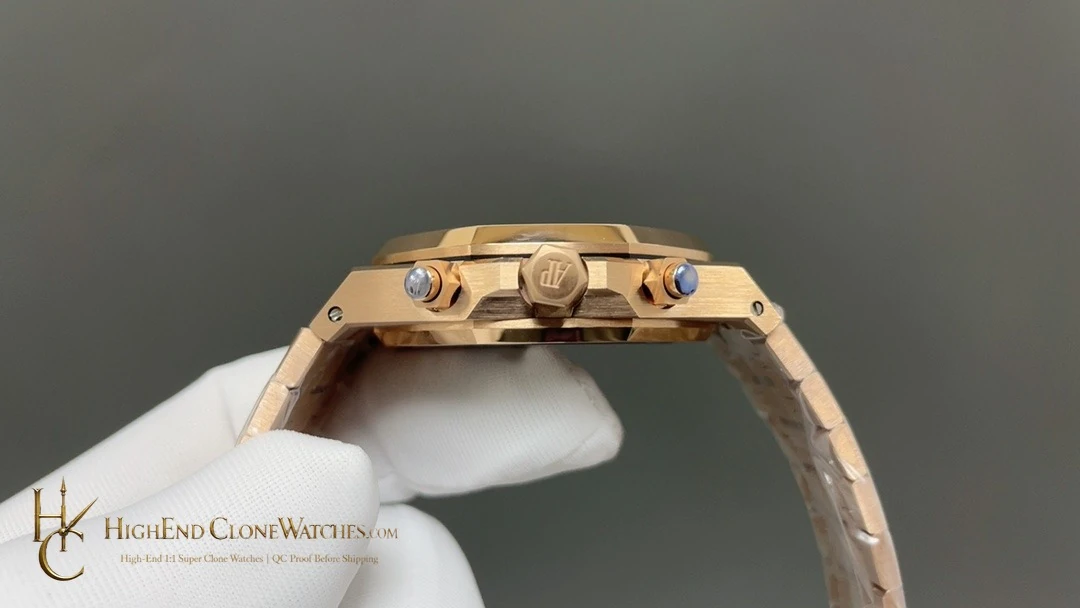
The Royal Oak Chronograph 26240OR.OO.1320OR.02 has a different visual rhythm from a standard three-hand Royal Oak. Its black Grande Tapisserie dial is divided by three recessed chronograph registers, with a date display positioned near 4:30 and two pushers flanking the crown. Those elements give the face depth and make the dial feel more technical, while the dark textured background prevents the information from becoming visually loose. The rose-gold-plated octagonal bezel and integrated bracelet then frame that complexity with a warm, continuous outer line.
Why the black dial is the right counterweight
On a 41mm rose-gold-tone chronograph, a pale dial would push the display and case color forward at the same time. This black configuration takes the opposite approach. The darker dial holds the registers together, allowing the bezel, screws, and bracelet to remain visible without competing for attention. The listed 12.0mm thickness gives the case a deeper profile than the 15500OR, which suits the additional dial and control-side detail. It is a watch with visual activity, but the color scheme keeps that activity controlled rather than noisy.
Chronograph 26240 or time-and-date 15500
The proper in-batch comparison is the black-dial 15500OR. Both are 41mm, both pair a black textured dial with rose-gold-plated steel and an integrated bracelet, and both carry the Royal Oak silhouette clearly. The decision comes down to how much information you want on the dial. The 15500OR leaves the black Grande Tapisserie largely open and makes the bracelet line the main attraction. This 26240OR gives the face more visual depth through its three registers, pushers, and date display. Choose the 15500OR for calm continuity; choose this chronograph when the layout itself is part of the appeal.
QC should focus on the dial architecture
Start with a straight-on close view. The three registers should sit evenly within the dial, their printing and hands should be aligned, and the date display should be centered in its opening. Then inspect the black Grande Tapisserie texture around those elements, where uneven pattern or marker placement is easier to notice against the dark field. On the case, check the crown and pushers for clean seating, then review the bezel brushing, polished bevels, and screw alignment. The bracelet should taper evenly away from the case and close squarely at the double-deployant clasp. A short control demonstration in the dispatch proof is appropriate for this chronograph configuration.
For the buyer who wants the dial to work harder
This is not simply a busier 15500OR. The registers and pushers give the case a different purpose and a more technical energy, while the black dial preserves a composed overall appearance. It makes sense for a buyer who already likes the 41mm black-and-gold-tone Royal Oak format but wants a watch that rewards a closer look at the face. If a clean, open dial is the priority, the 15500OR remains the better answer. If the attraction is the geometry of a three-register chronograph held inside the Royal Oak's octagon, this configuration has the stronger case.
Questions to settle before ordering
What distinguishes this black-dial 26240OR from a standard Royal Oak?
Its black Grande Tapisserie dial incorporates three recessed chronograph registers, two pushers, and a date display, giving the 41mm case a more technical, information-rich layout.
When is the black-dial 15500OR the better alternative?
The 15500OR is better when you prefer a simpler time-and-date dial and want the integrated bracelet line to be the primary visual feature. This 26240OR favors dial complexity and chronograph controls.
What should a QC review cover on this chronograph?
Ask for straight-on views of register, hand, marker, and date alignment; close views of the black dial texture, crown and pushers, bezel finishing, screw seating, bracelet taper, clasp closure, and a short control demonstration.
What movement is listed for this Royal Oak Chronograph 26240OR.OO.1320OR.02 configuration?
The listed movement is Clone Calibre 4401.
Review the exact configuration before it leaves.
Use model-specific QC proof to confirm the visible details and stated functions that informed your choice.
QC proof before dispatch