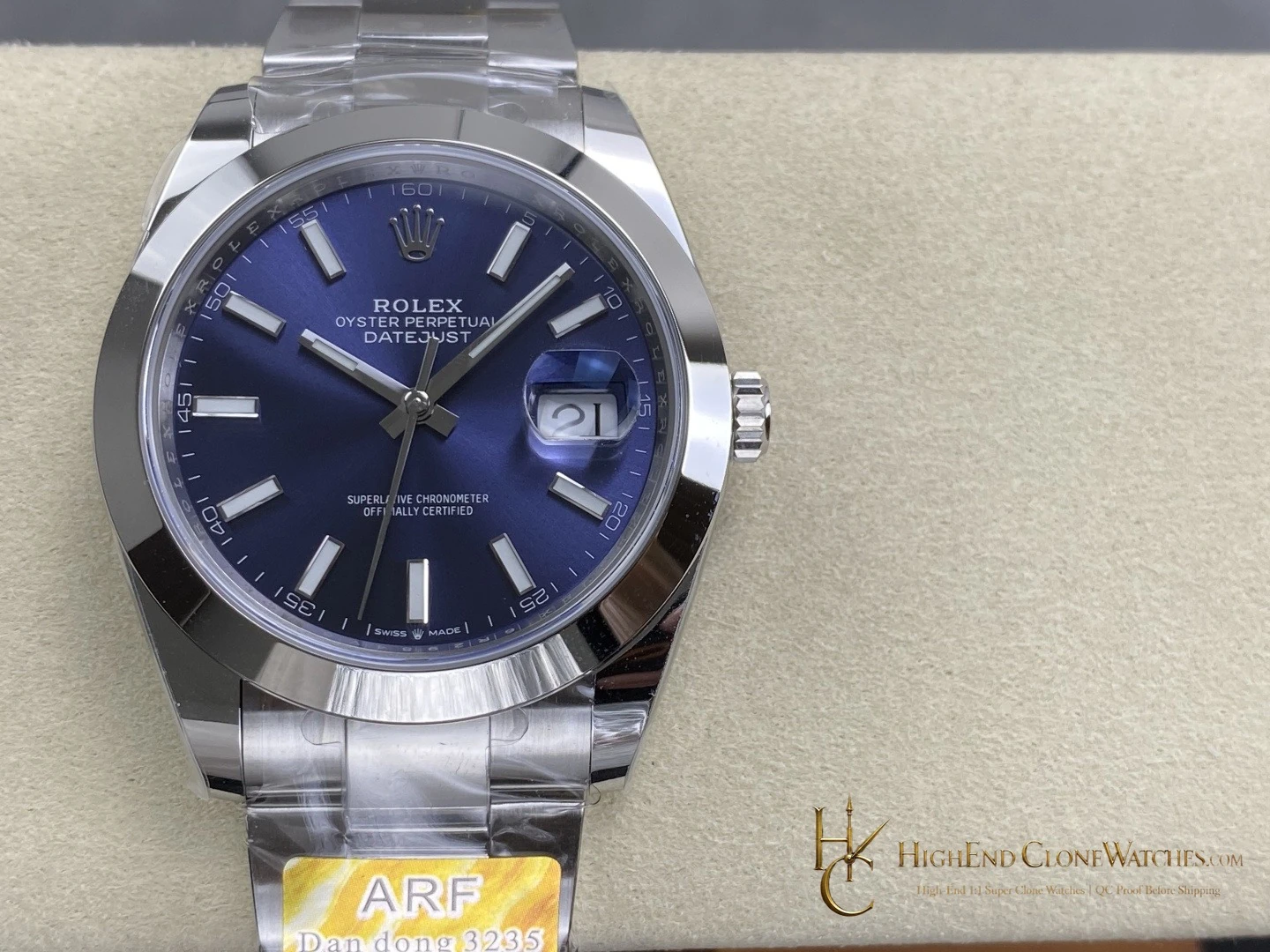
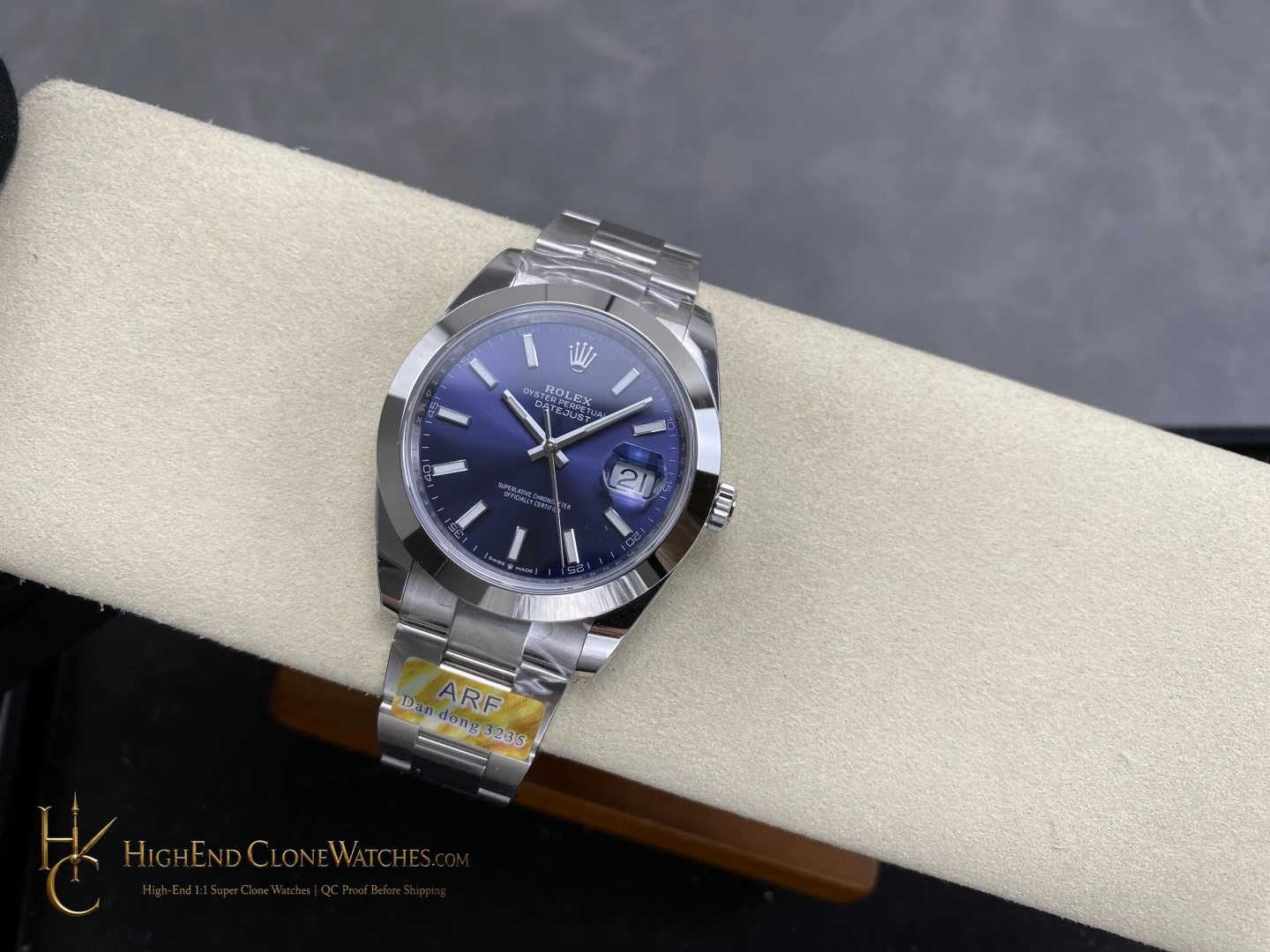
A 36mm blue-dial Datejust on Oyster is the useful alternative. Select it when compact proportion is more important; select this 126300 when the blue dial should read broadly and the Oyster bracelet should keep the look practical and unfussy. A fluted-bezel or Jubilee sibling makes a different, more patterned statement.
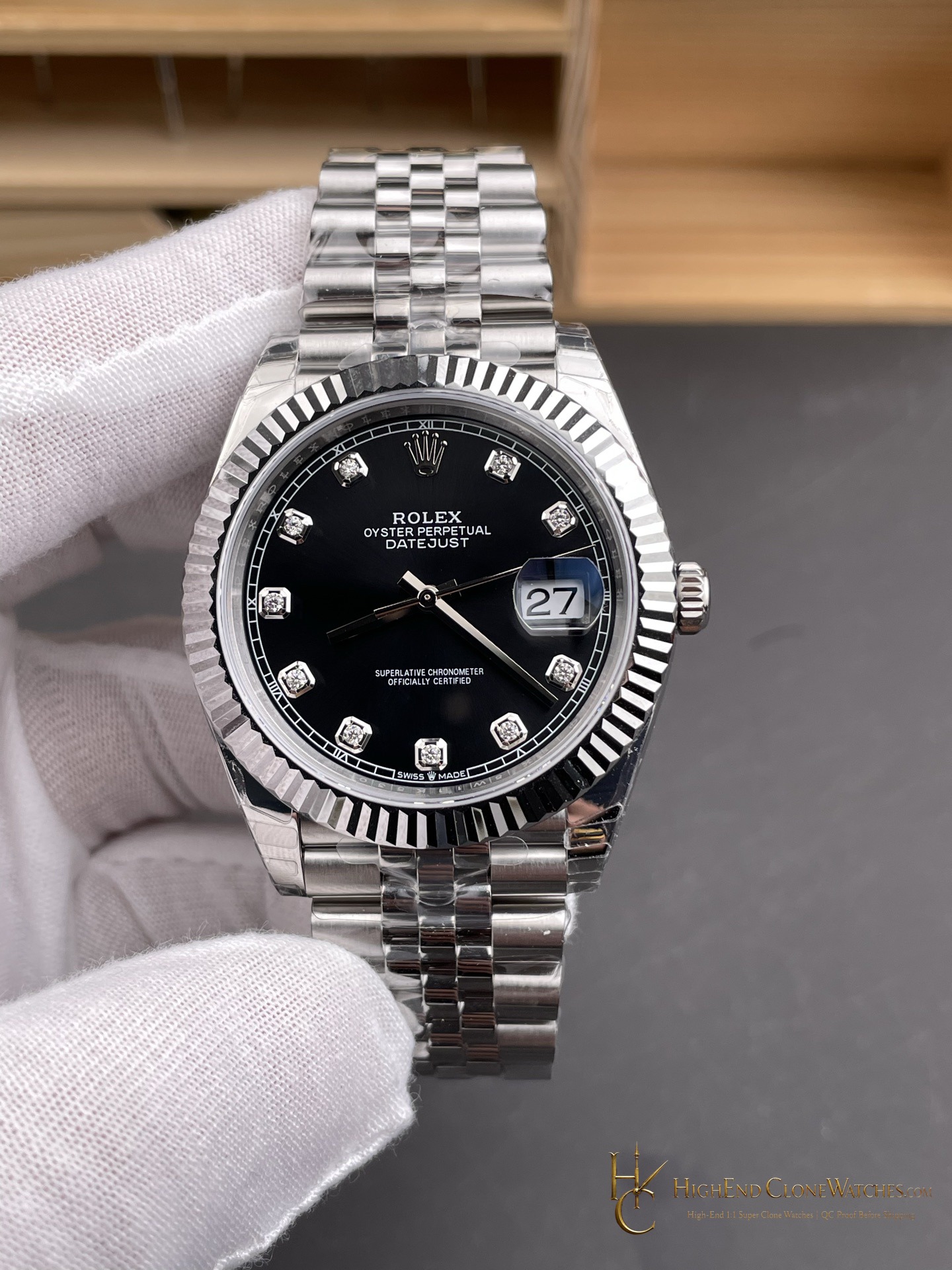
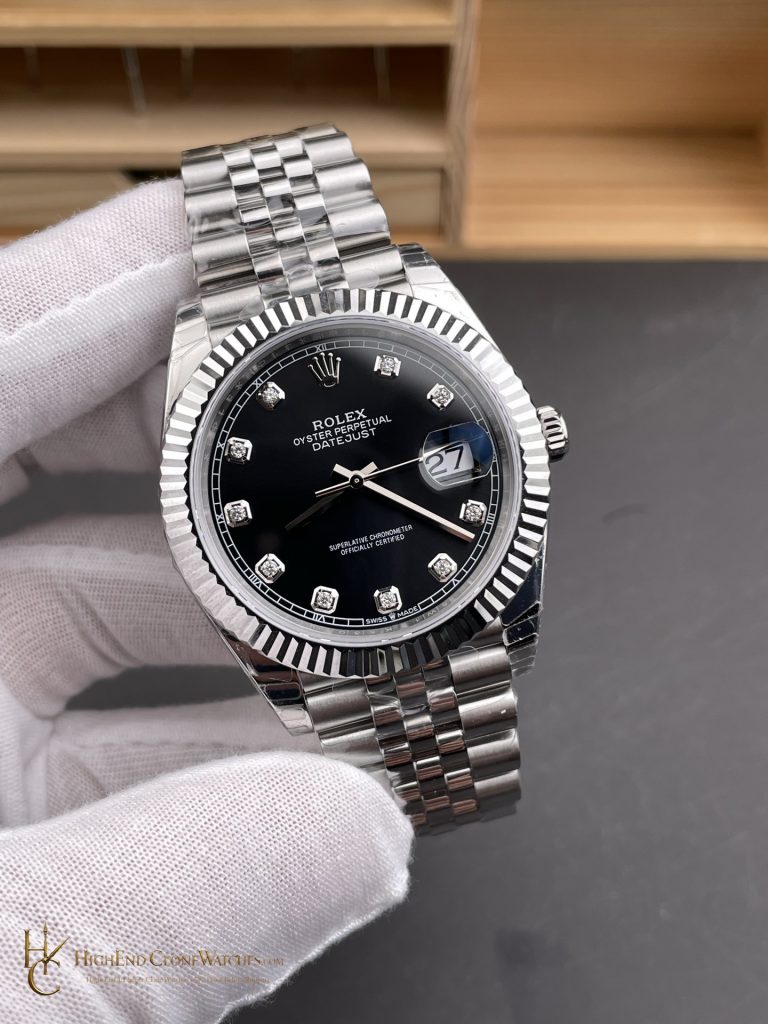
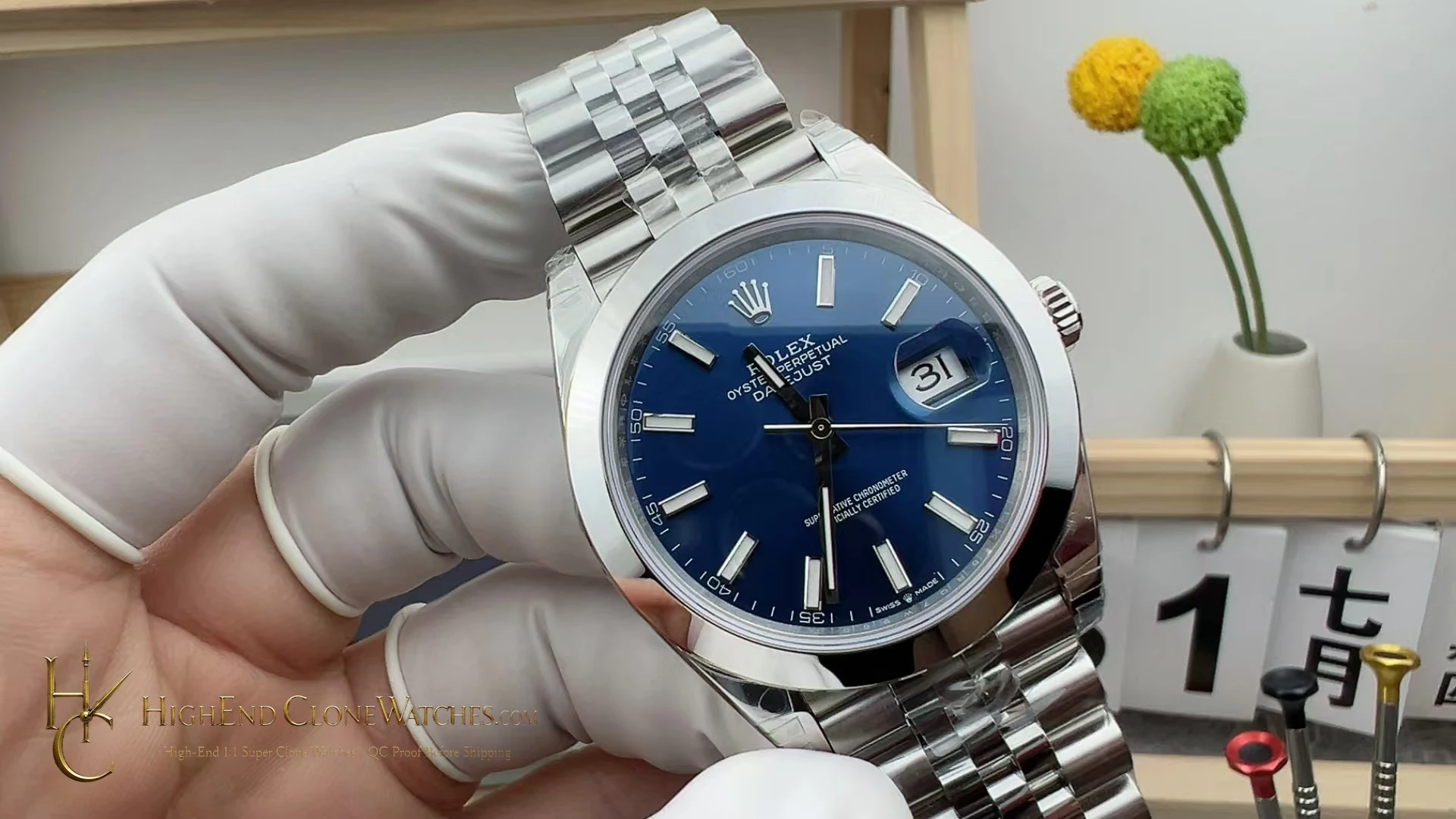
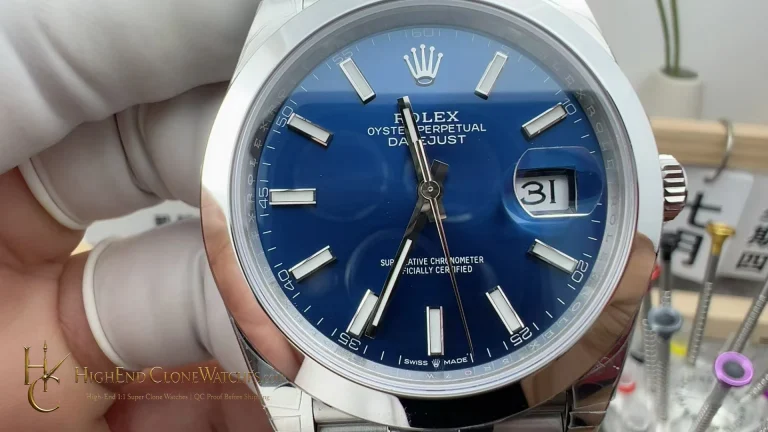
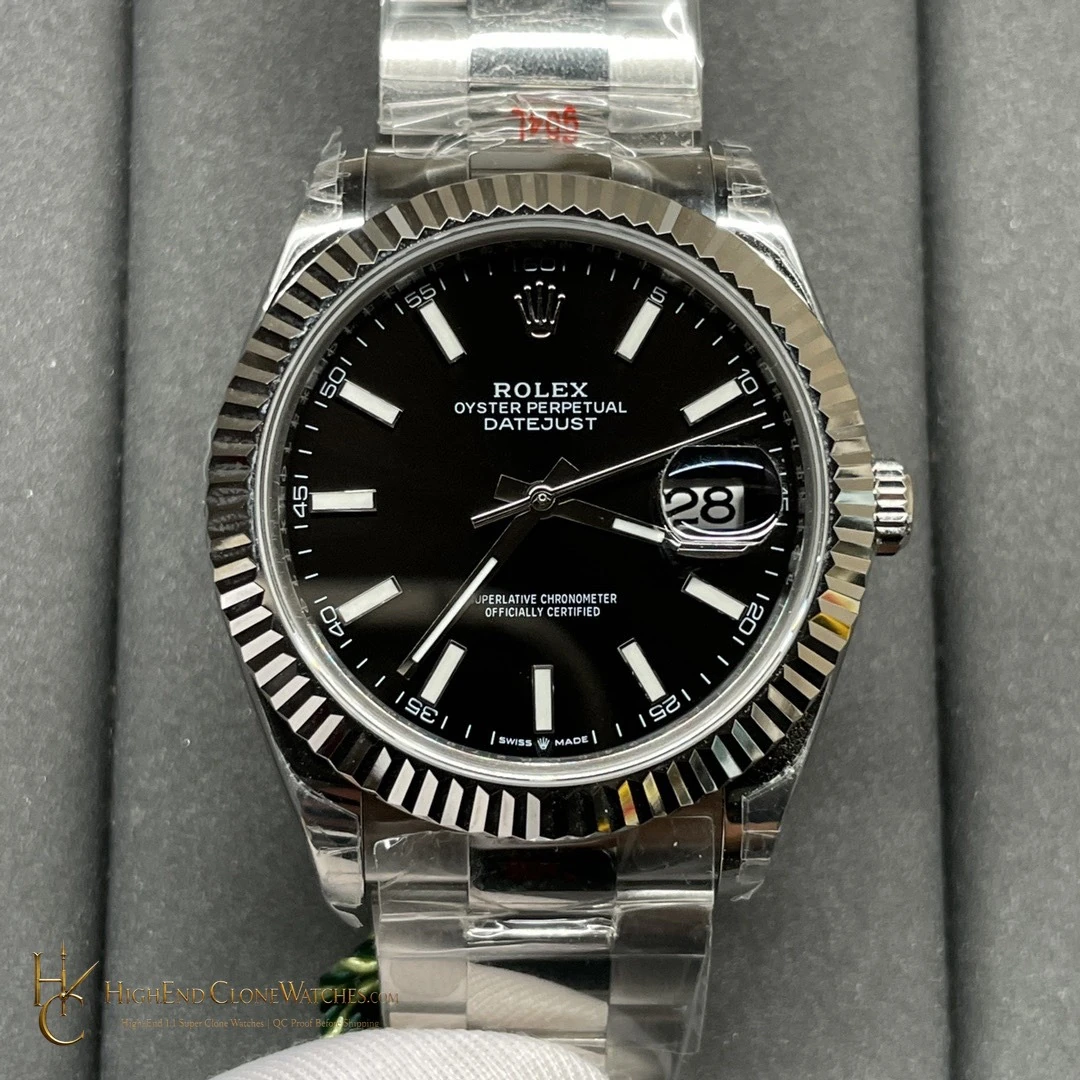
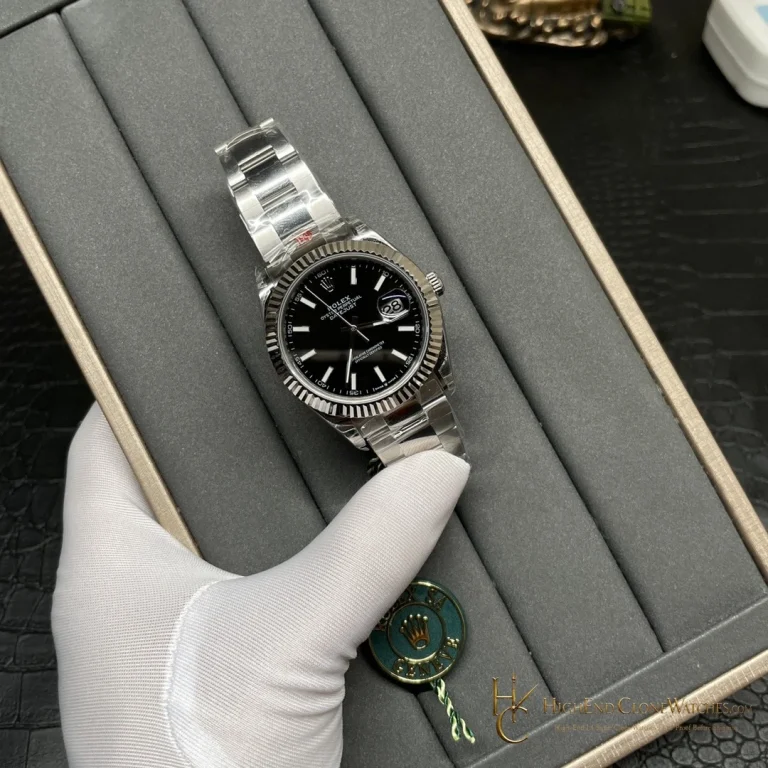
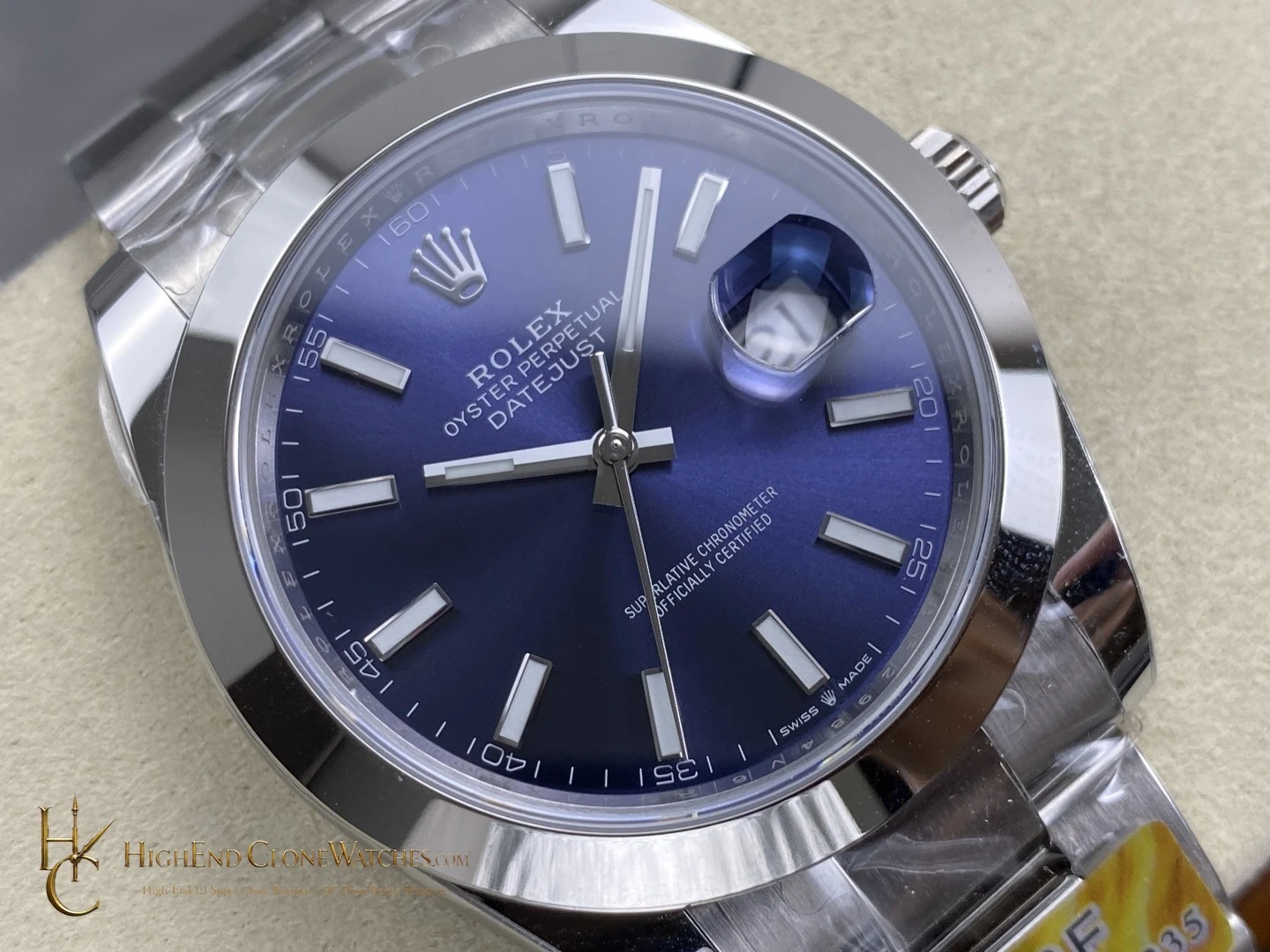
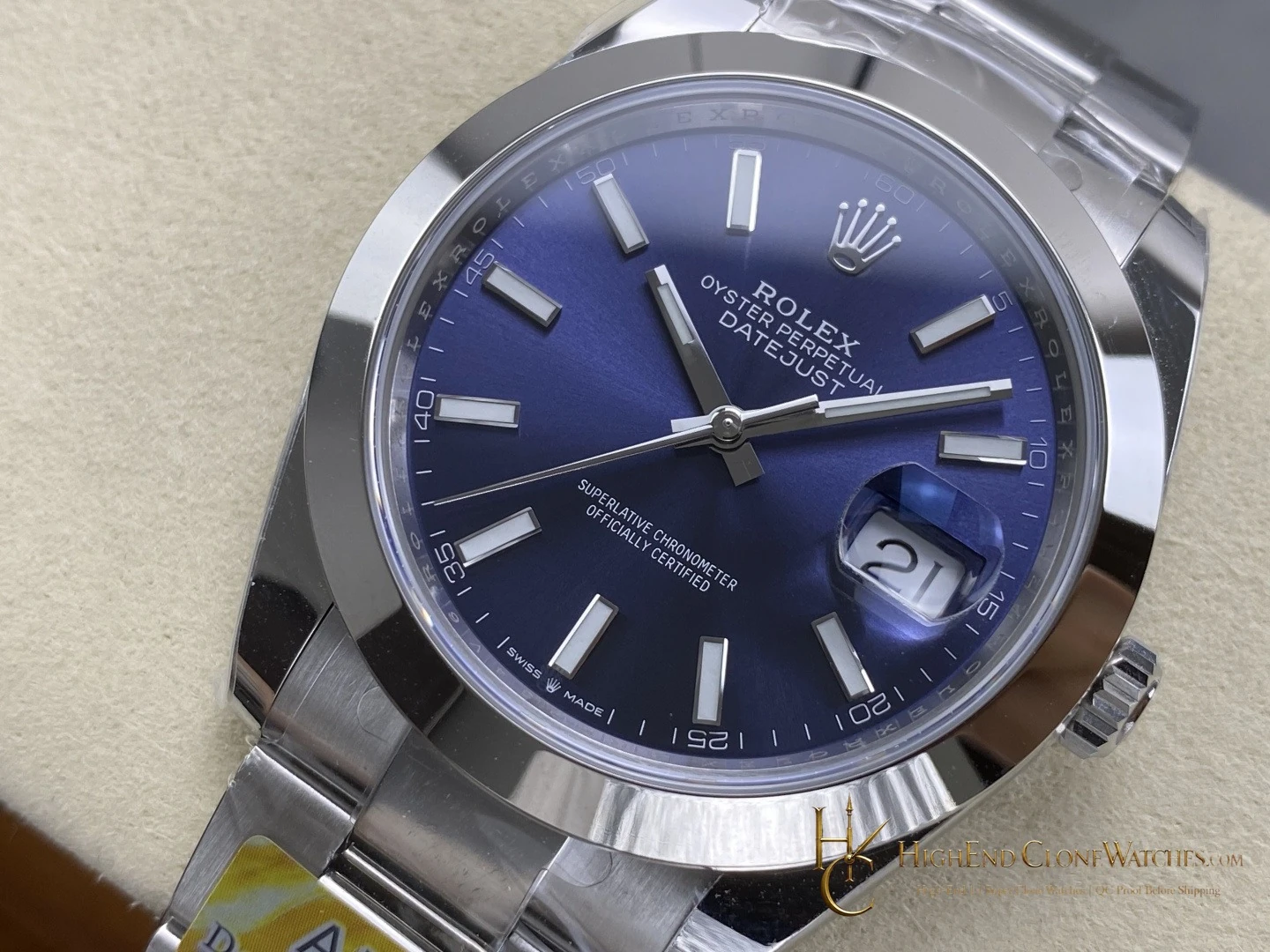
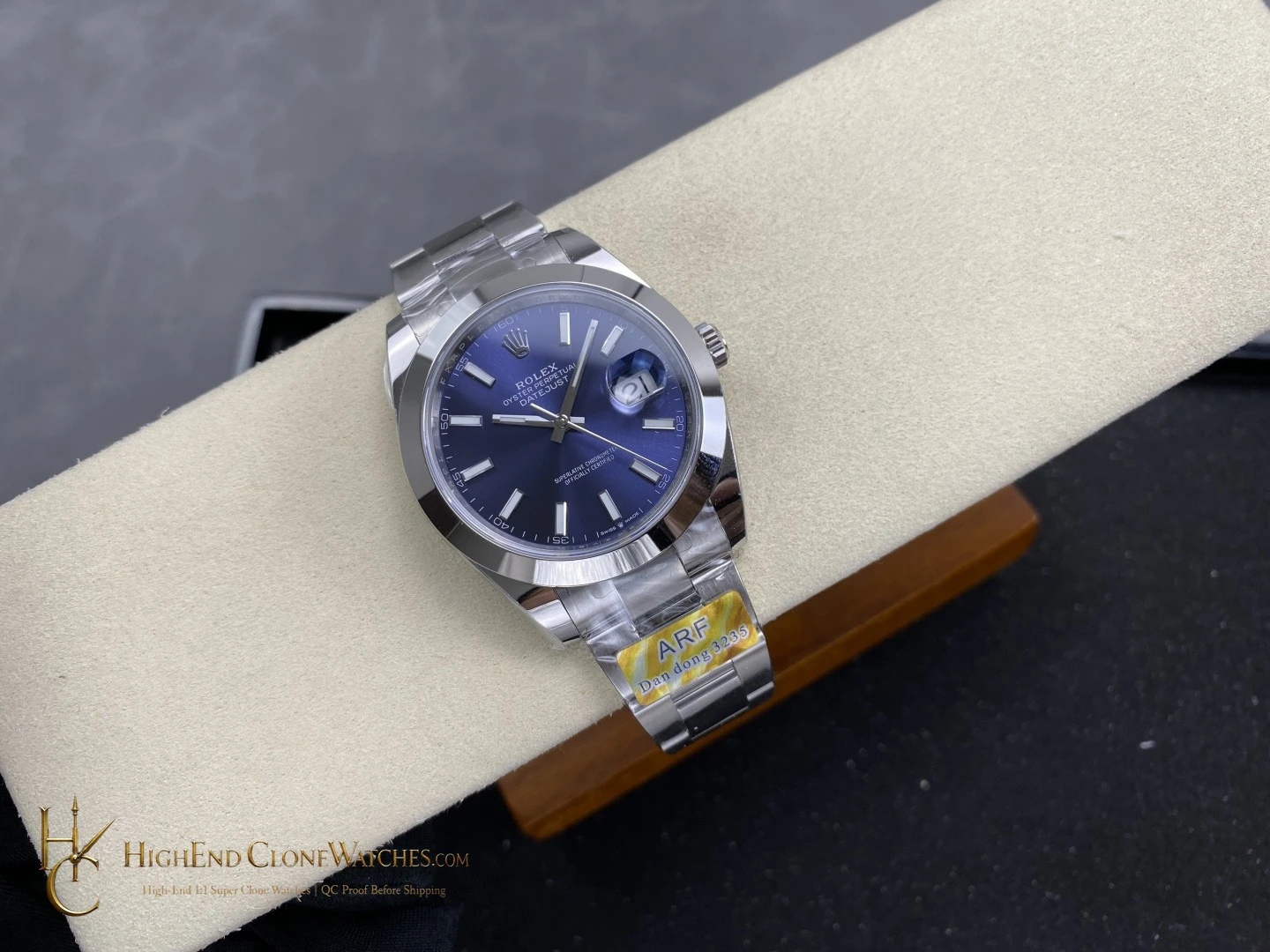
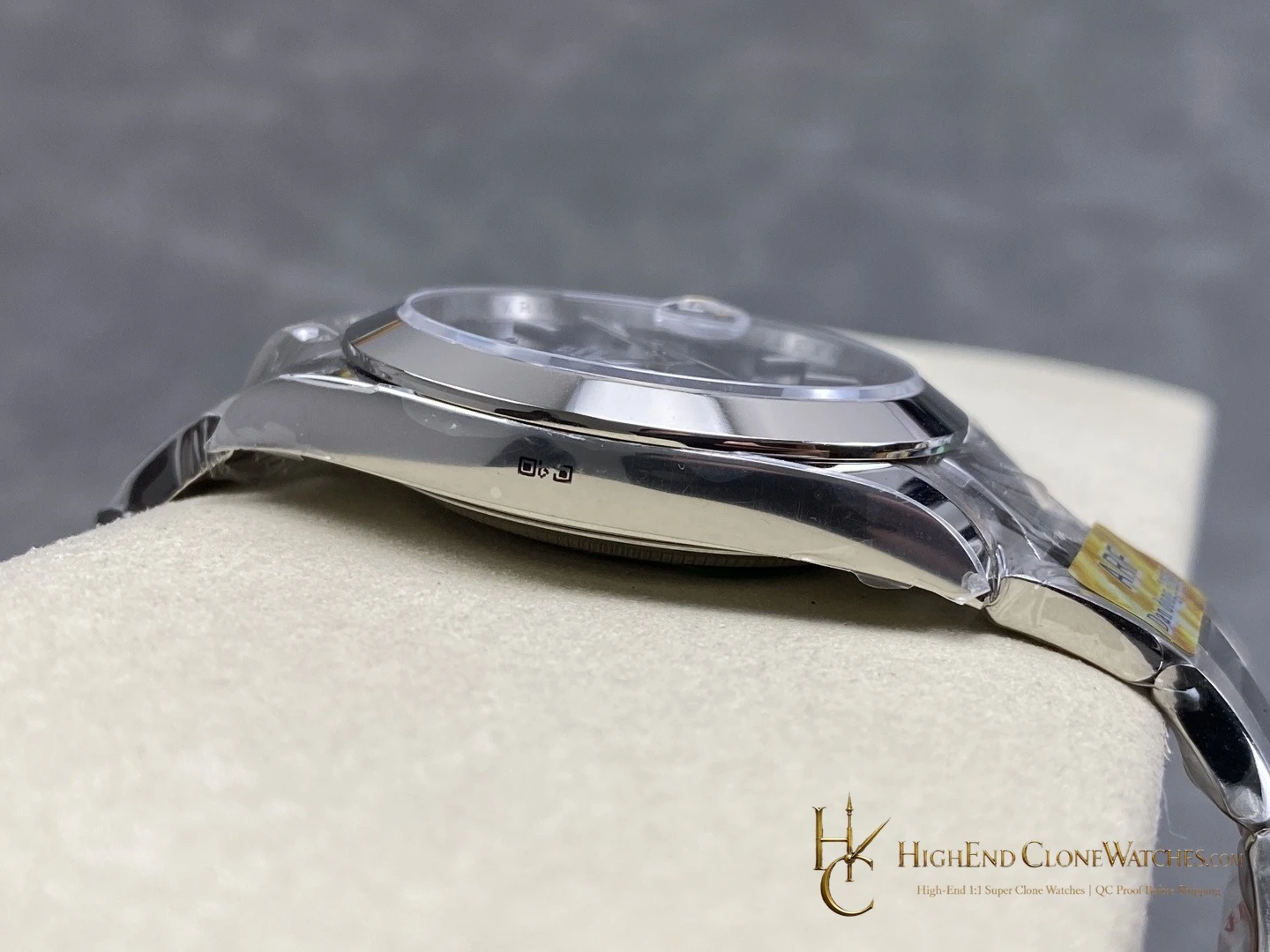
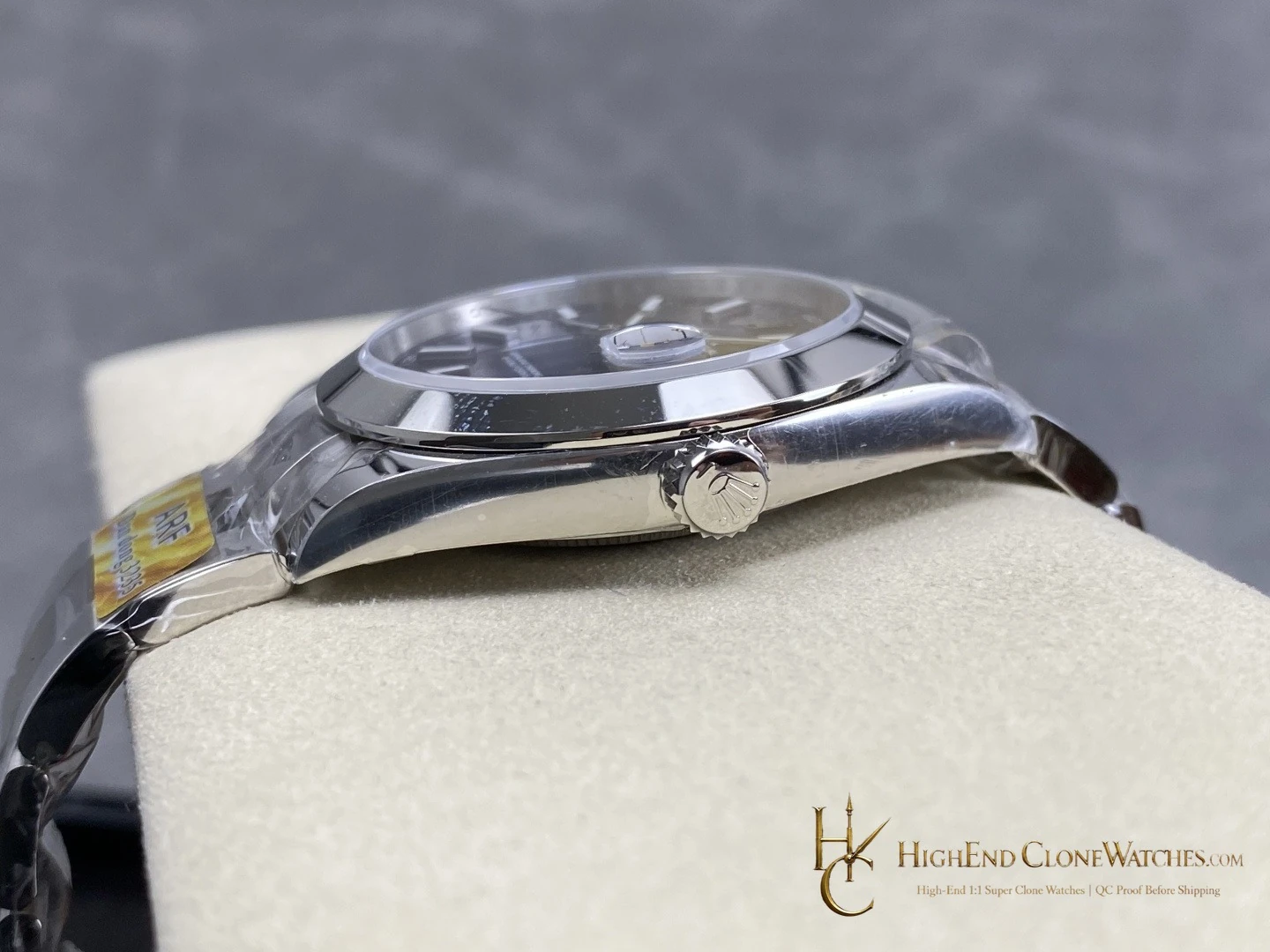
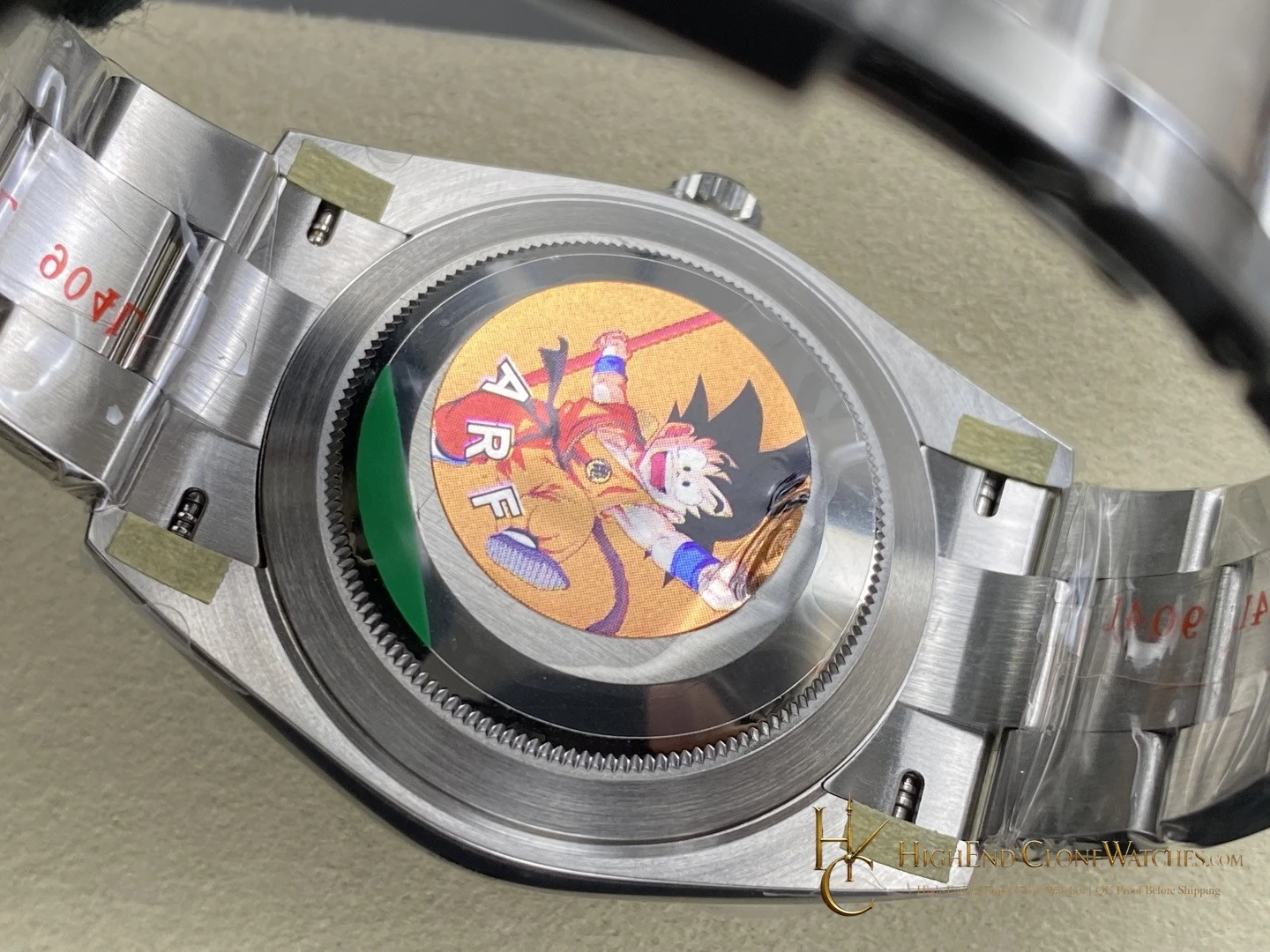
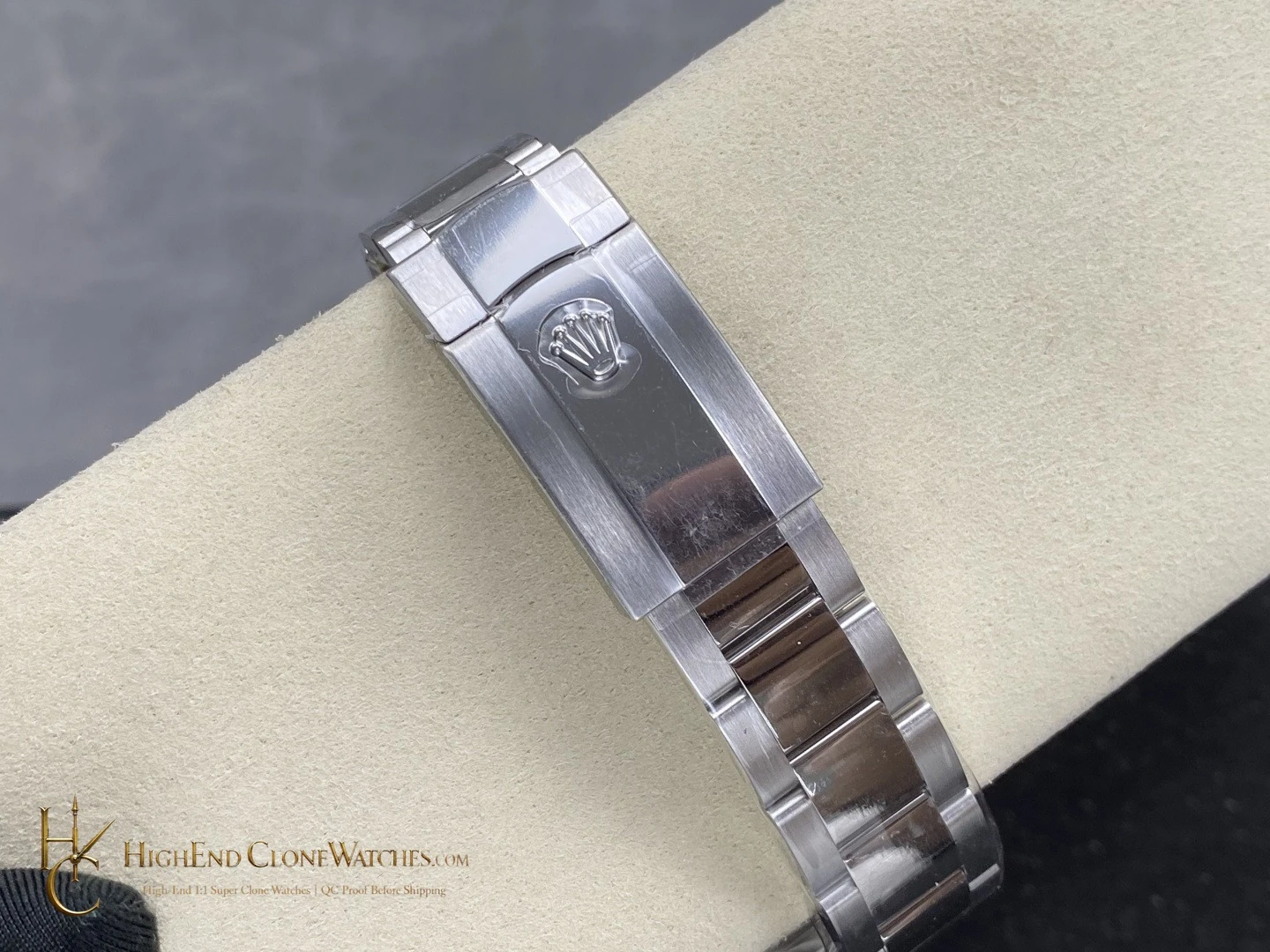
The photographed configuration should remain consistent across the front, angled, bracelet, clasp, and caseback views. That consistency helps a buyer judge the exact reference and variant rather than relying on a generic Datejust impression. For this watch, the combination of blue dial with smooth stainless steel bezel and Oyster bracelet is the visual identity to compare across those views.
A buyer wants blue color and a larger Datejust footprint without the extra visual texture of a fluted bezel or Jubilee bracelet. The stated case and bracelet details should be considered together when judging fit: the dial sets the tone, the bezel frames it, and the bracelet determines how formal or direct the watch feels on the wrist. A useful approval set therefore includes both a level front image and a natural angled view.
Check blue dial tone and alignment, Cyclops/date centering, smooth bezel edge, case profile, Oyster end links, Easylink/folding clasp action, and caseback. These checks are most useful when the same watch is shown consistently before dispatch, with the dial, case edges, bracelet connection, closure, and caseback all visible enough for a confident configuration check.