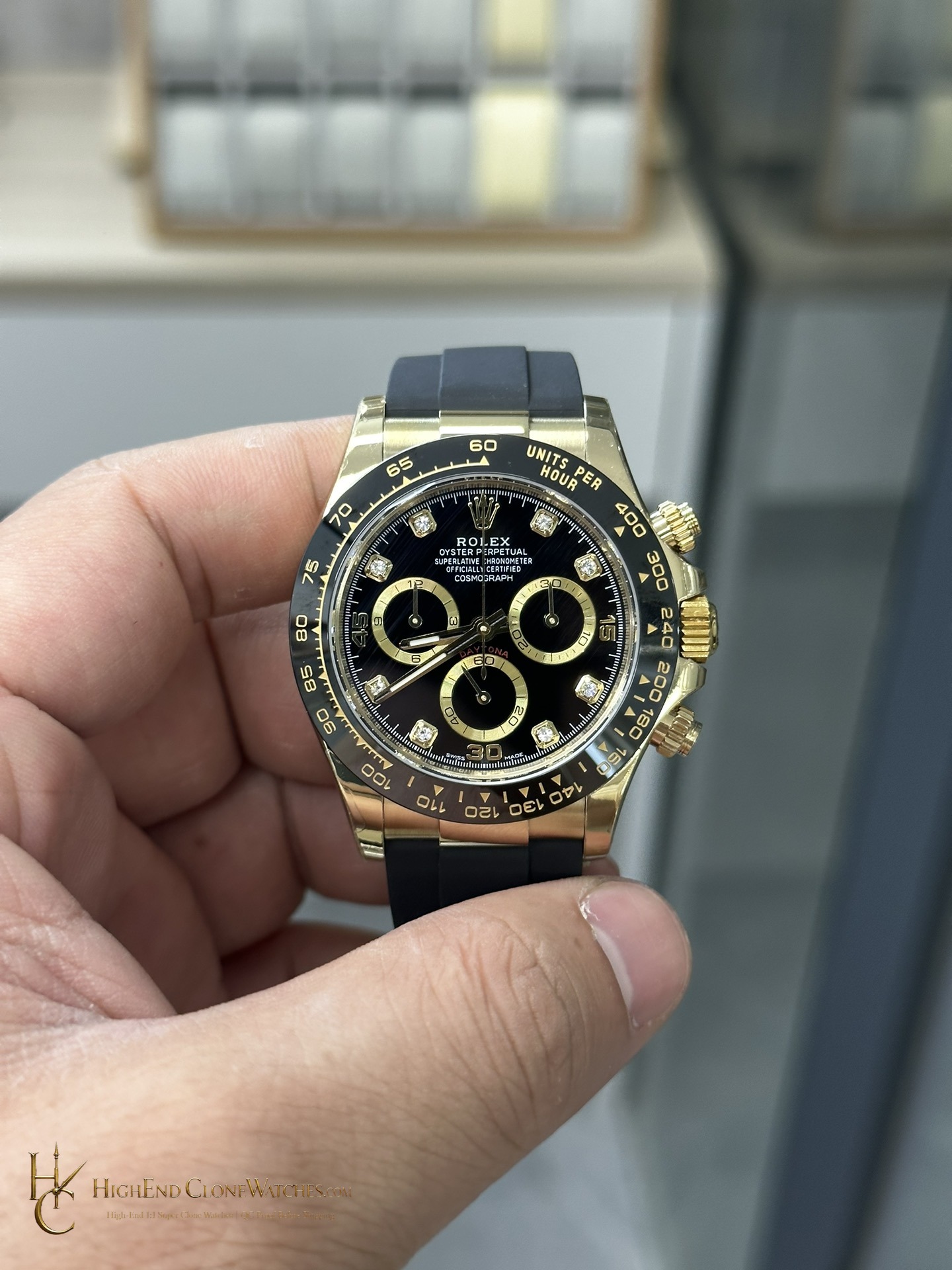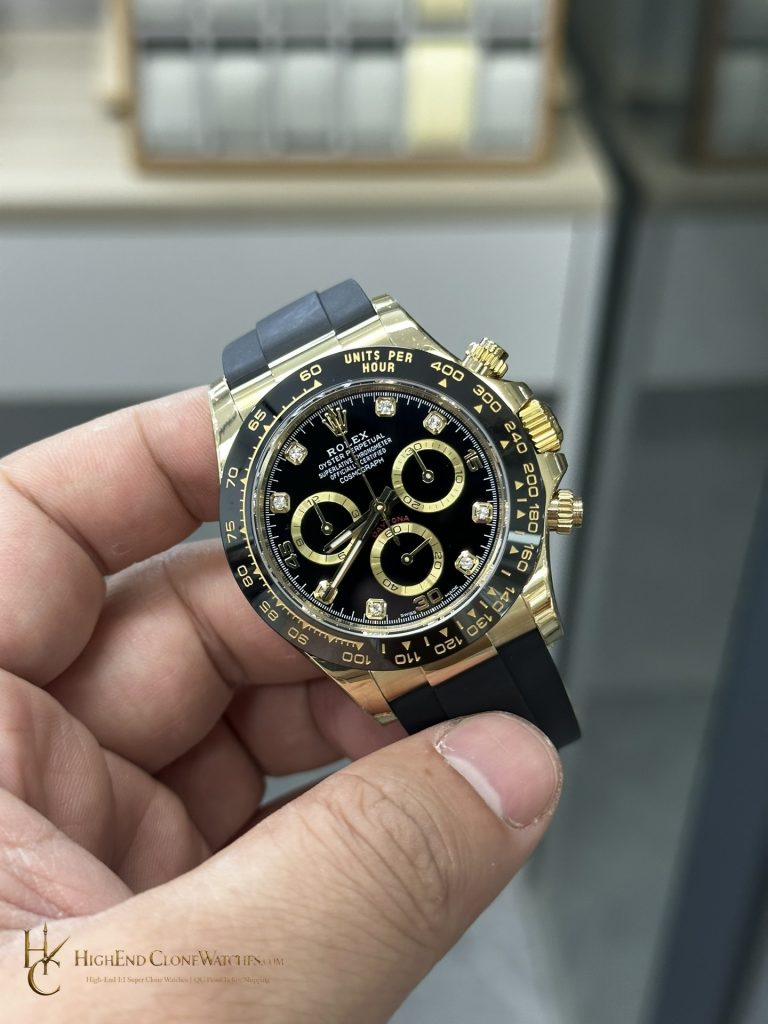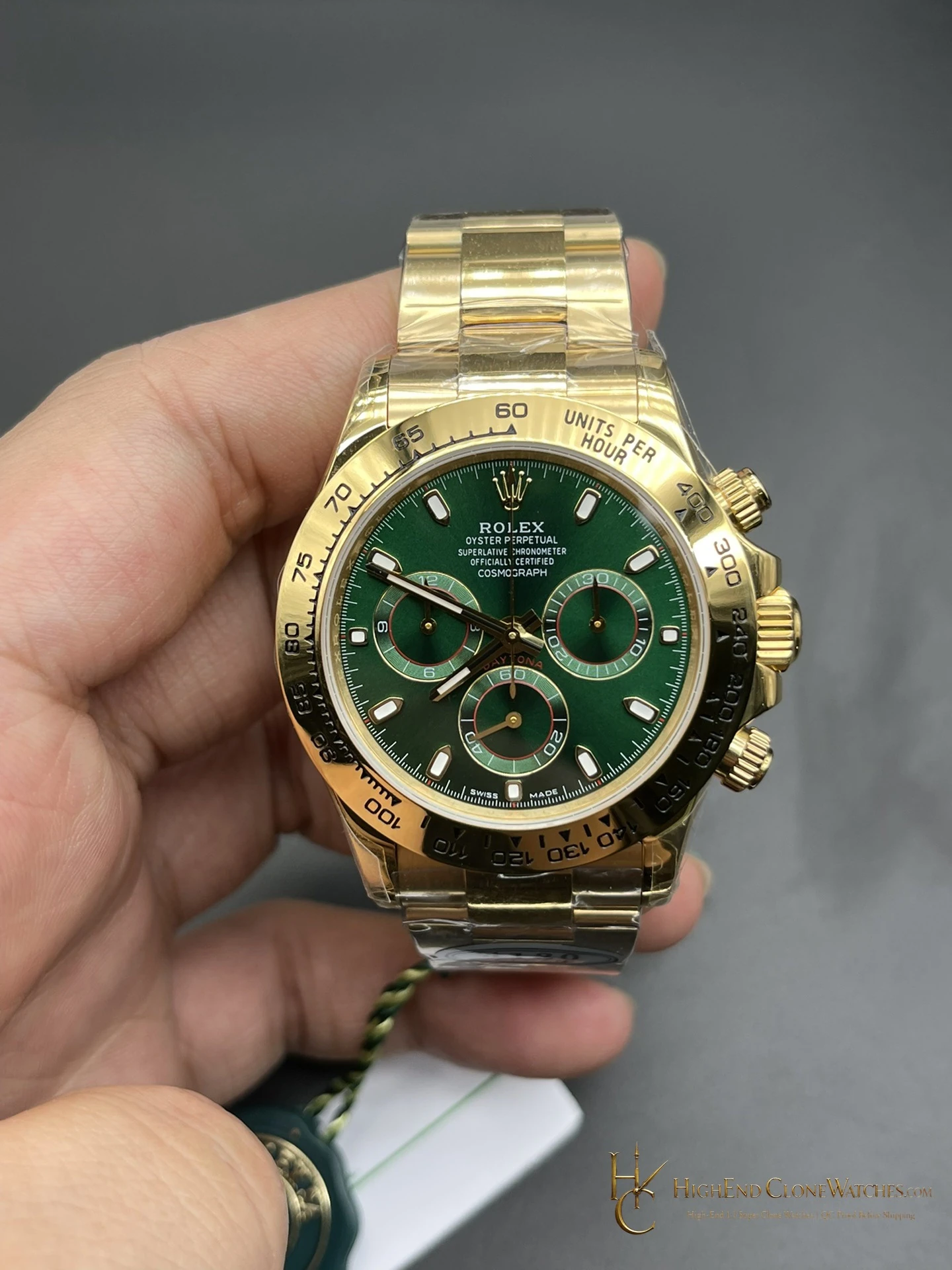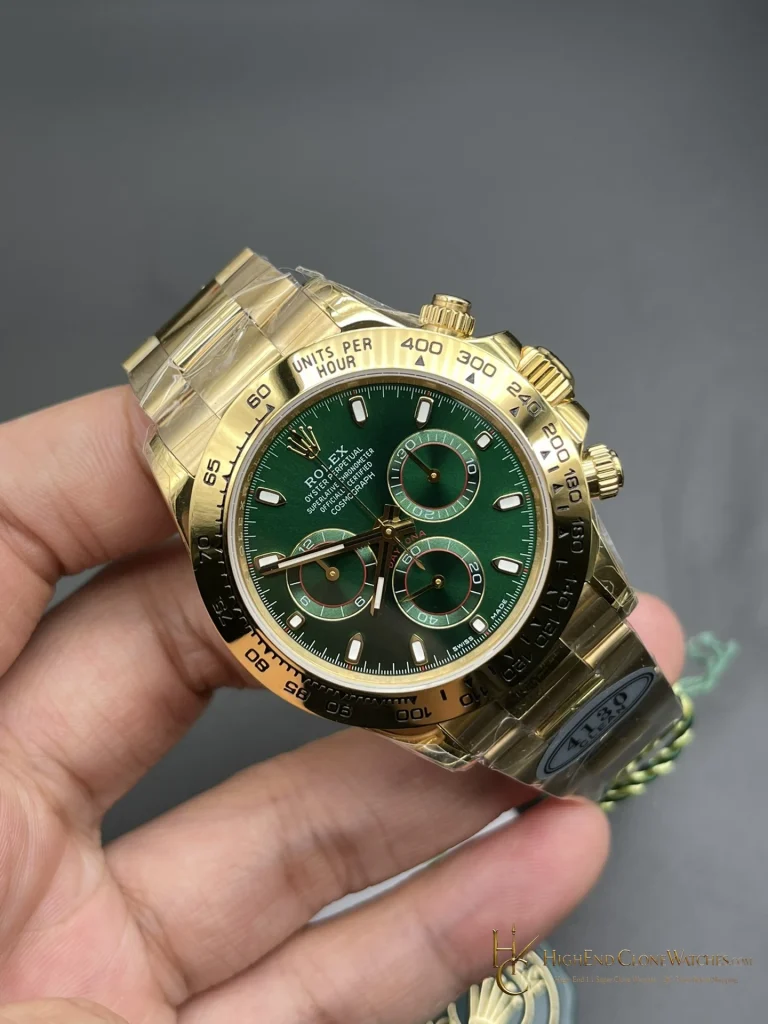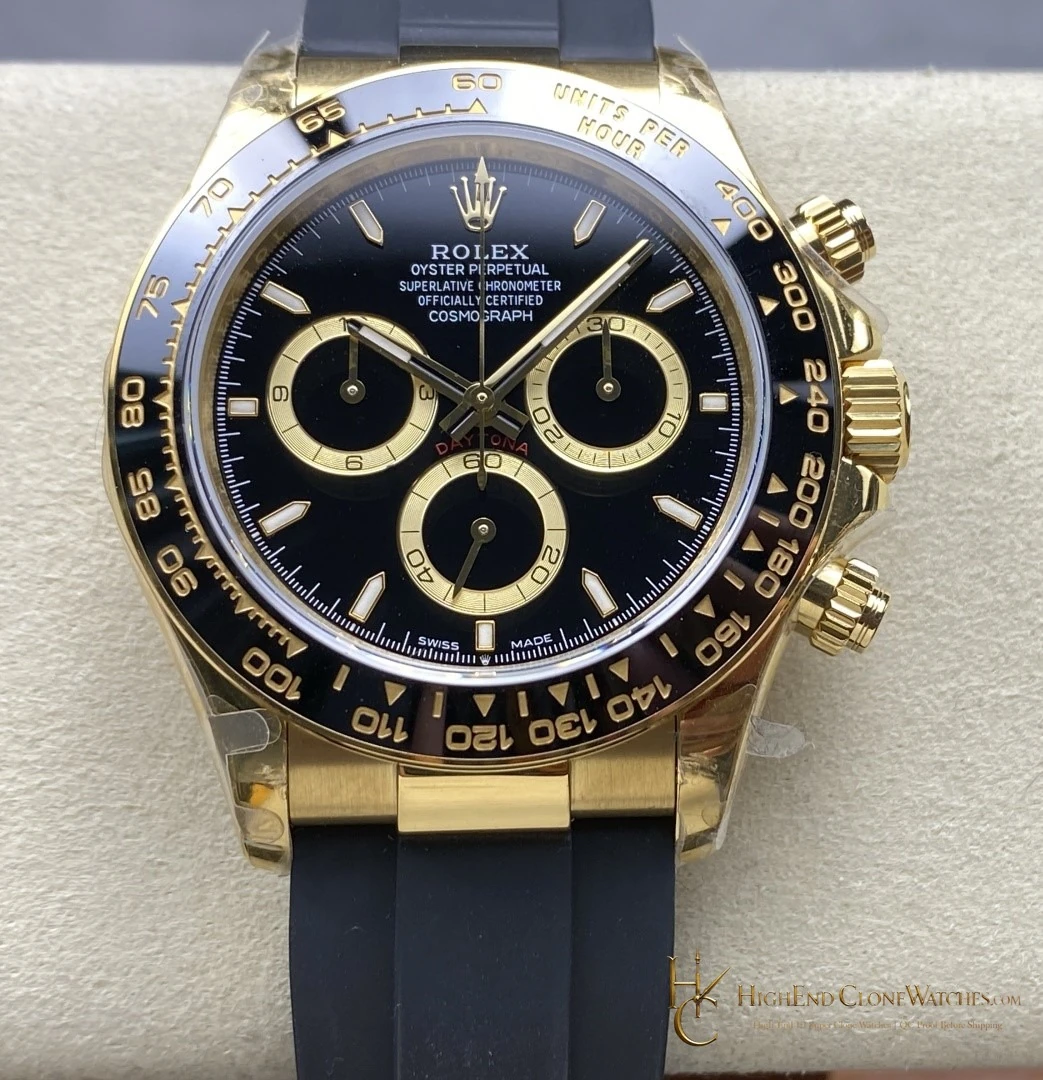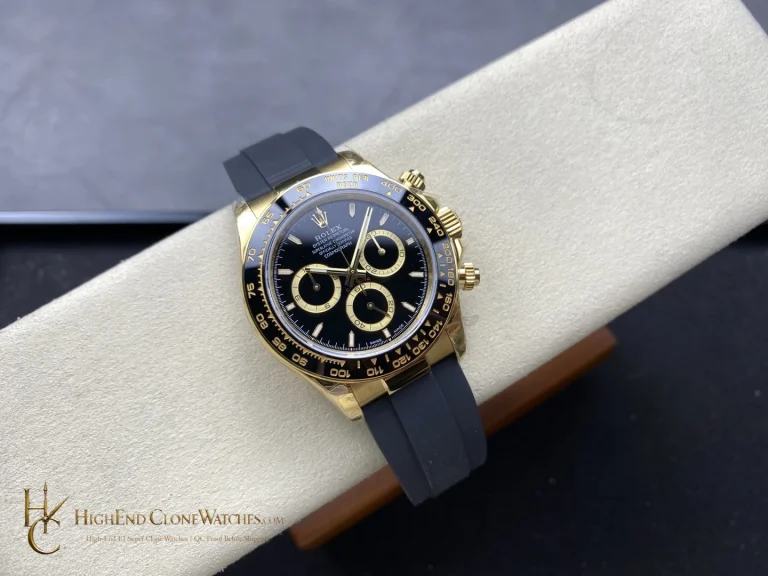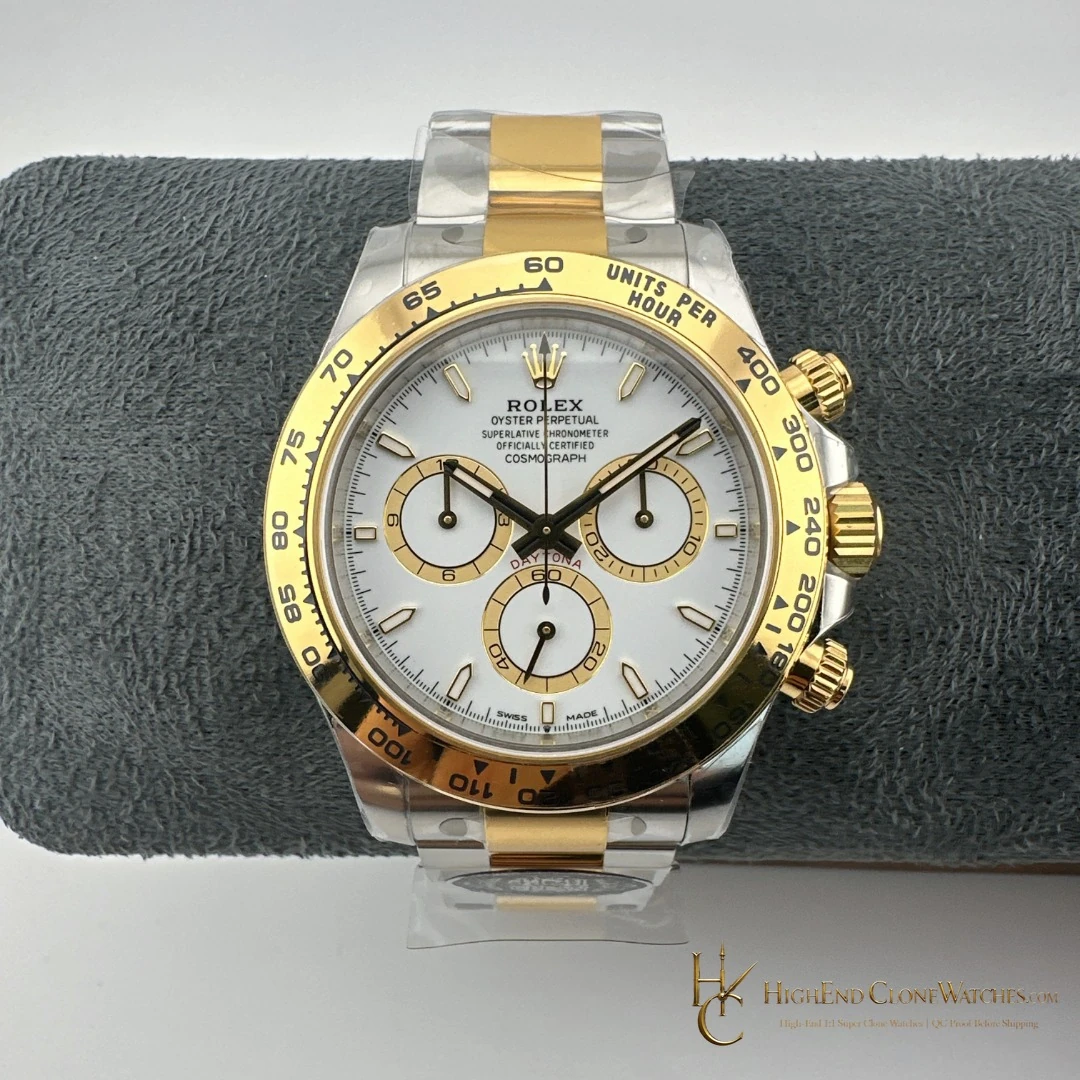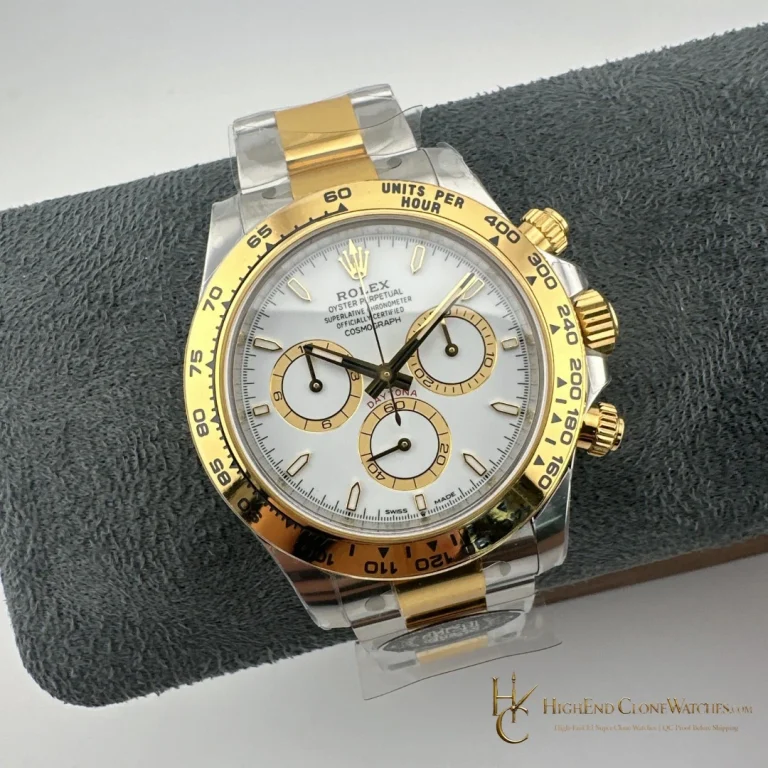
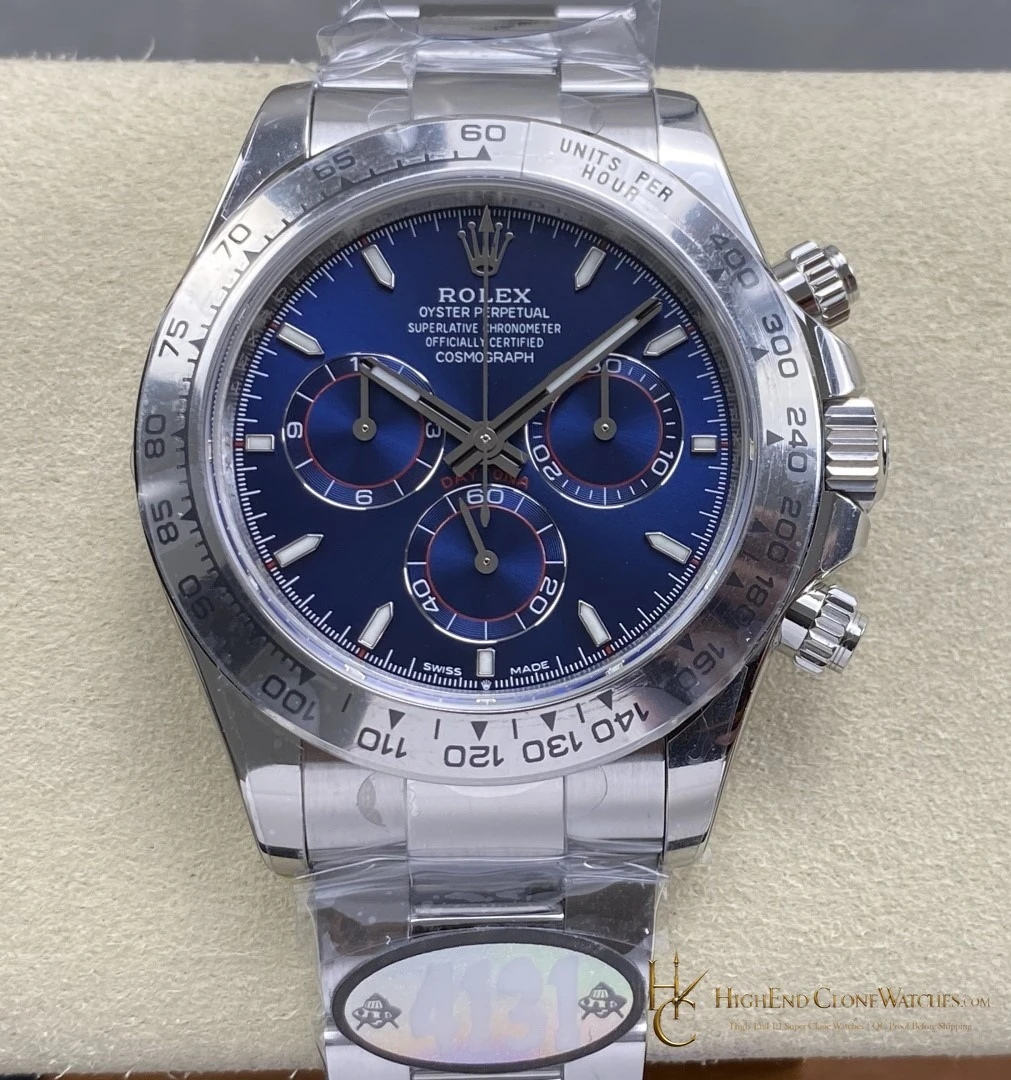
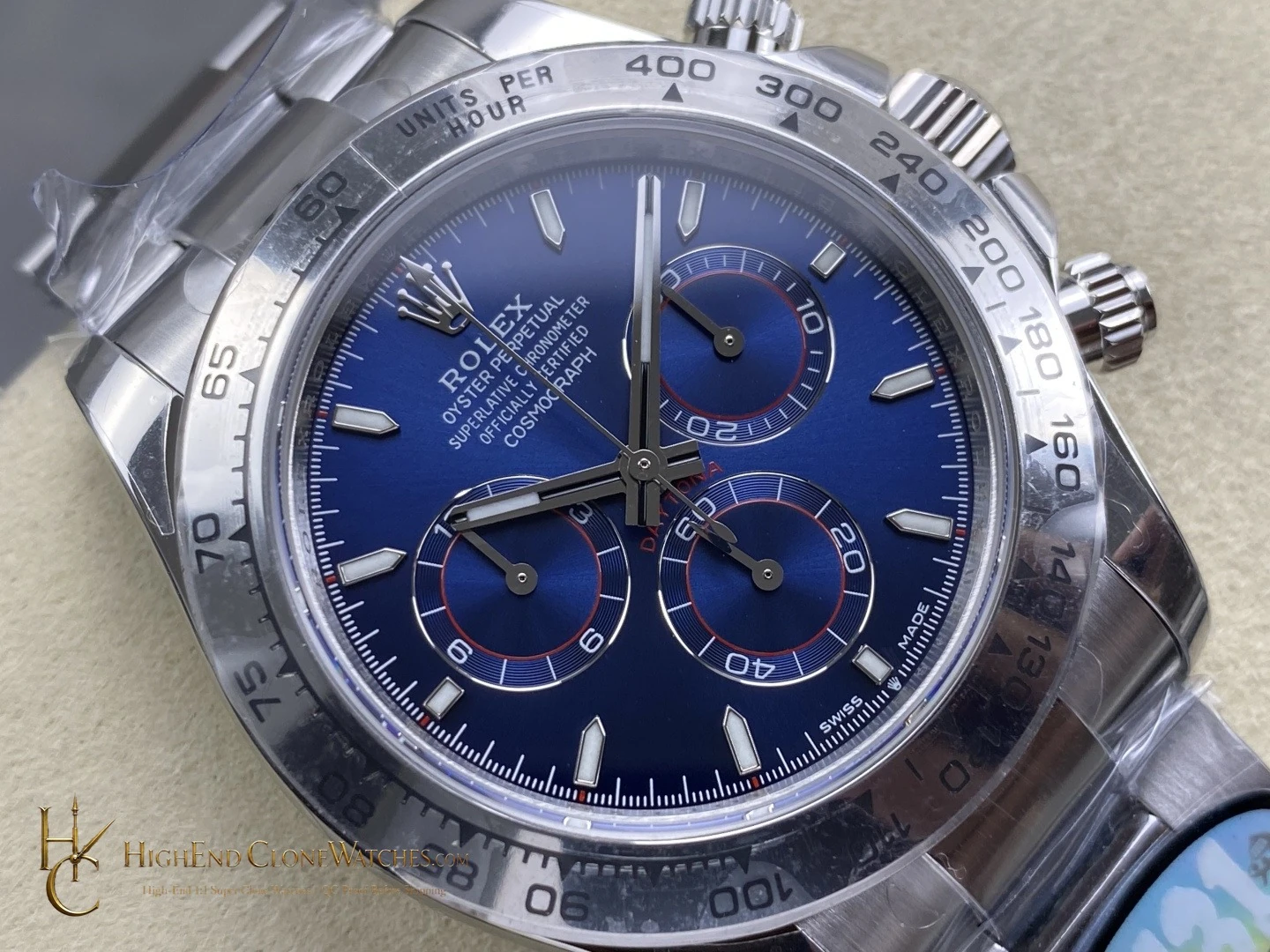
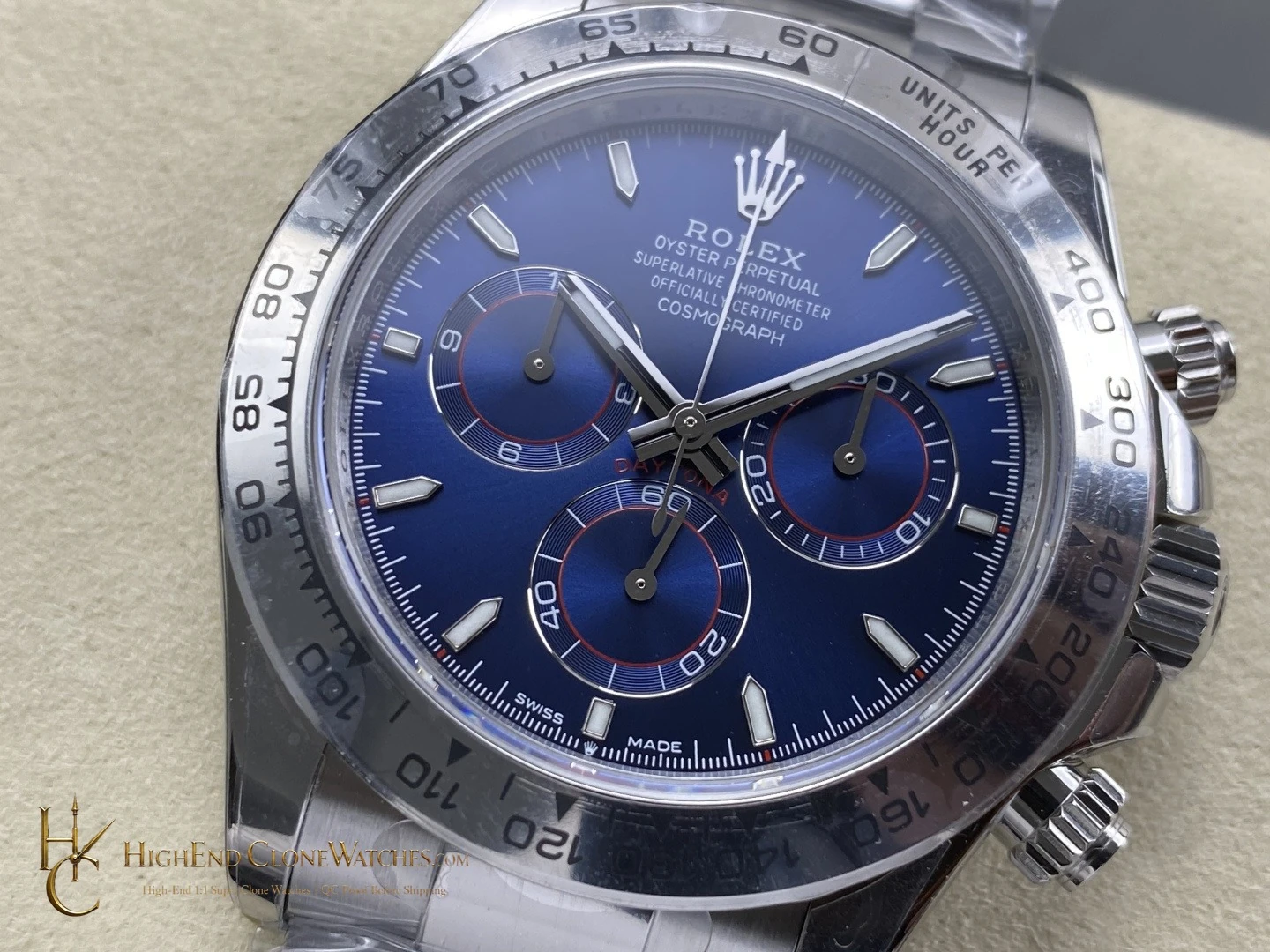
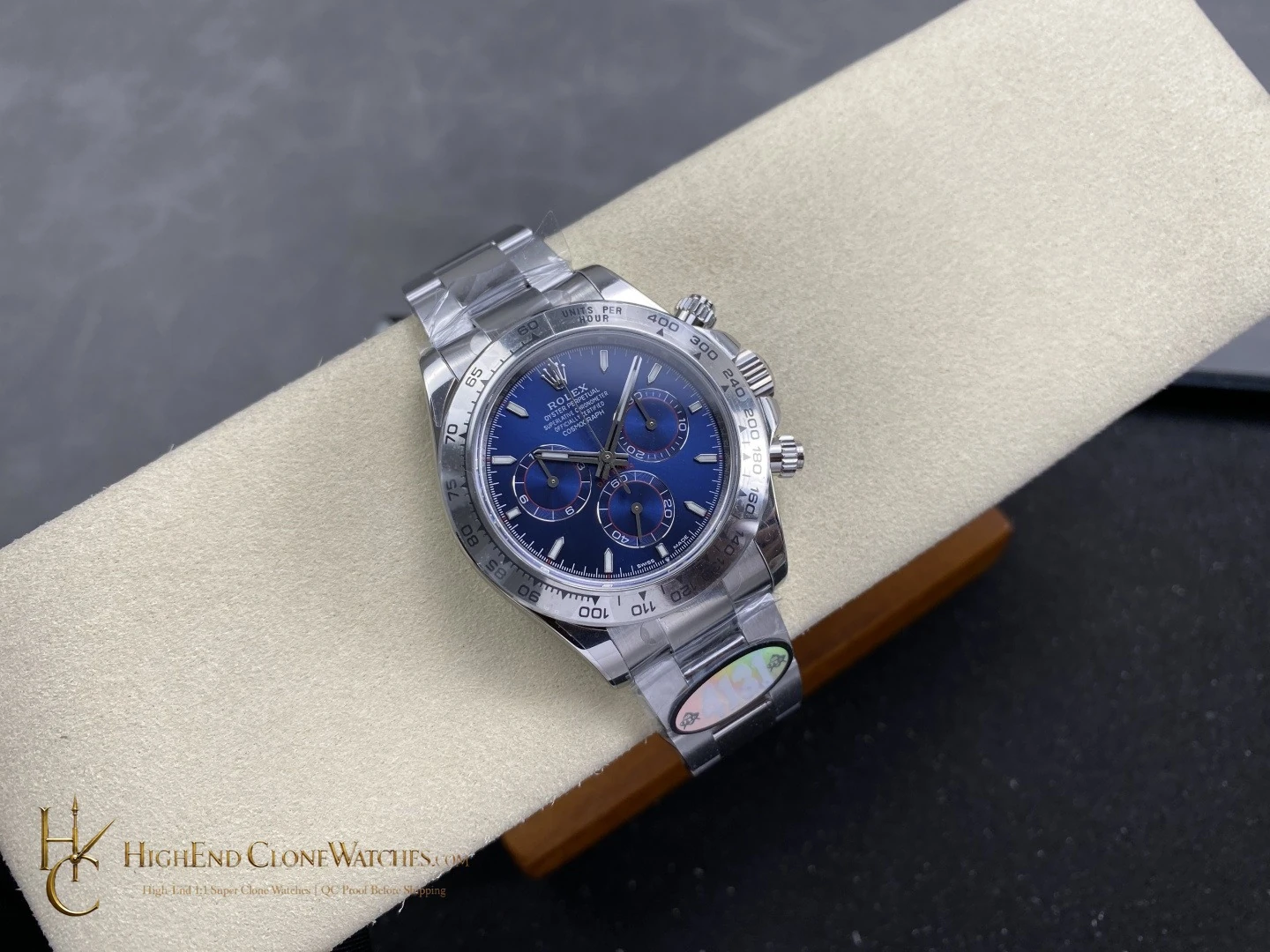
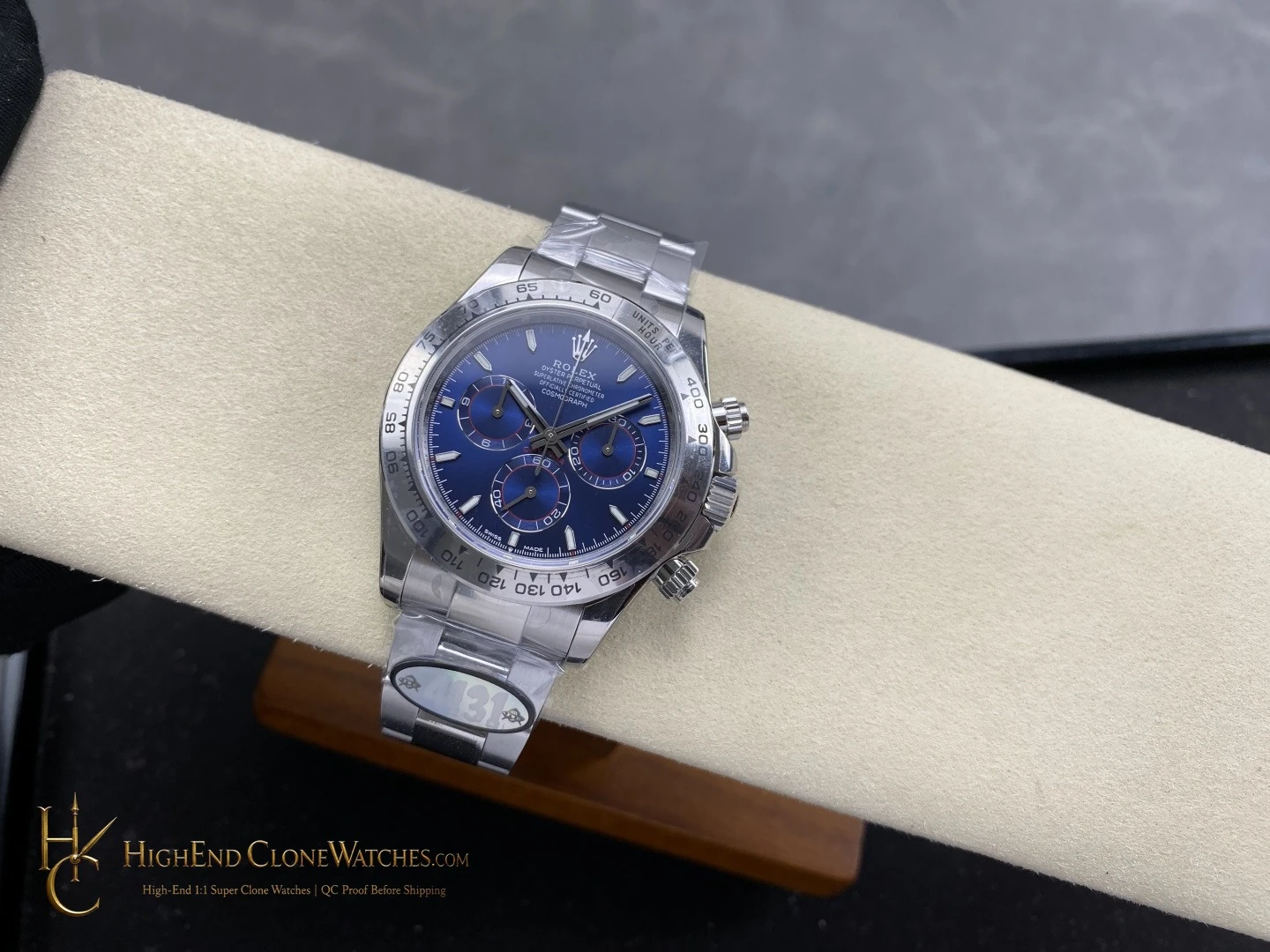
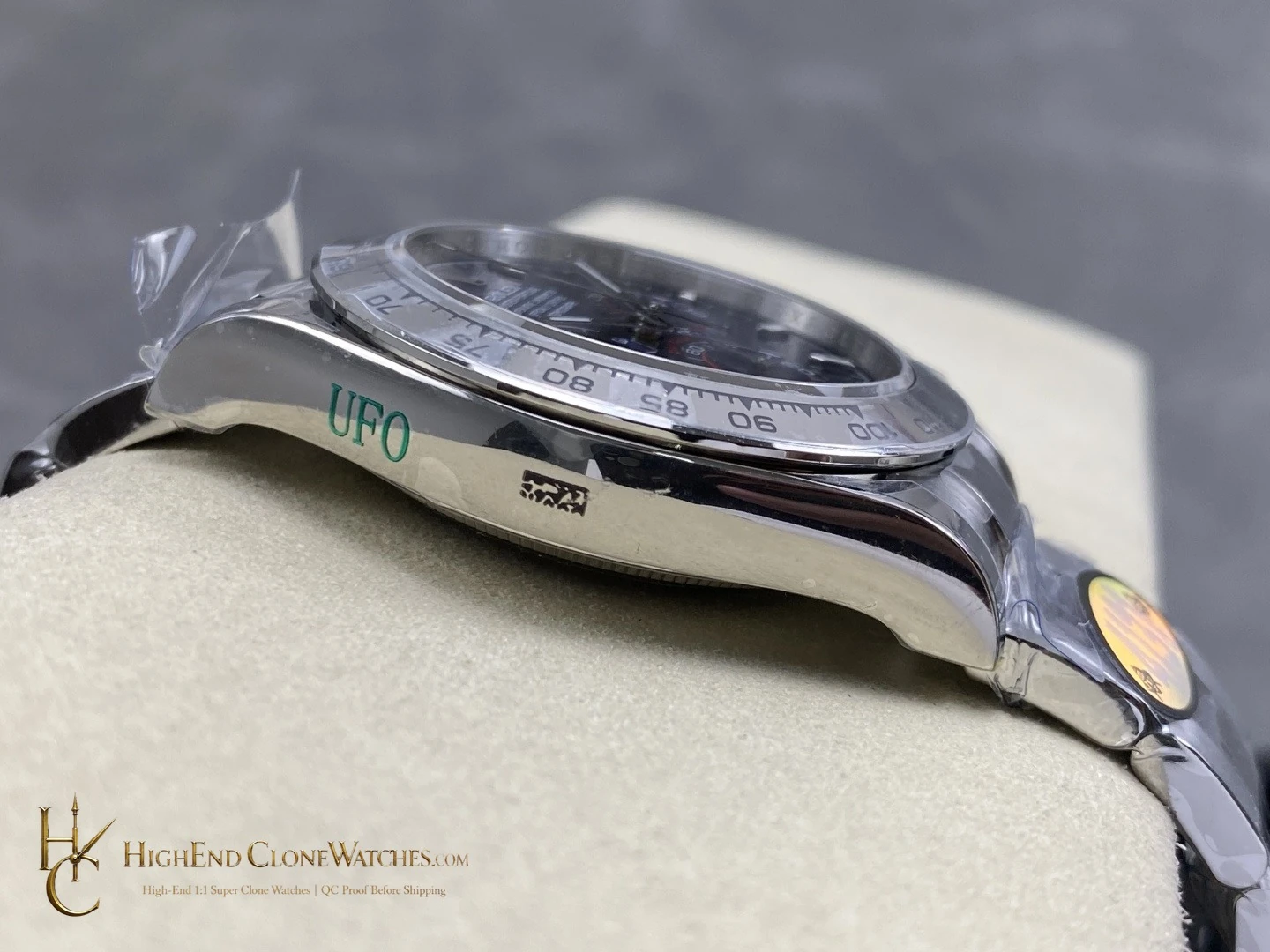
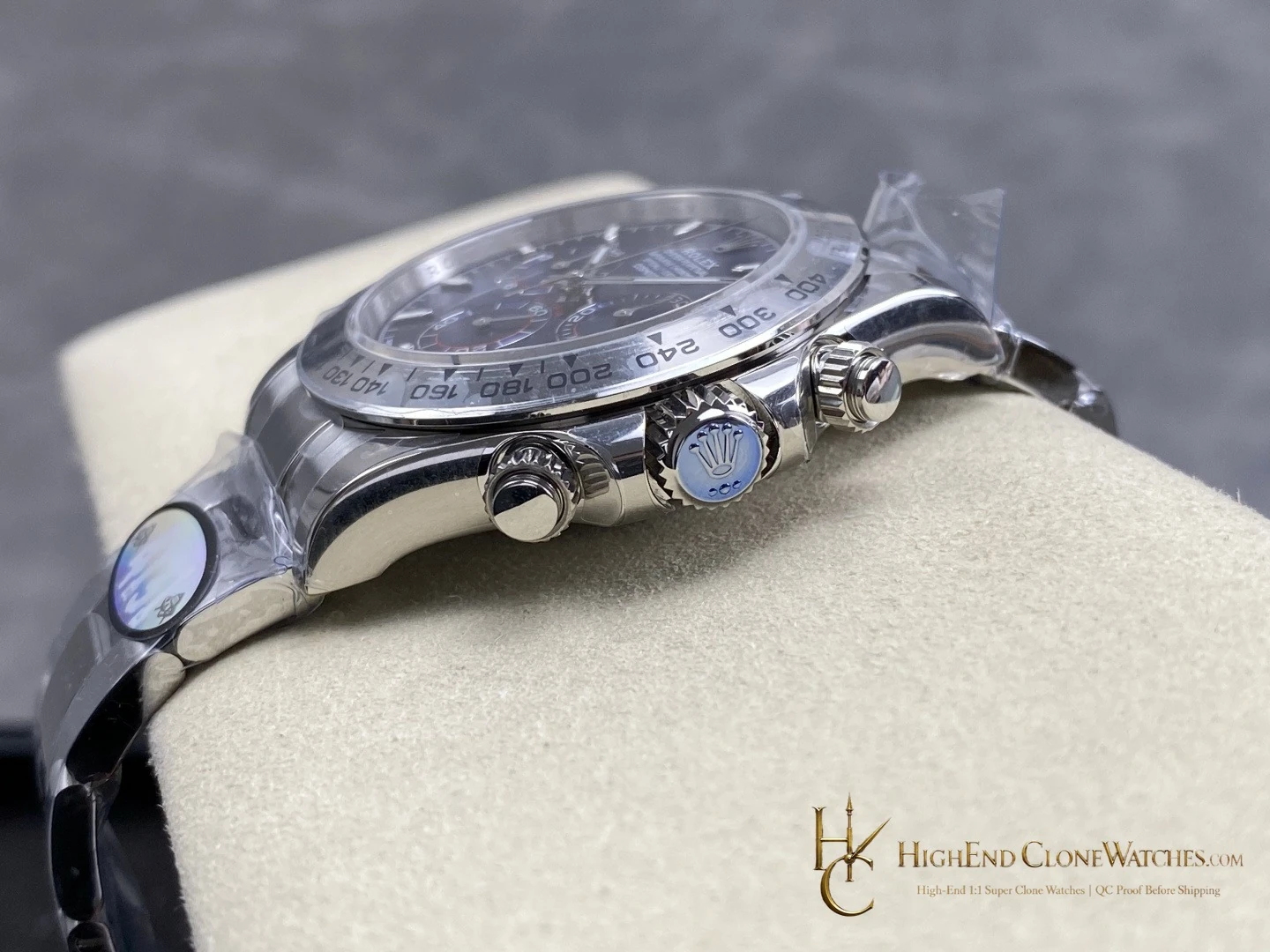
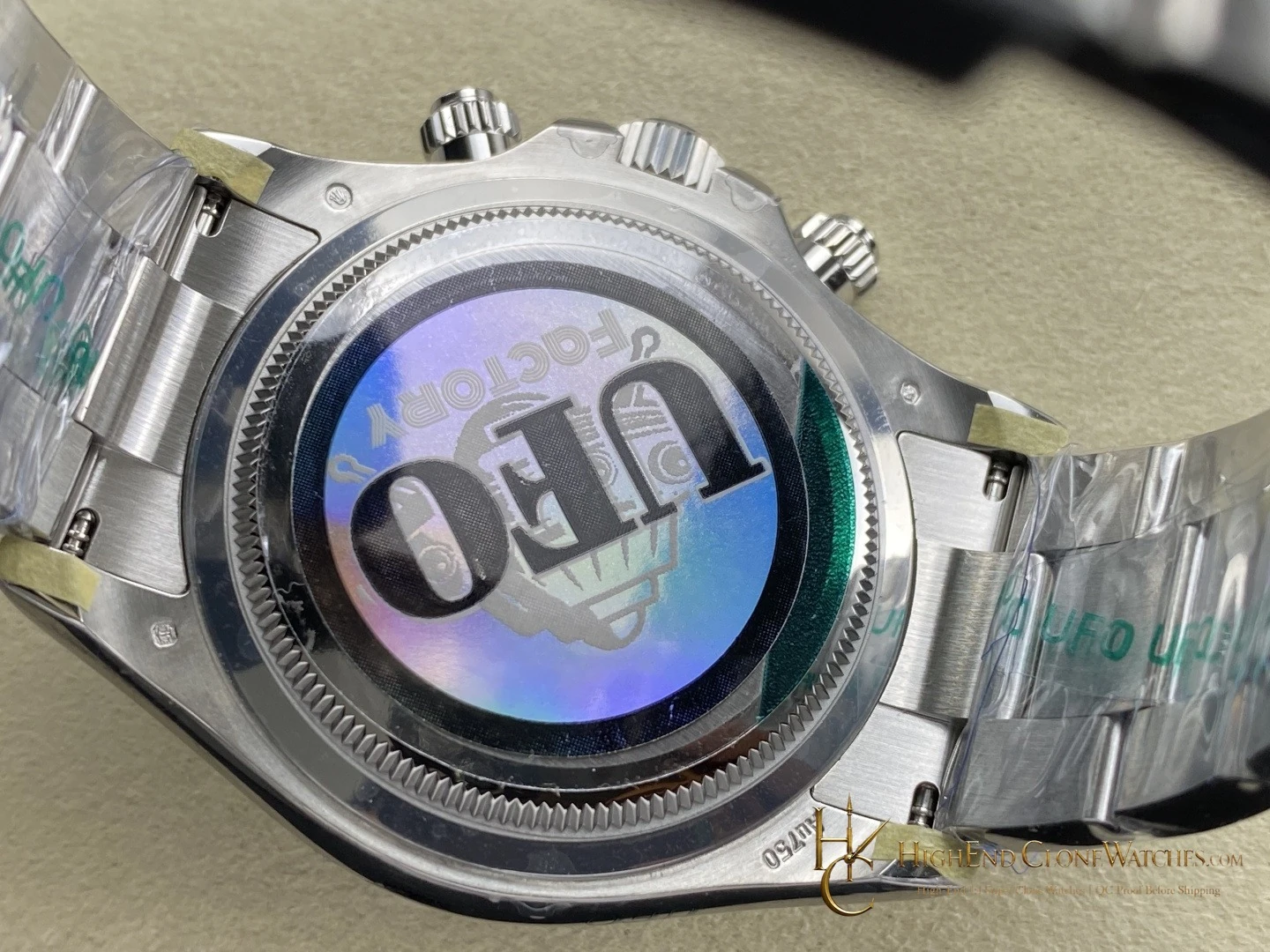
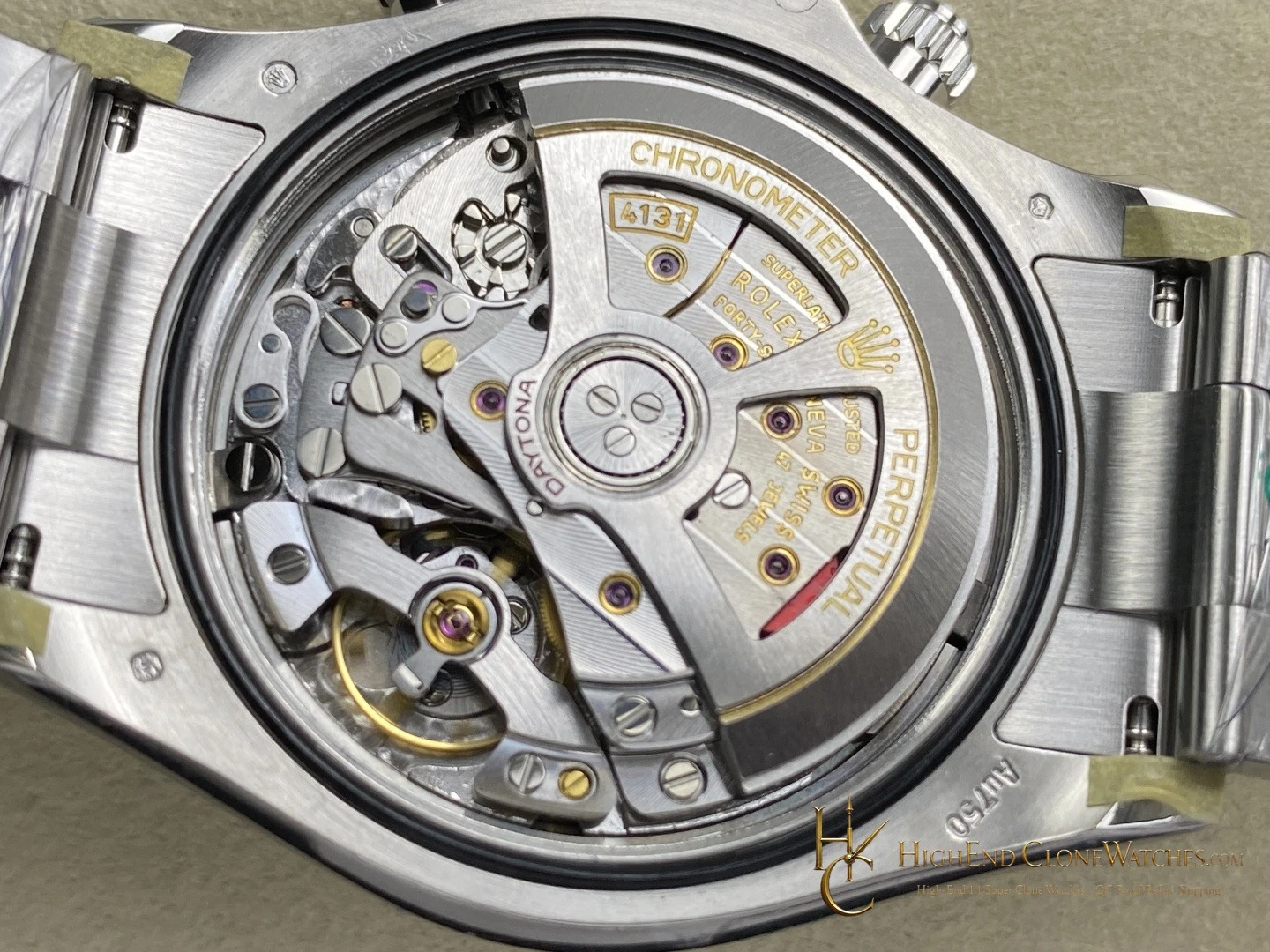
Check that the blue tone is even across the dial, the red typography is clean and the registers sit squarely within the case. The tachymeter numerals should follow the bezel without drift. Operate the chronograph and verify a clean hand reset, then inspect bracelet articulation, clasp closure and the caseback finish. These details determine whether the extra weight feels like a coherent part of the configuration.
The weighted bracelet also changes the way the watch balances when the wrist is relaxed. Inspect the first links and clasp together, not only the dial, because a smooth transition keeps the added mass comfortable rather than making the watch feel top-heavy. The blue surface should remain the lead feature while the bracelet supplies the supporting presence.
Before deciding on the weighted build, compare how the watch sits with a cuff and with a bare wrist. The same extra presence that works well over knitwear can feel more assertive under a narrow shirt cuff. That is a useful wardrobe test for a buyer choosing between this edition and a lighter steel alternative.
This is the blue Daytona for buyers who treat wrist presence as a real part of the choice.