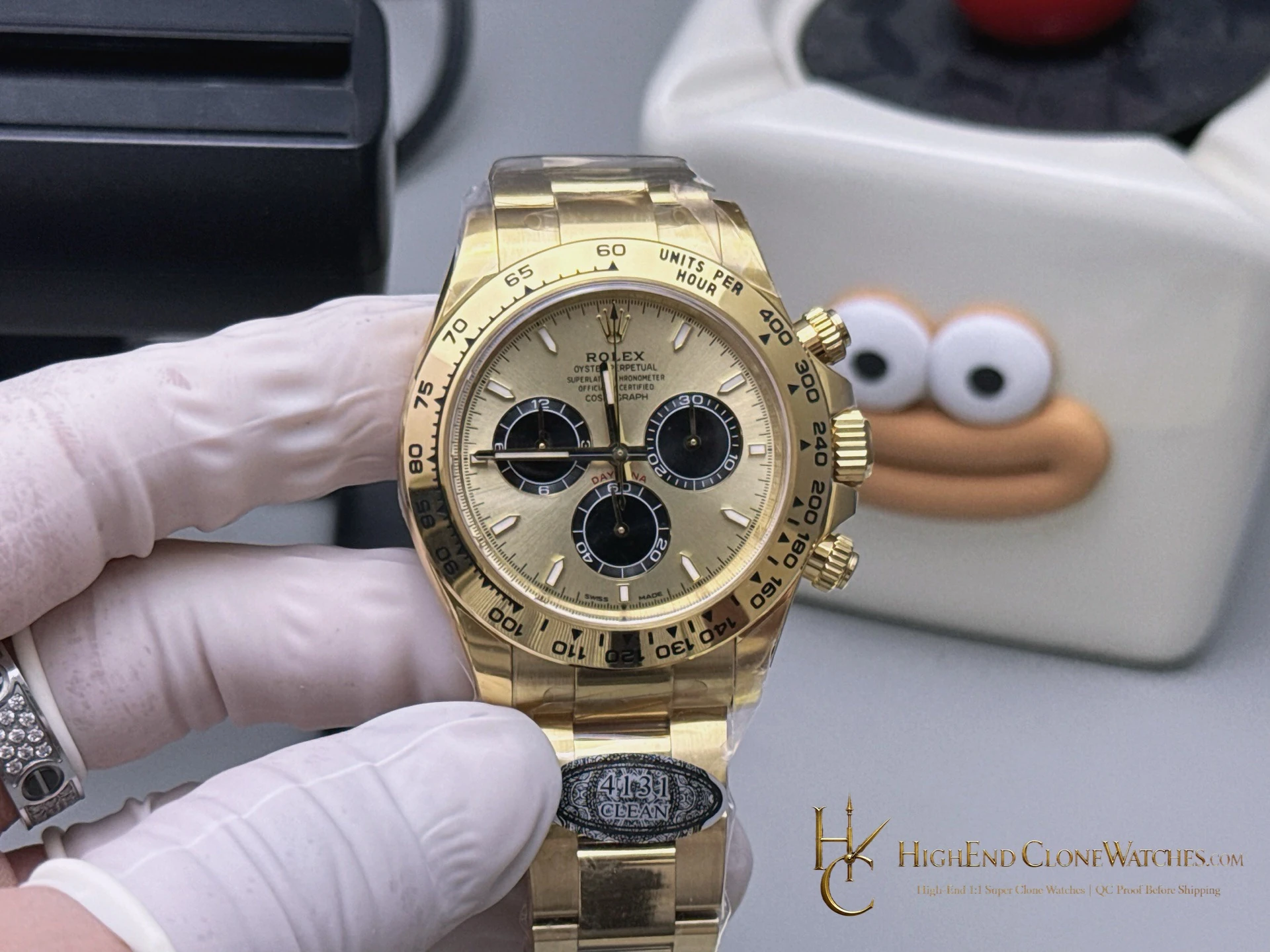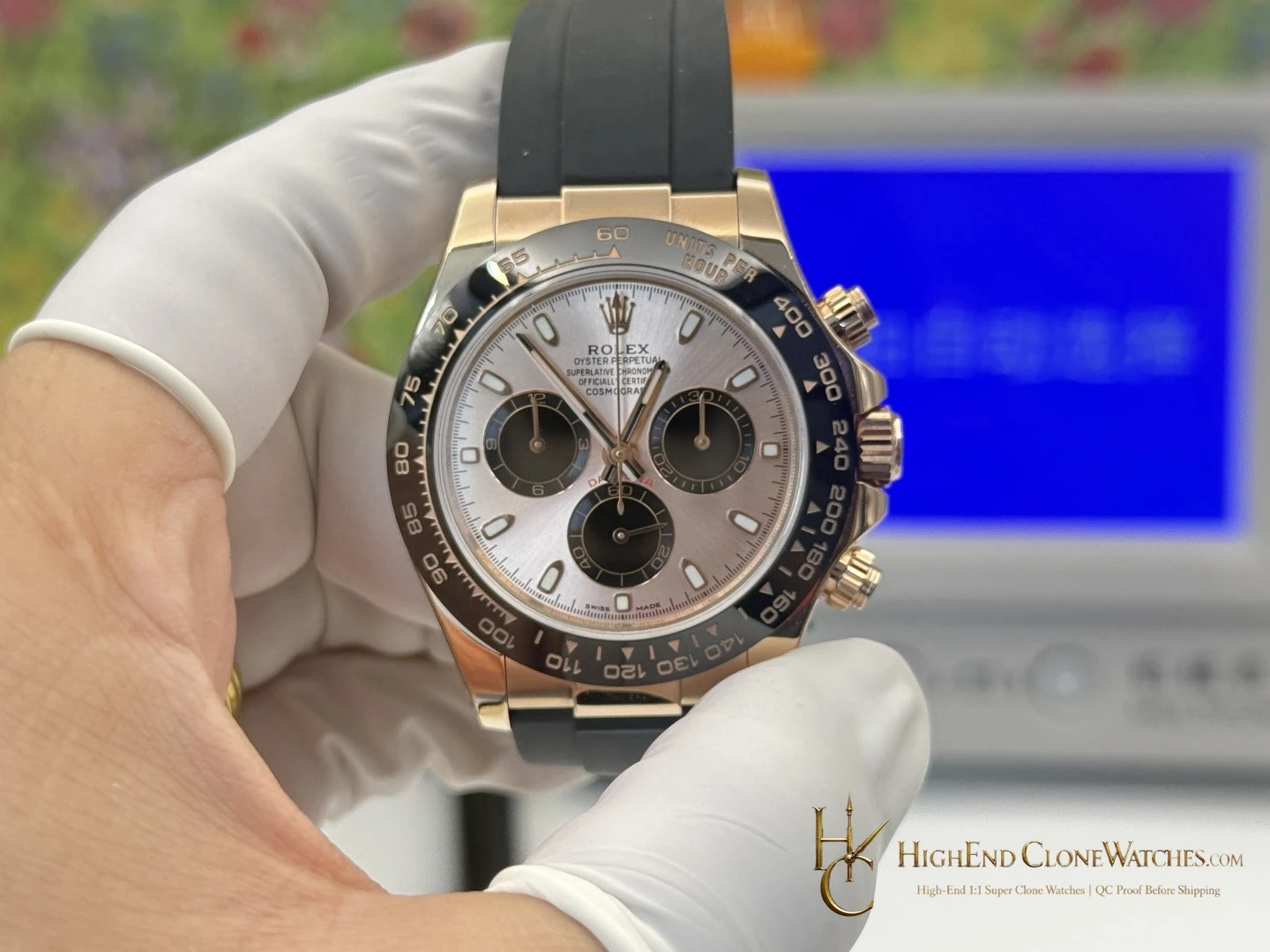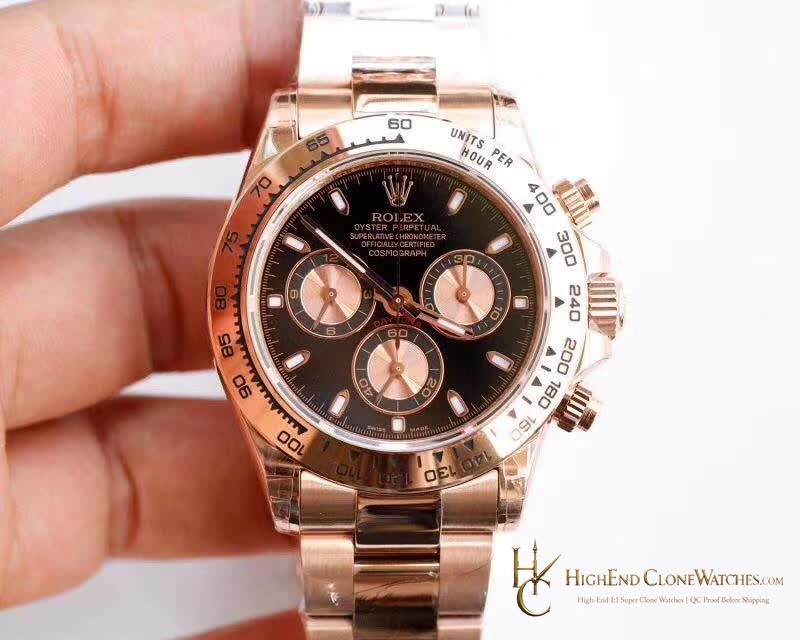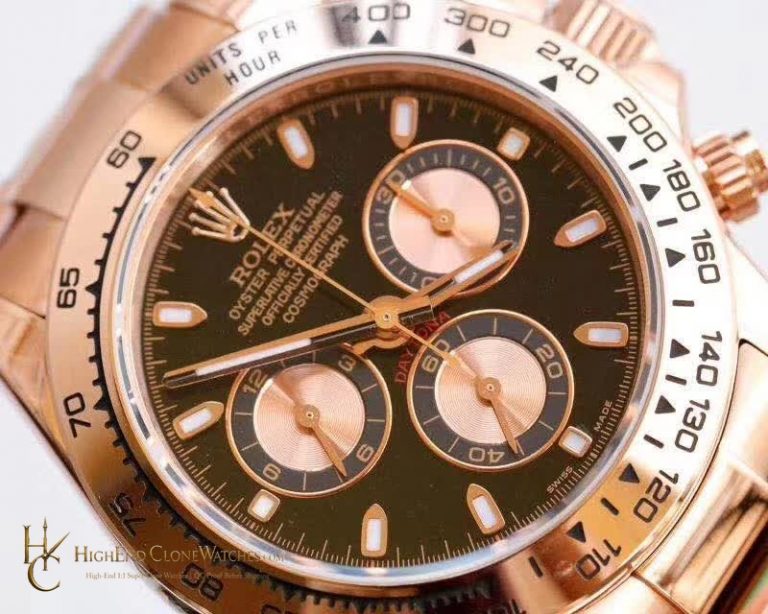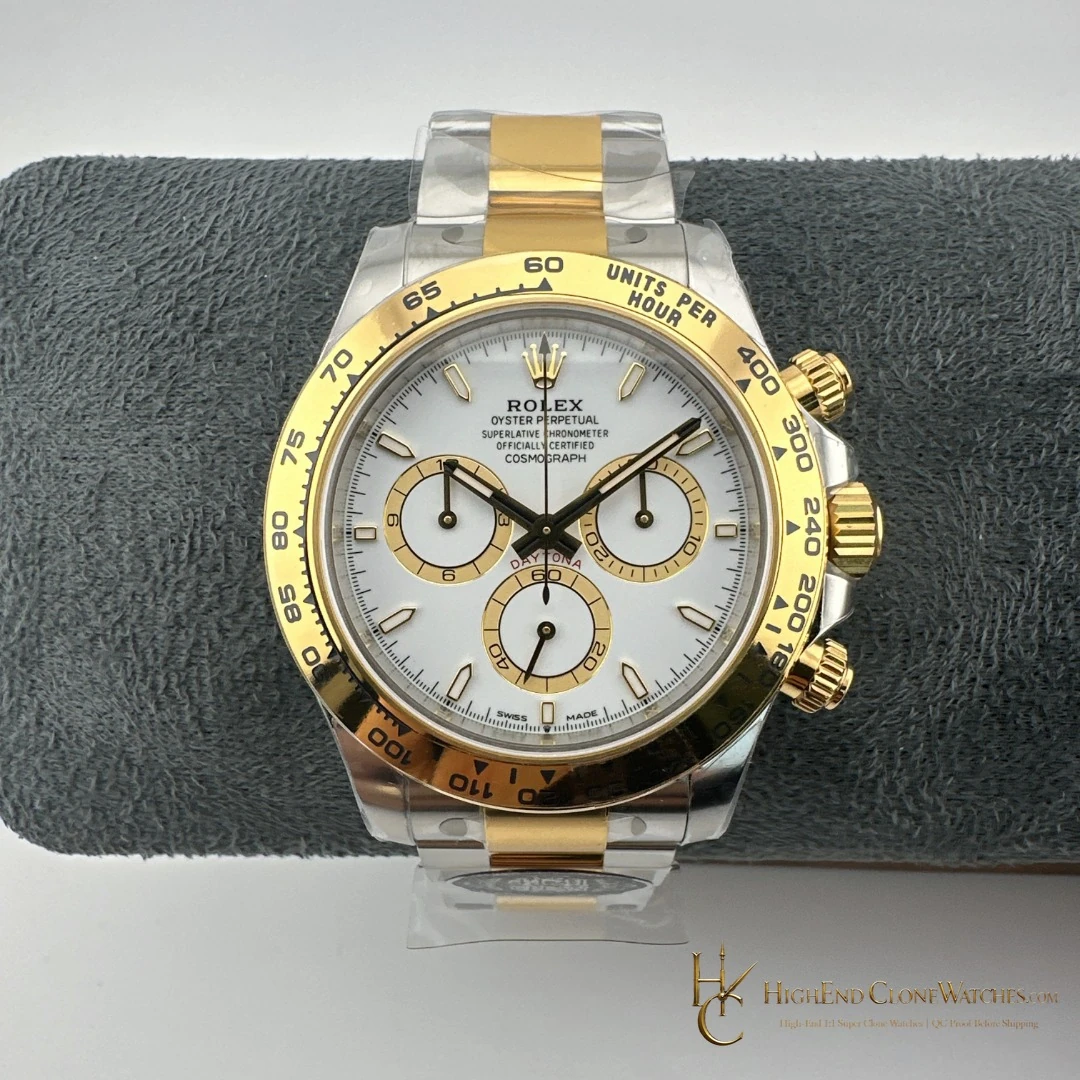
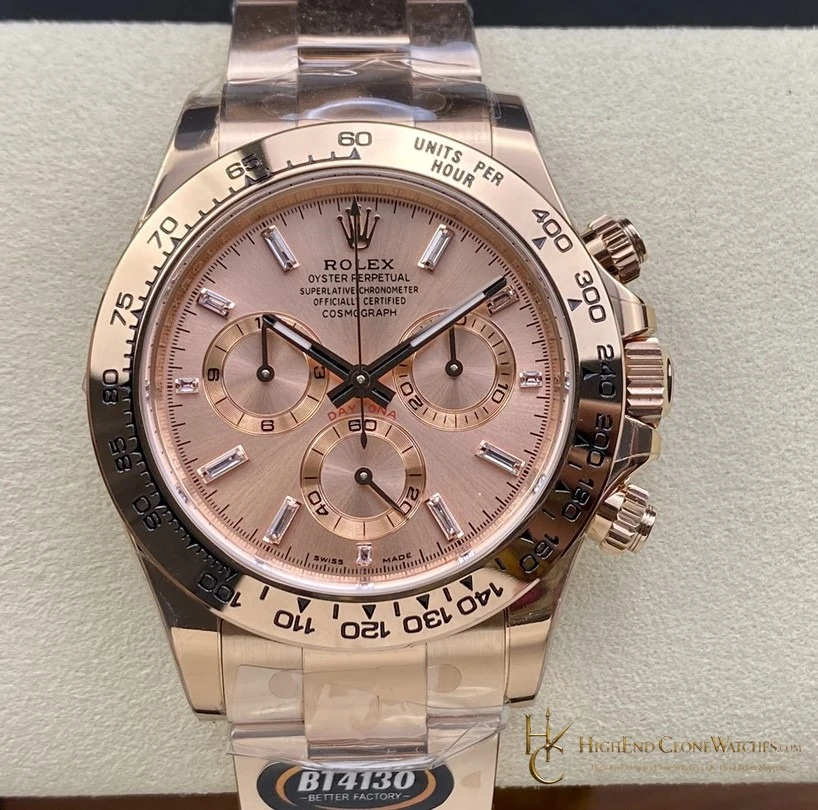
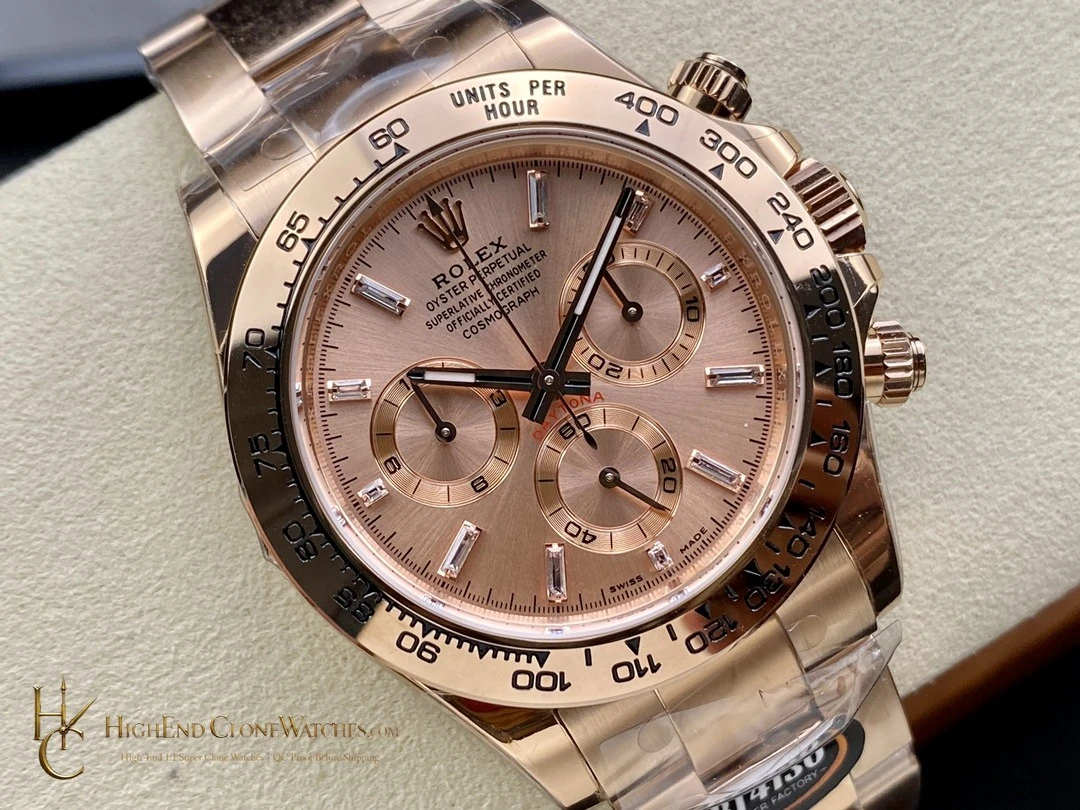
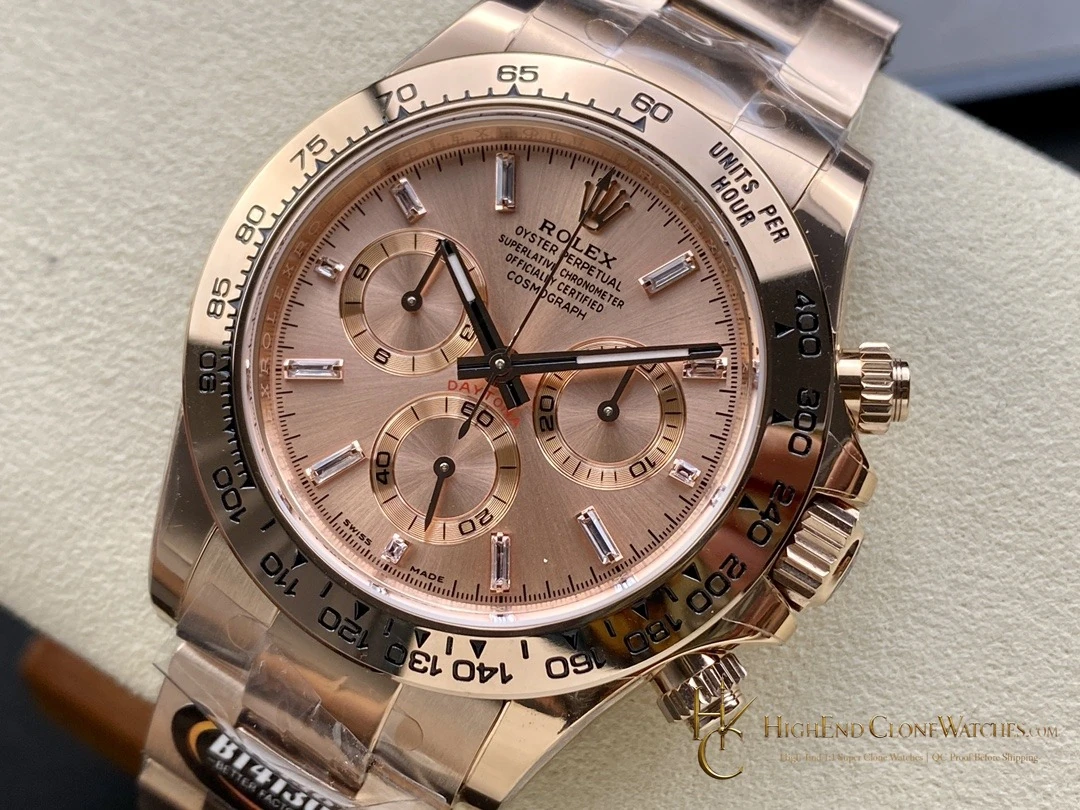
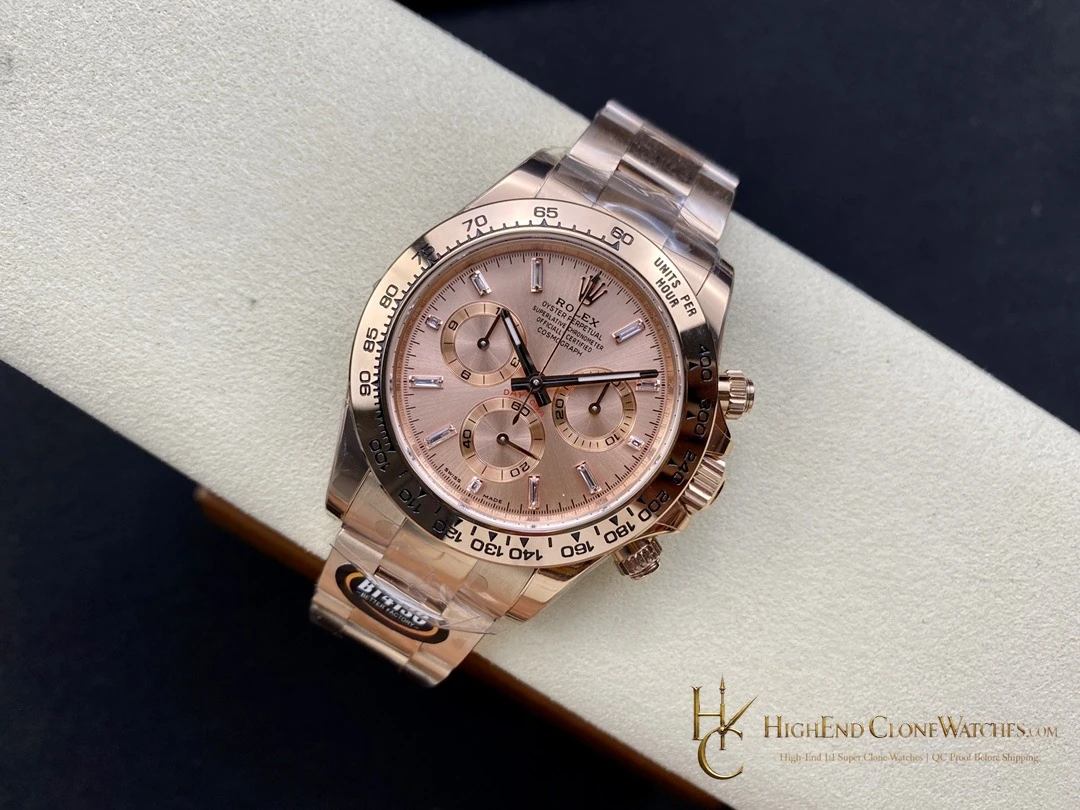
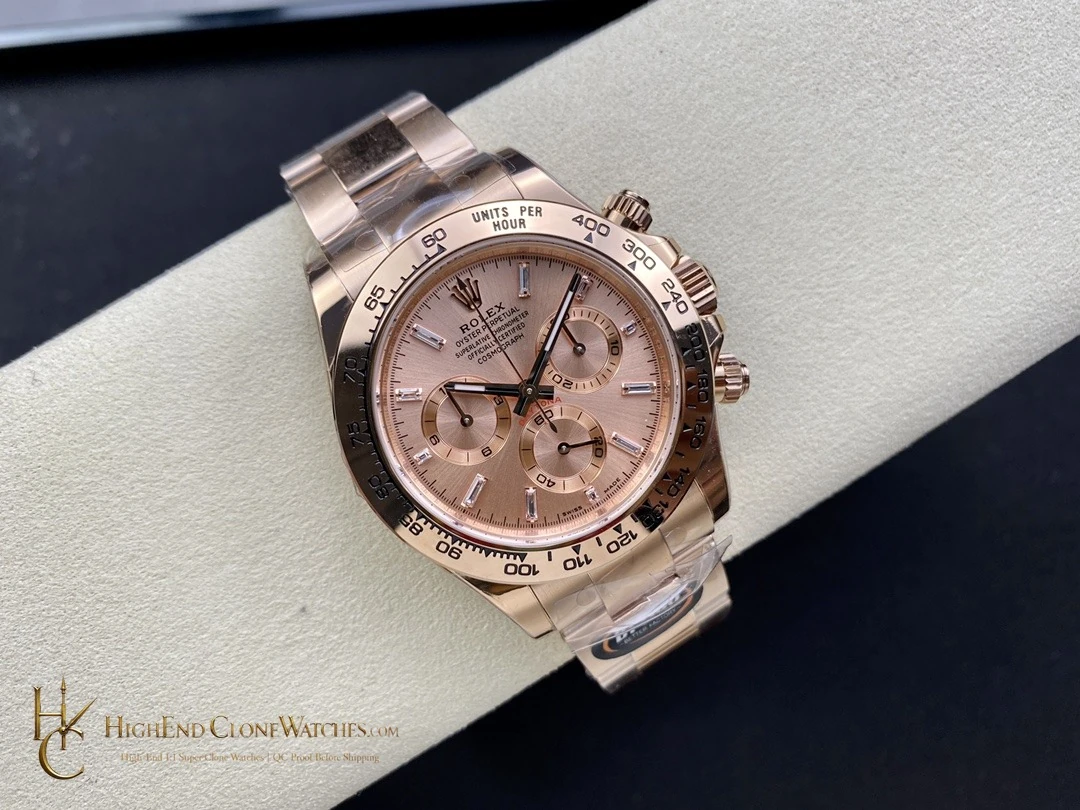
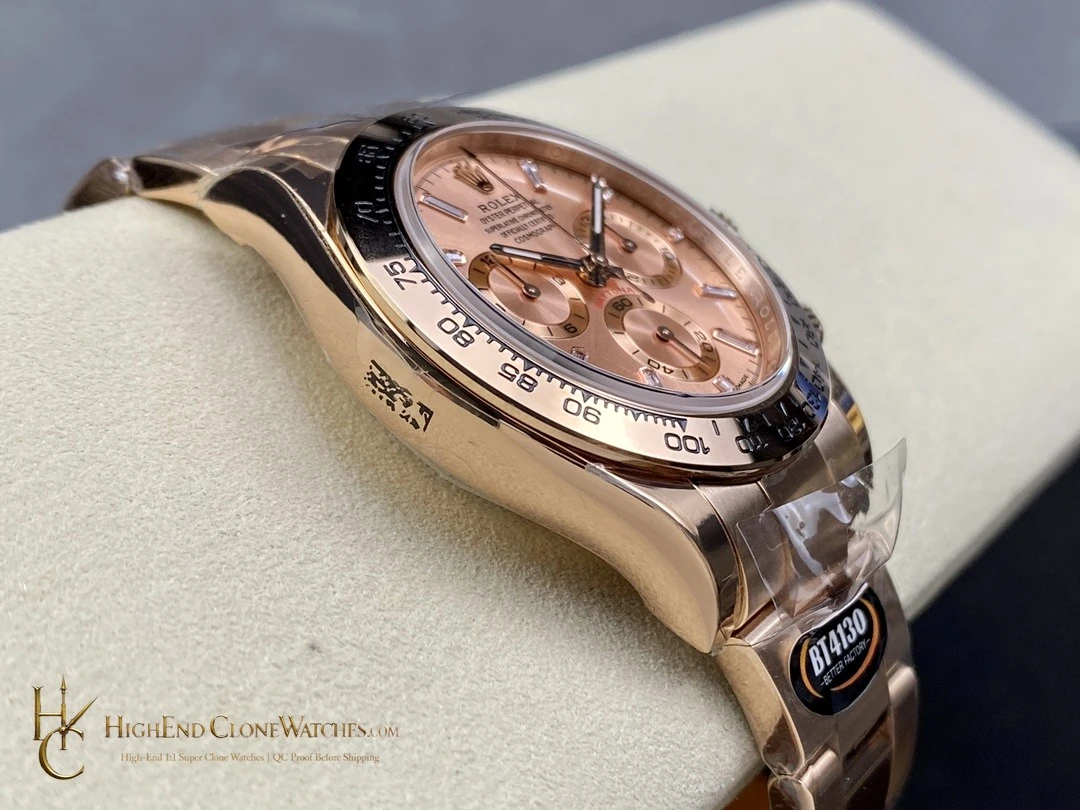
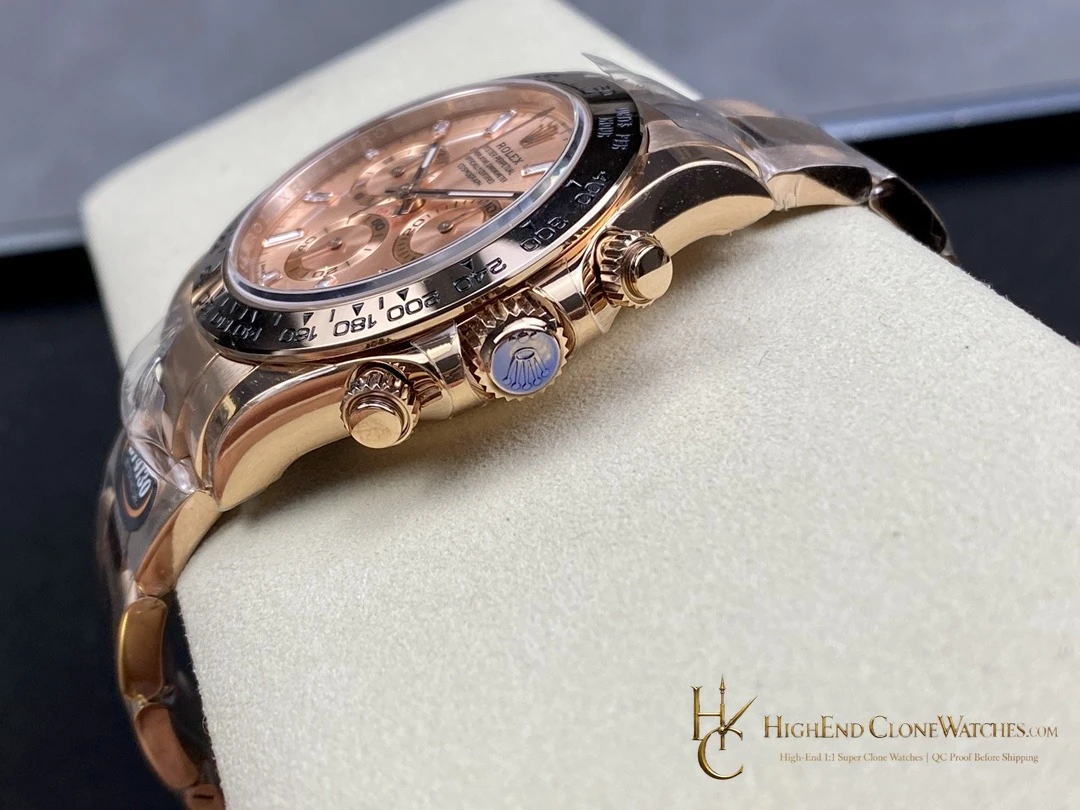
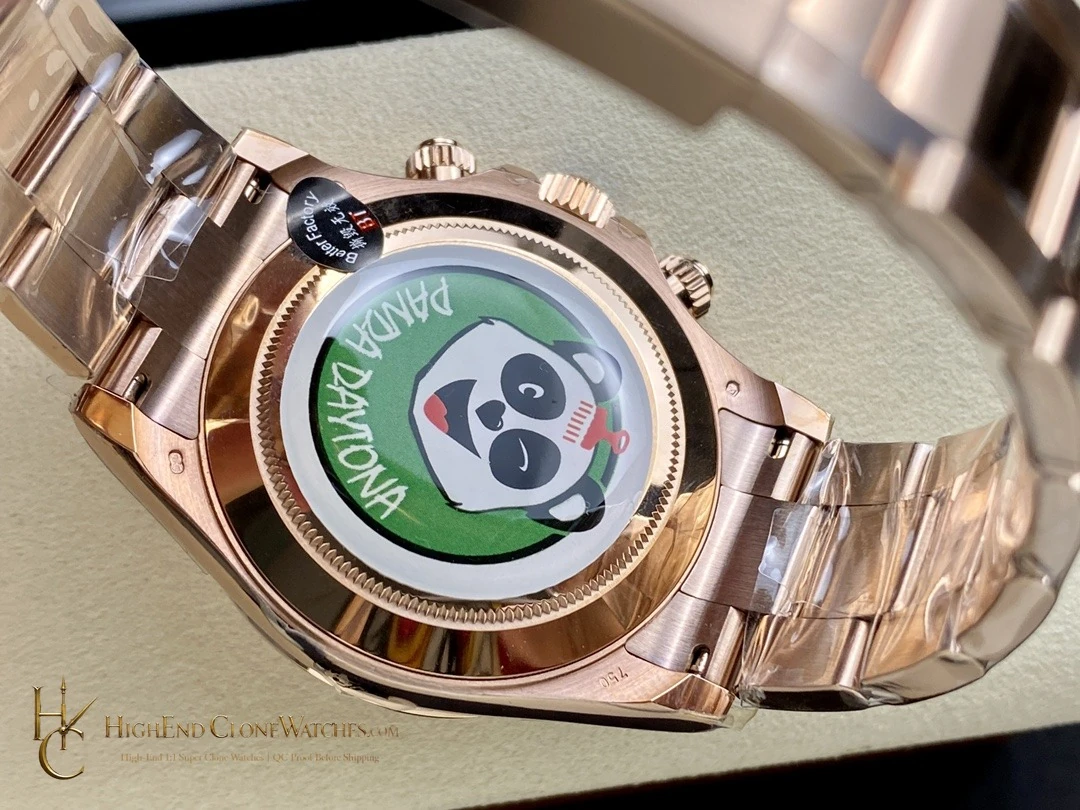
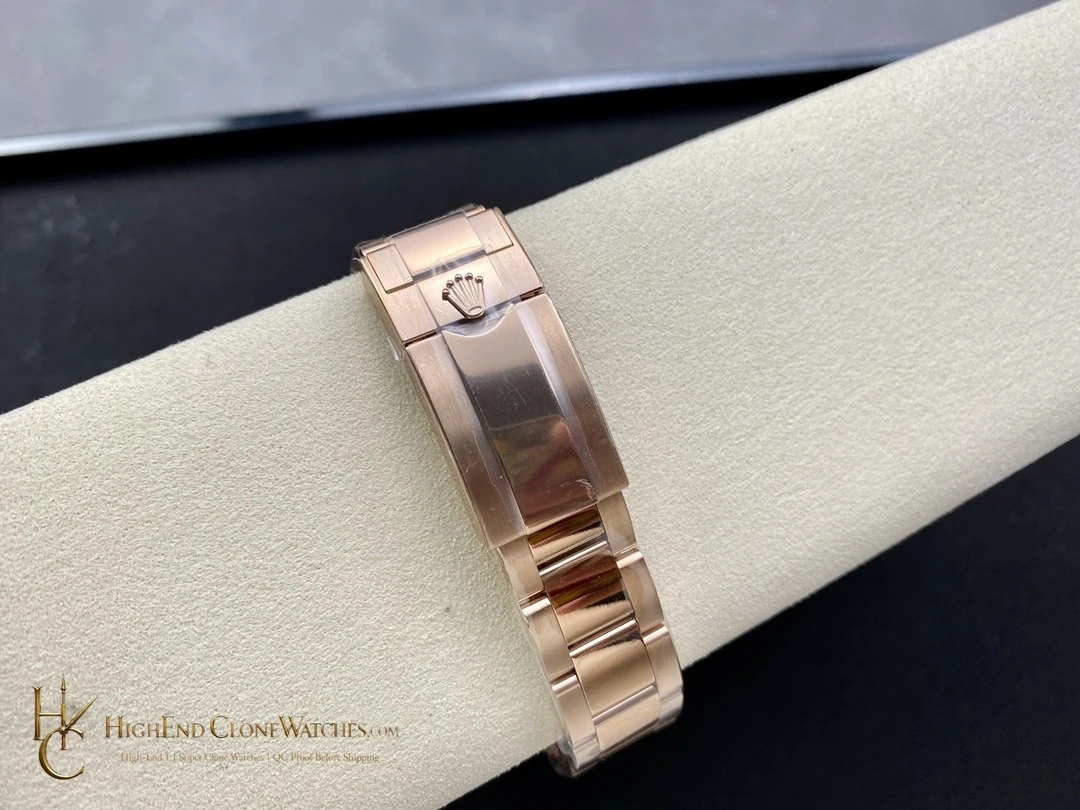
Check the sunray tone, register spacing and tachymeter engraving from the front, then inspect the side profile, crown and pushers. The chronograph hand should return cleanly to zero. Crystal clarity, end-link fit, bracelet articulation and flip-lock clasp closure complete the practical review because each transition is visible in this continuous-color design.
The matching bracelet also means small inconsistencies can interrupt the intended flow more readily than on a contrast-led model. Check the end links and clasp in the same light used to inspect the dial, then view the watch at an angle to make sure the warm finish remains even along the case and bracelet surfaces.
Wear this configuration where the dial can catch changing light rather than remain hidden under a tight cuff. In a formal rotation, that reflective movement supplies interest without adding a second accent color. The result is a calmer statement than a black contrast dial, but still a clear one at normal viewing distance.
It is the Daytona to choose when the appeal lies in a unified warm surface rather than a high-contrast dial.