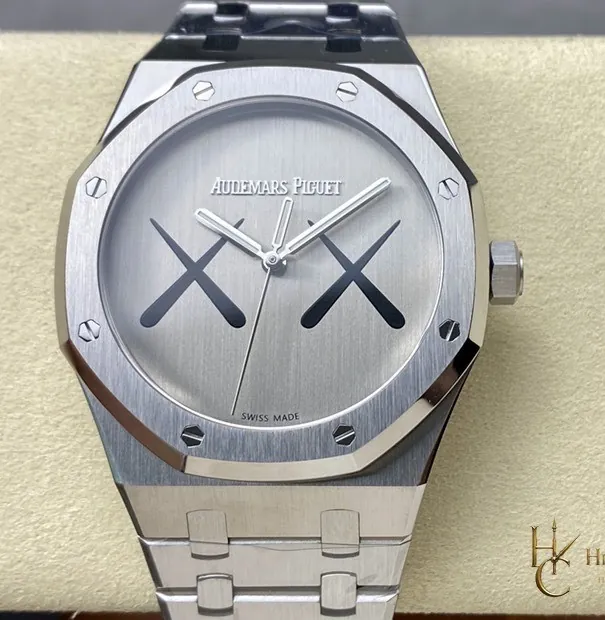
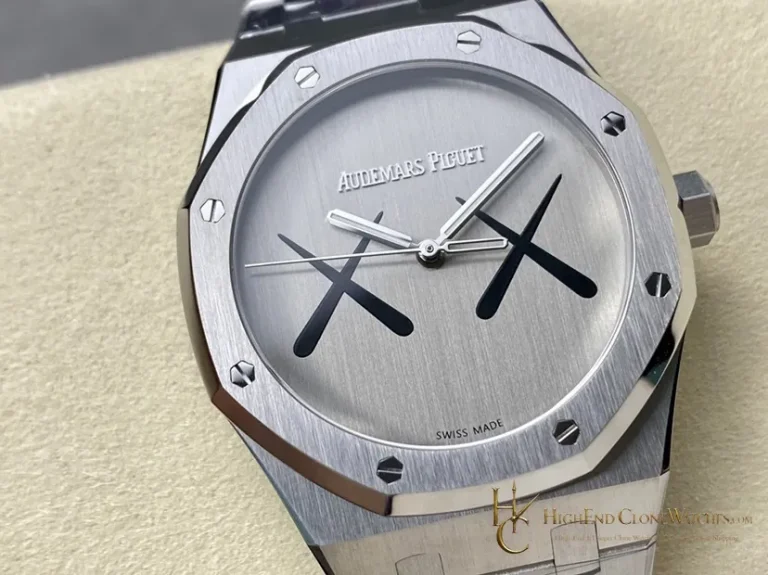
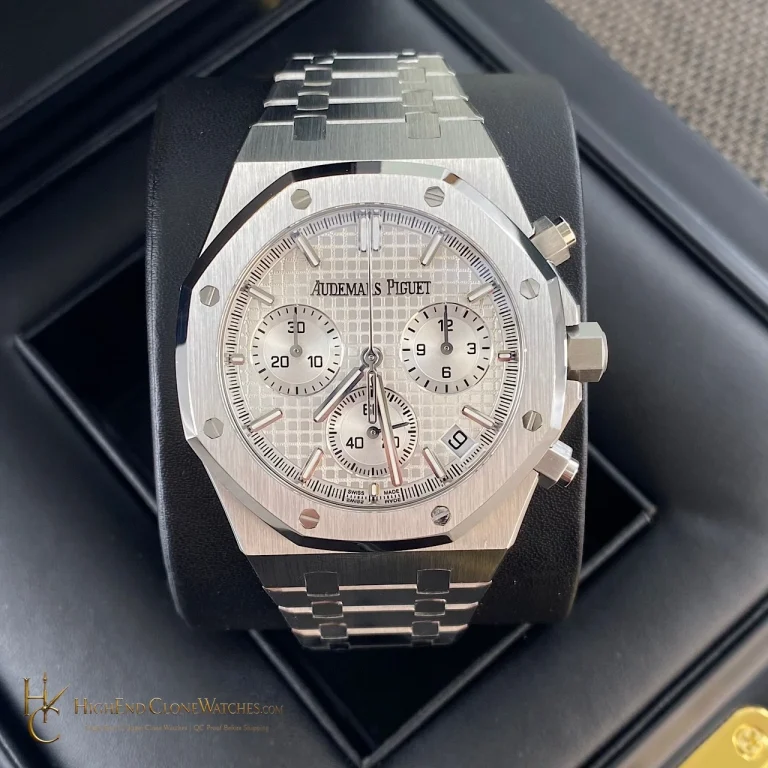
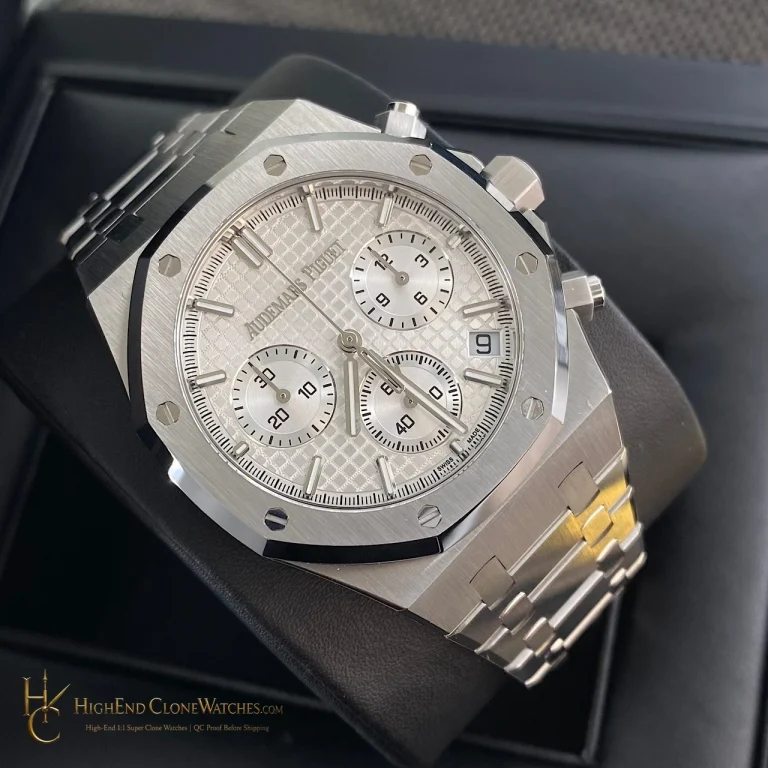
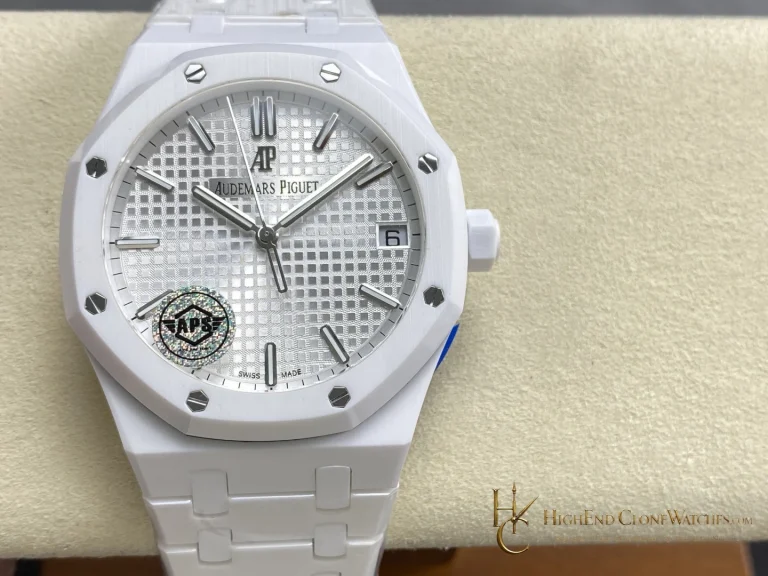
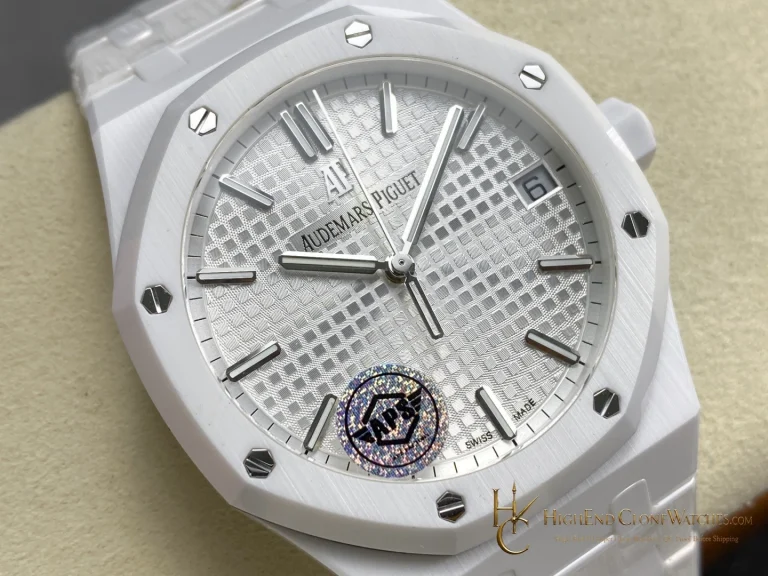
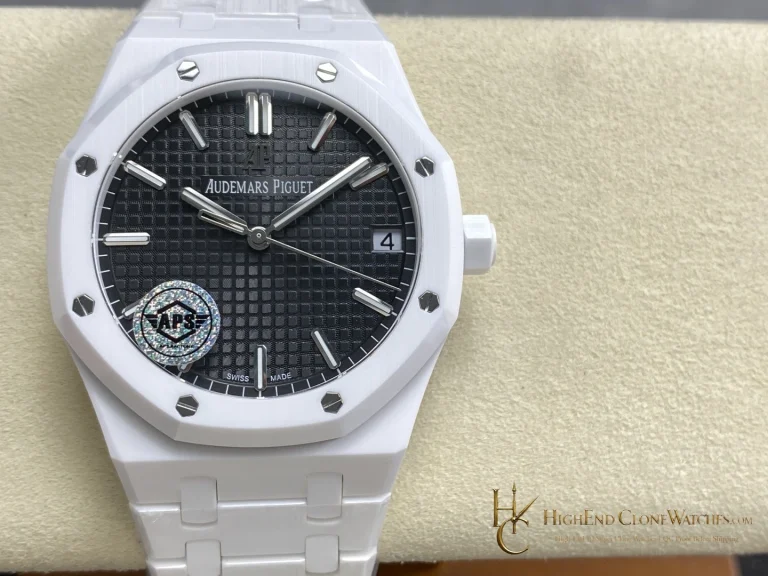
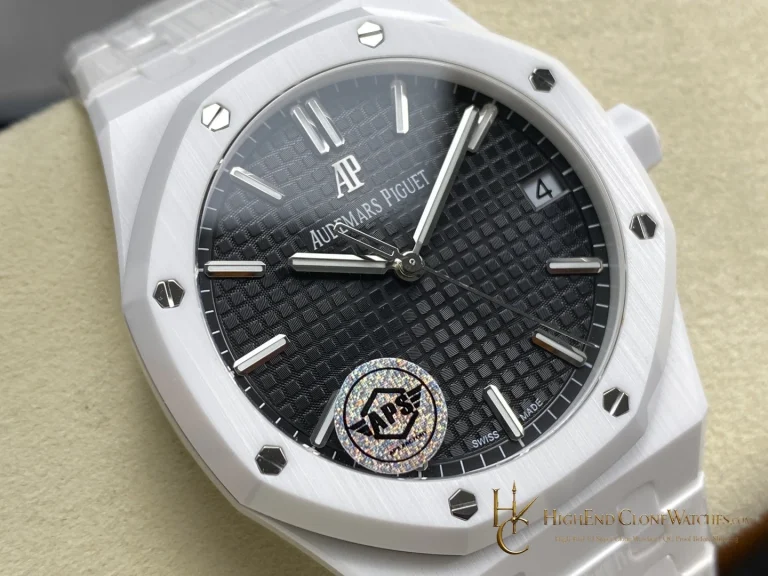
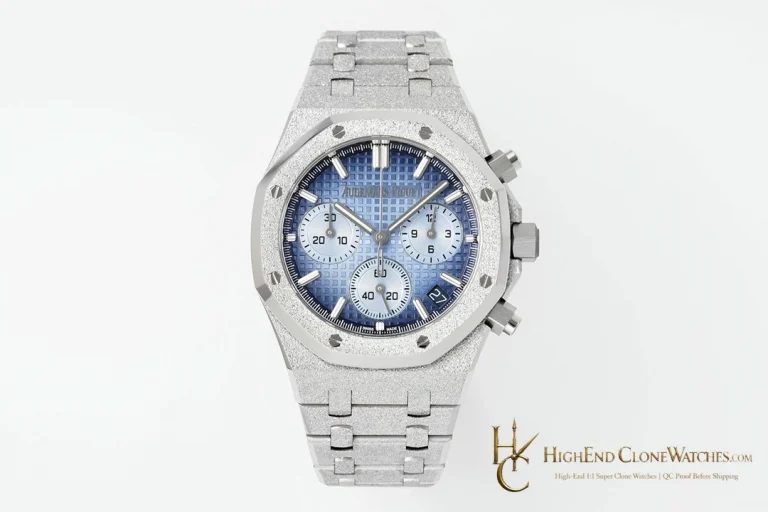
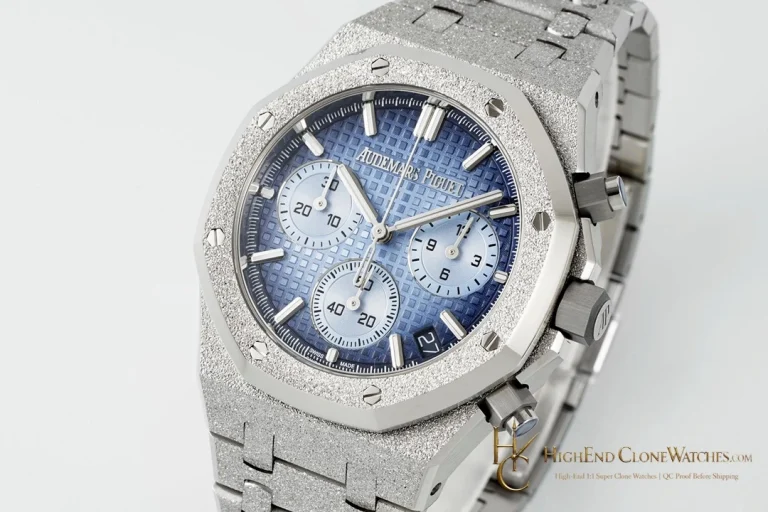
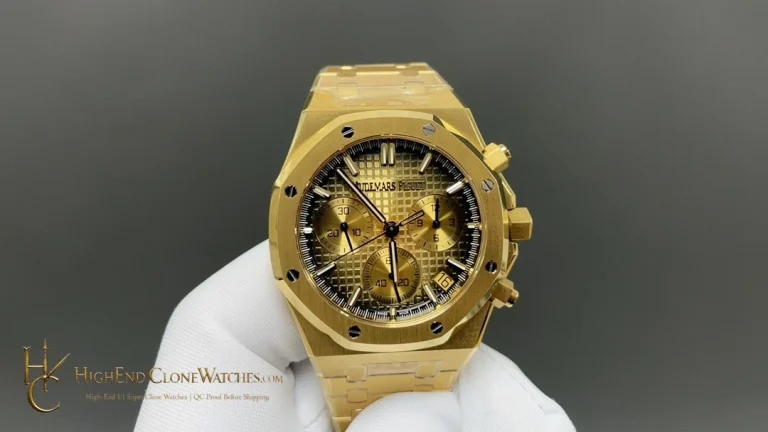
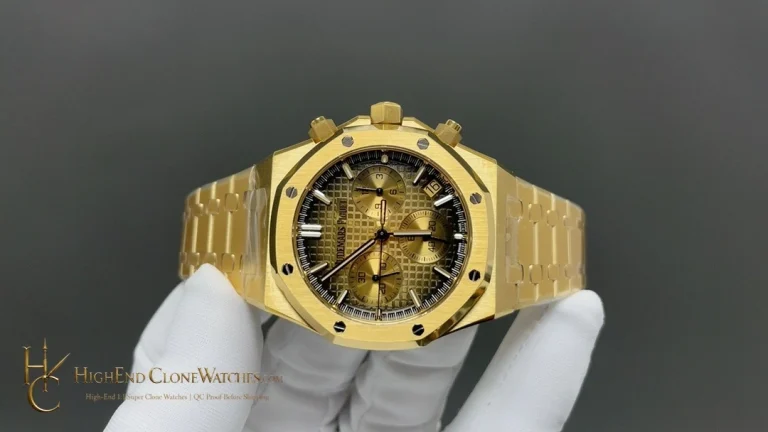
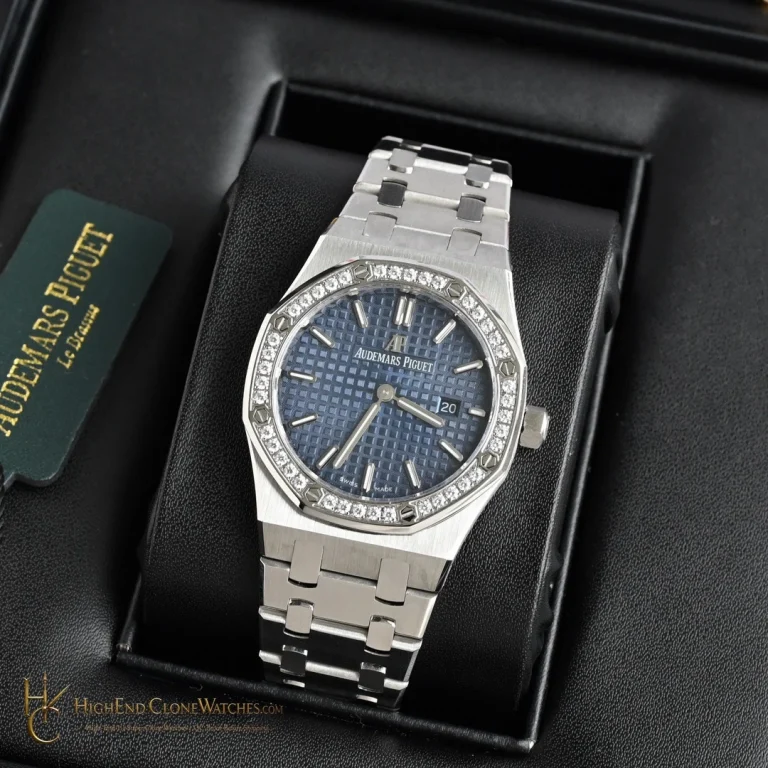
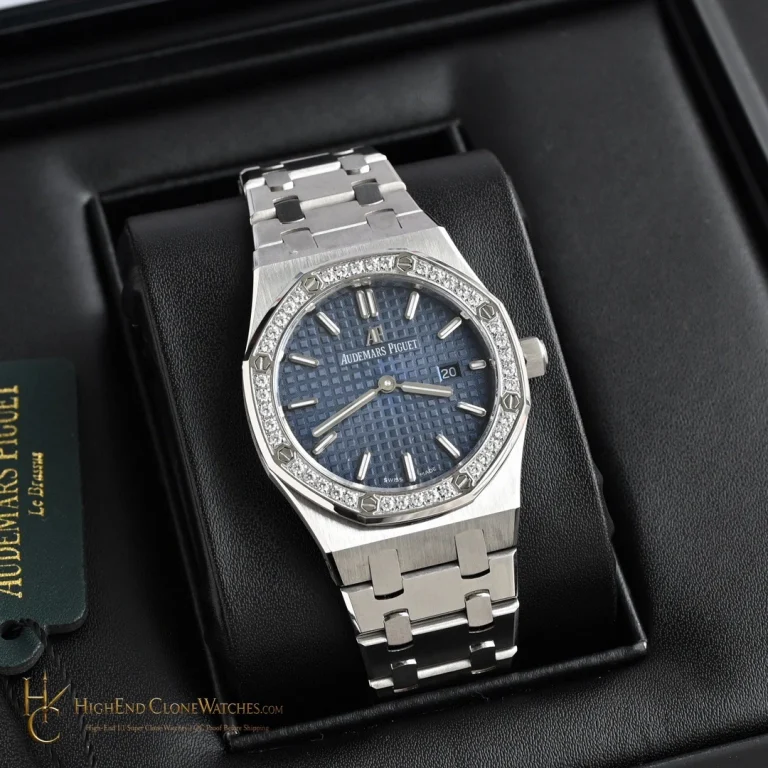
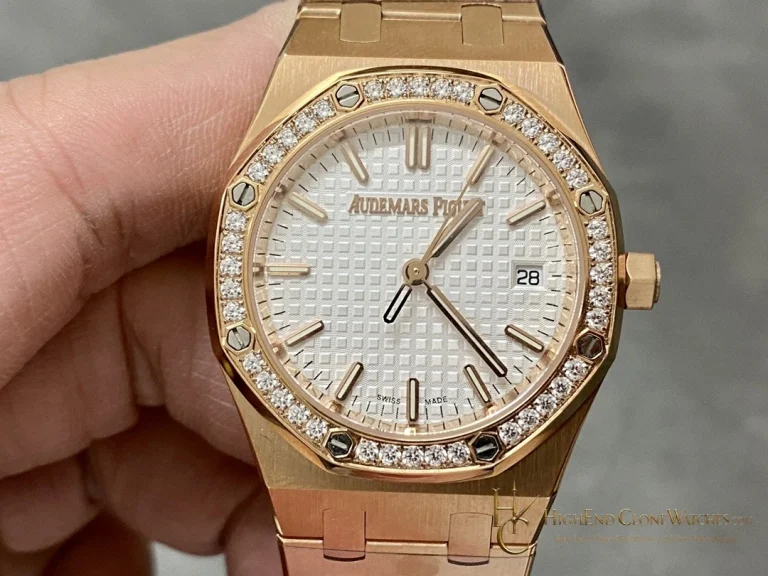
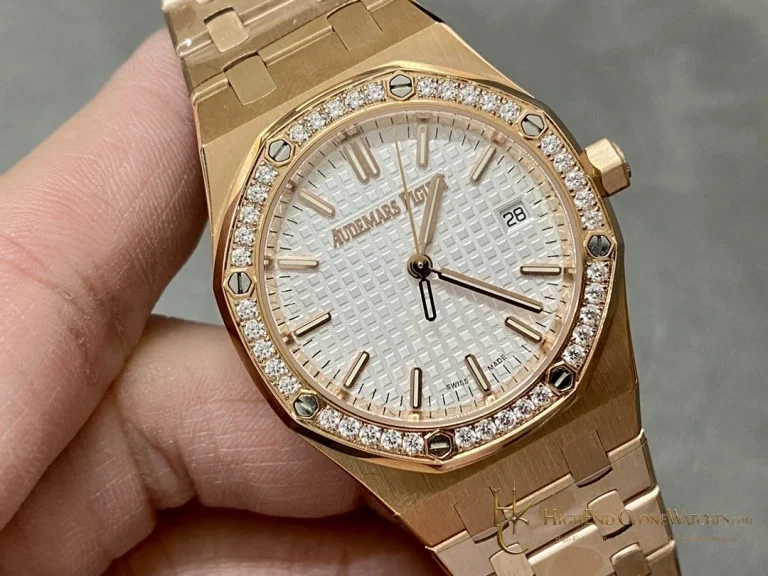
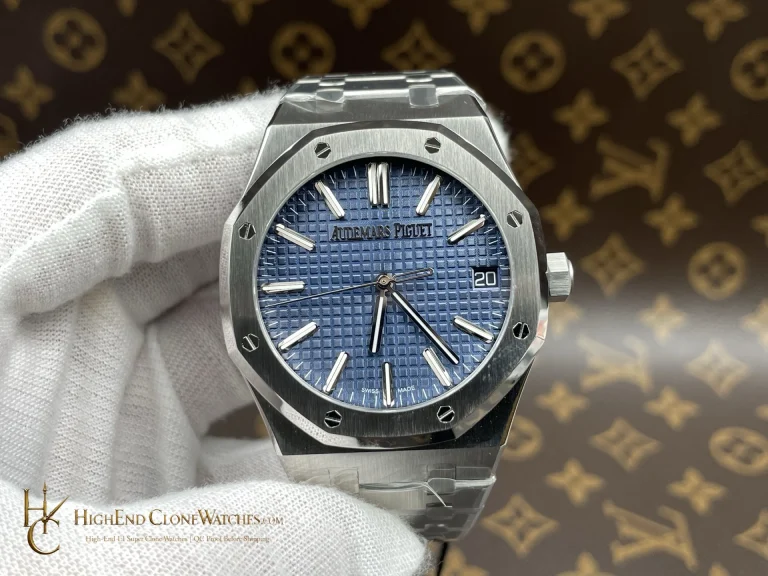
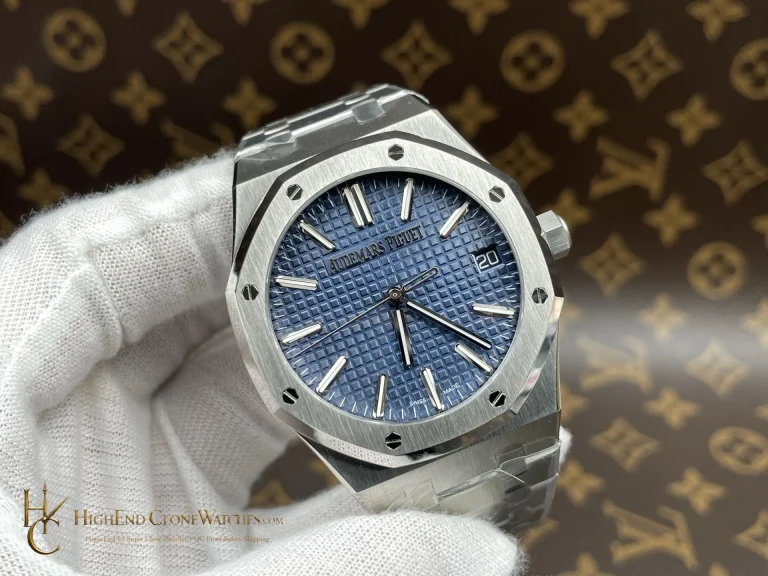
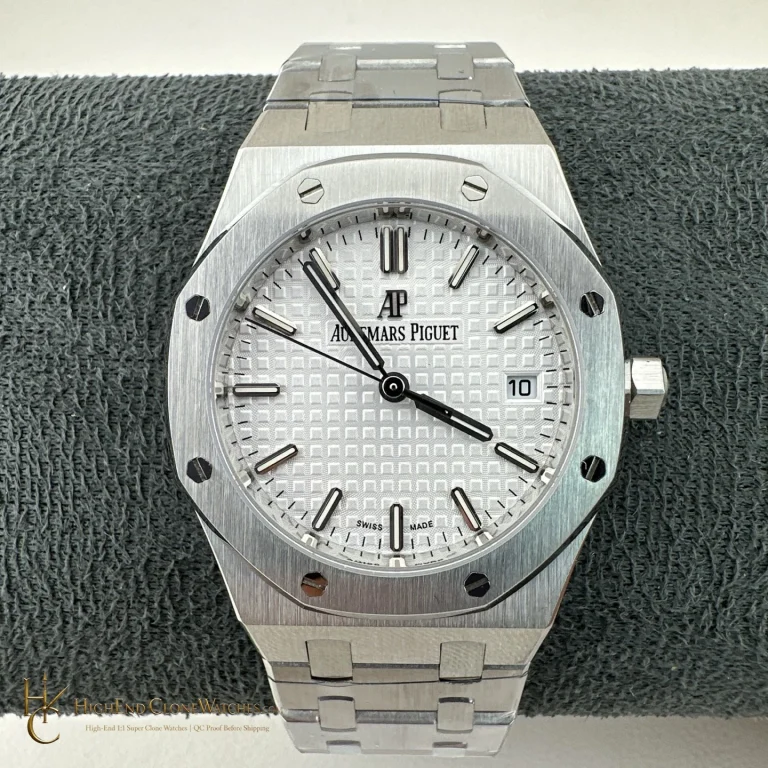
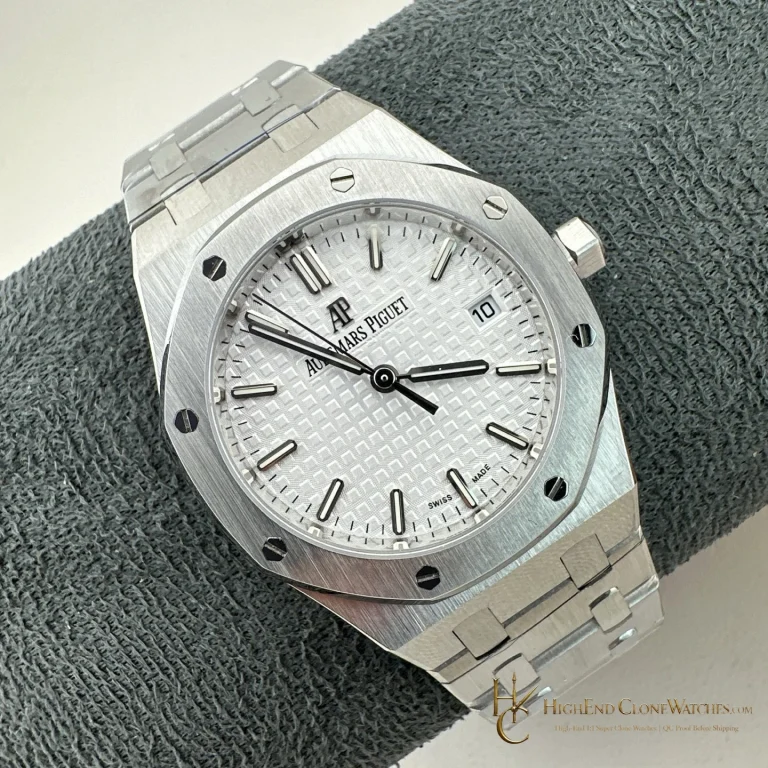
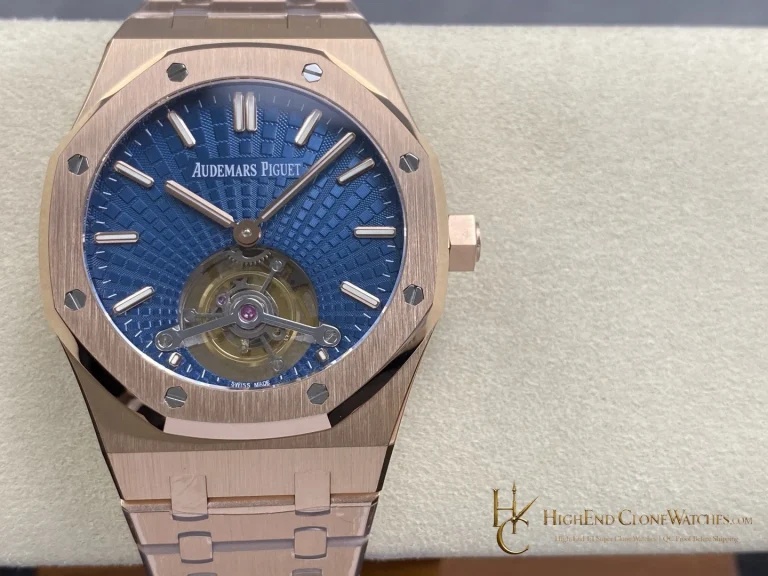
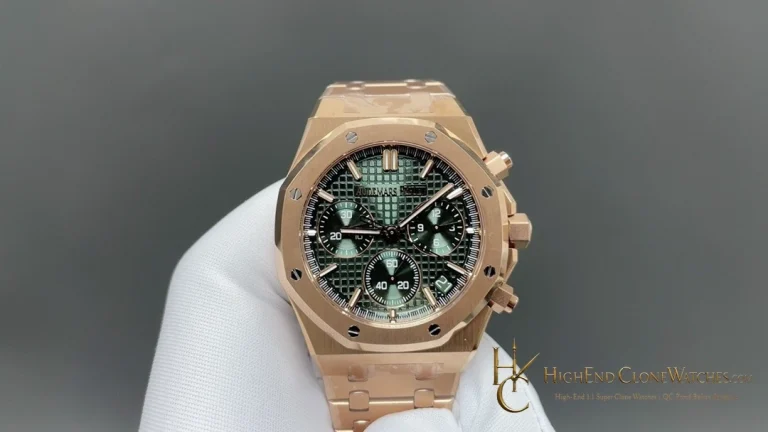
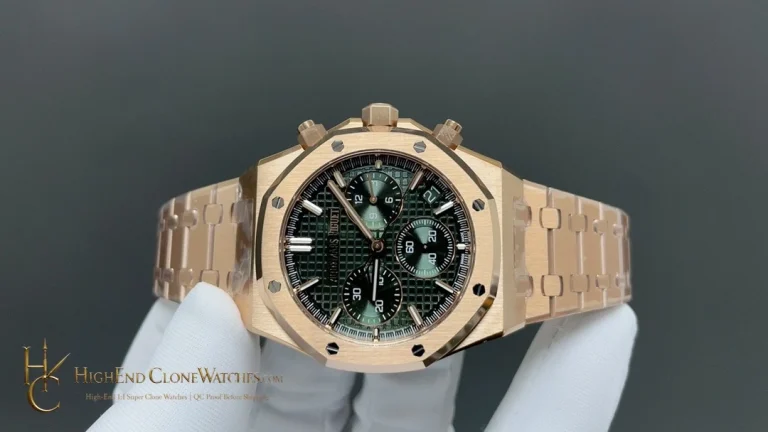
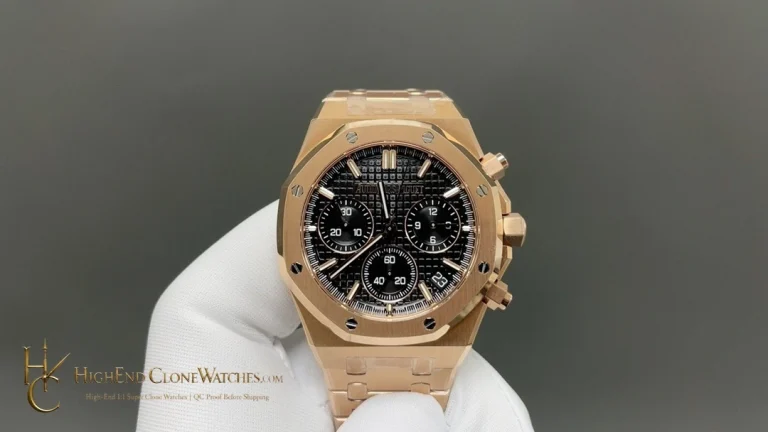
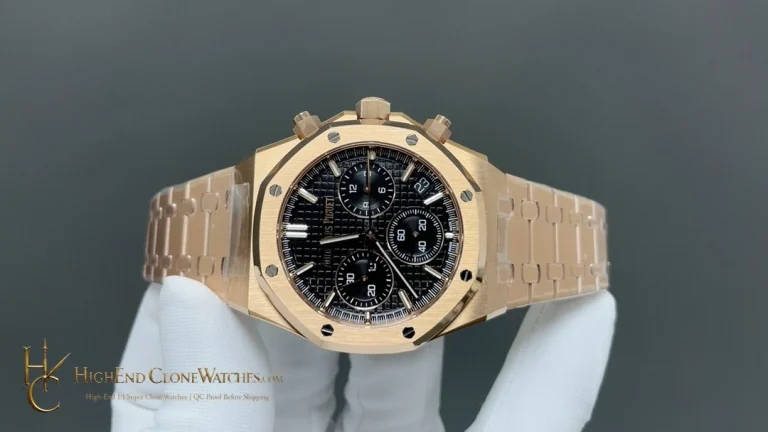
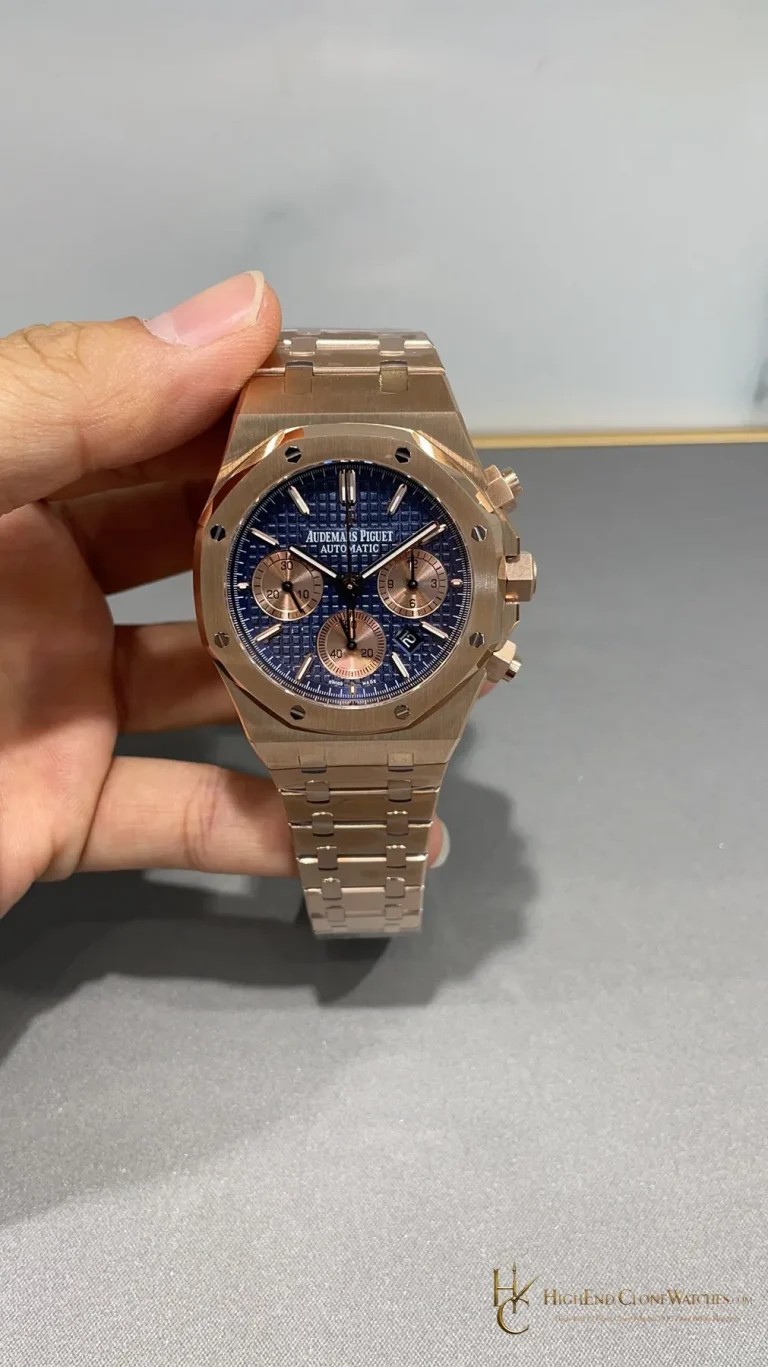
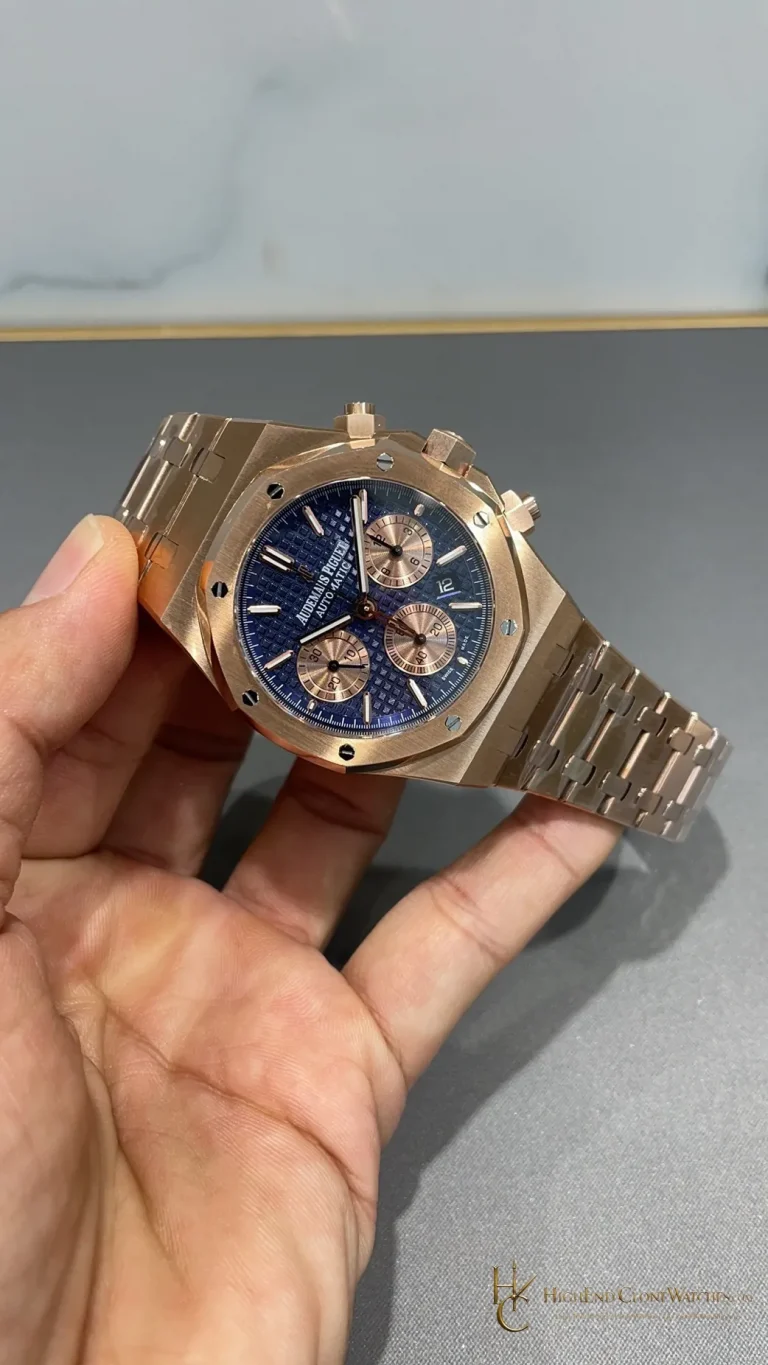
AP buyers usually notice finishing before anything else. Royal Oak and Offshore models need the right case geometry, brushed grain, polished bevels, bezel screw seating, Tapisserie texture, bracelet articulation, and case thickness.
Audemars Piguet has a very specific visual contract: the octagonal bezel, the eight exposed fasteners, the brushed planes and polished chamfers must read as a single piece of geometry. That is why Royal Oak buyers tend to look at the case and bracelet before they discuss the dial. A beautiful blue, black or grey Tapisserie pattern cannot rescue a bezel whose proportions feel soft or a bracelet whose first link does not continue the case cleanly.
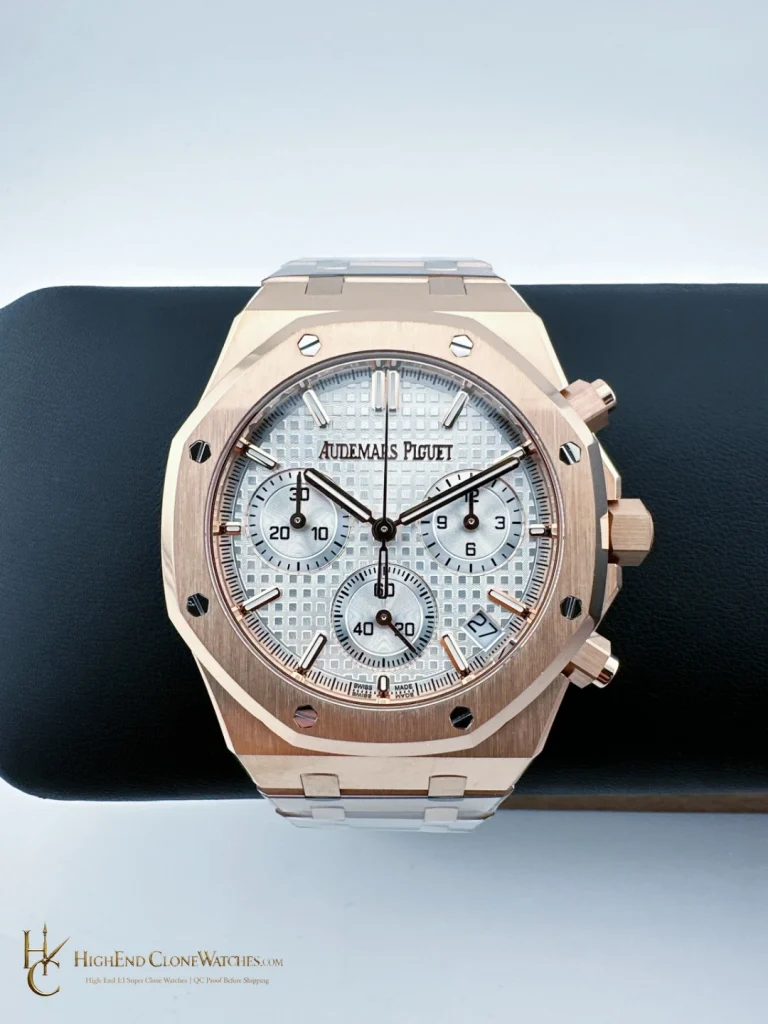
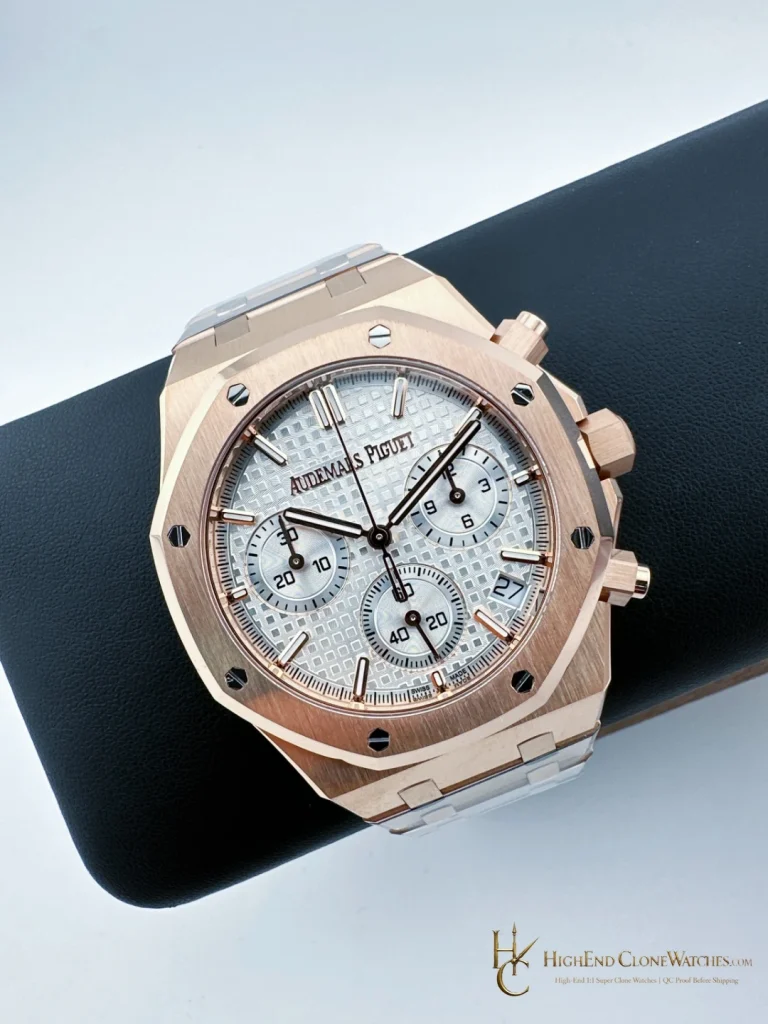
The 15500 and 15510 families are the clearest version of that idea. Their three-hand layouts leave room for the case and bracelet to do the work. The 26240 and 26331 chronographs build a busier face around the same architecture, so register spacing, pusher placement and date integration become part of the decision instead of an afterthought.
Jumbo, chronograph and Offshore are different purchases
A Jumbo-style Royal Oak is for someone who likes the flat, almost architectural relationship between bezel, dial and integrated bracelet. It has less need to prove itself with extra dial information. A chronograph earns its place when you actually prefer the denser face and the pushers breaking the side profile. It should not be chosen merely because a more complicated-looking dial seems more expensive.
Royal Oak Offshore uses the same family name but changes the mood completely. Larger cases, rubber straps, ceramic details and Méga Tapisserie dials create a heavier, more athletic watch. References such as 15720 sit in this lane. Choose Offshore because the additional mass, hardware and strap integration are the point; a buyer looking for the slim bracelet-led Royal Oak experience will be happier staying with the core line.
The current AP selection has real reference differences
Within the three-hand group, 15500 and 15510 references keep the focus on the octagonal frame and dial texture. The smaller 77350 and 77351 models change the bracelet-to-case proportion enough that they should be considered in their own right, rather than treated as reduced versions of a 41mm watch. Rose-gold, ceramic and diamond-framed references add light or material contrast, which makes surface transitions more visible than on plain steel.
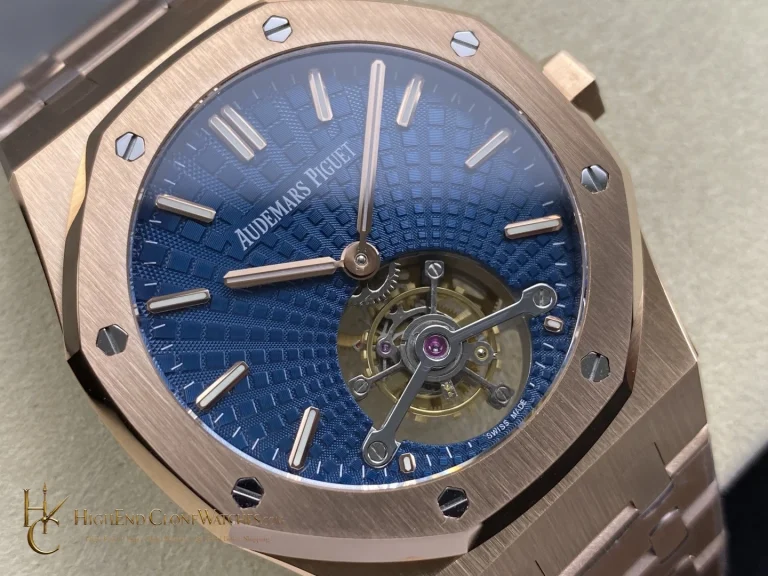
Openworked and tourbillon-style pieces belong in a separate category. Once the movement view occupies the dial, hand clearance, bridge arrangement and case-side balance matter as much as the Royal Oak bezel. They suit a buyer who wants the watch to be read in layers, not someone chasing the quietest expression of the AP shape.
A useful AP QC request is short and exact
Ask for an angled bezel view, a level dial image and a photograph of the first bracelet links flexed slightly. Those three views show the fastener seating, brushed-to-polished transitions, Tapisserie regularity and whether the bracelet begins naturally at the case. On a chronograph, add one direct image of the registers and date. On Offshore, add the crown and pusher side with the rubber strap attached.
AP invites close inspection. The correct watch still looks resolved once the catalogue lighting disappears.
Before you open a product page
Shortlist by wrist use first. Then confirm the exact dial, case, strap or bracelet, movement version, and QC photos before payment.