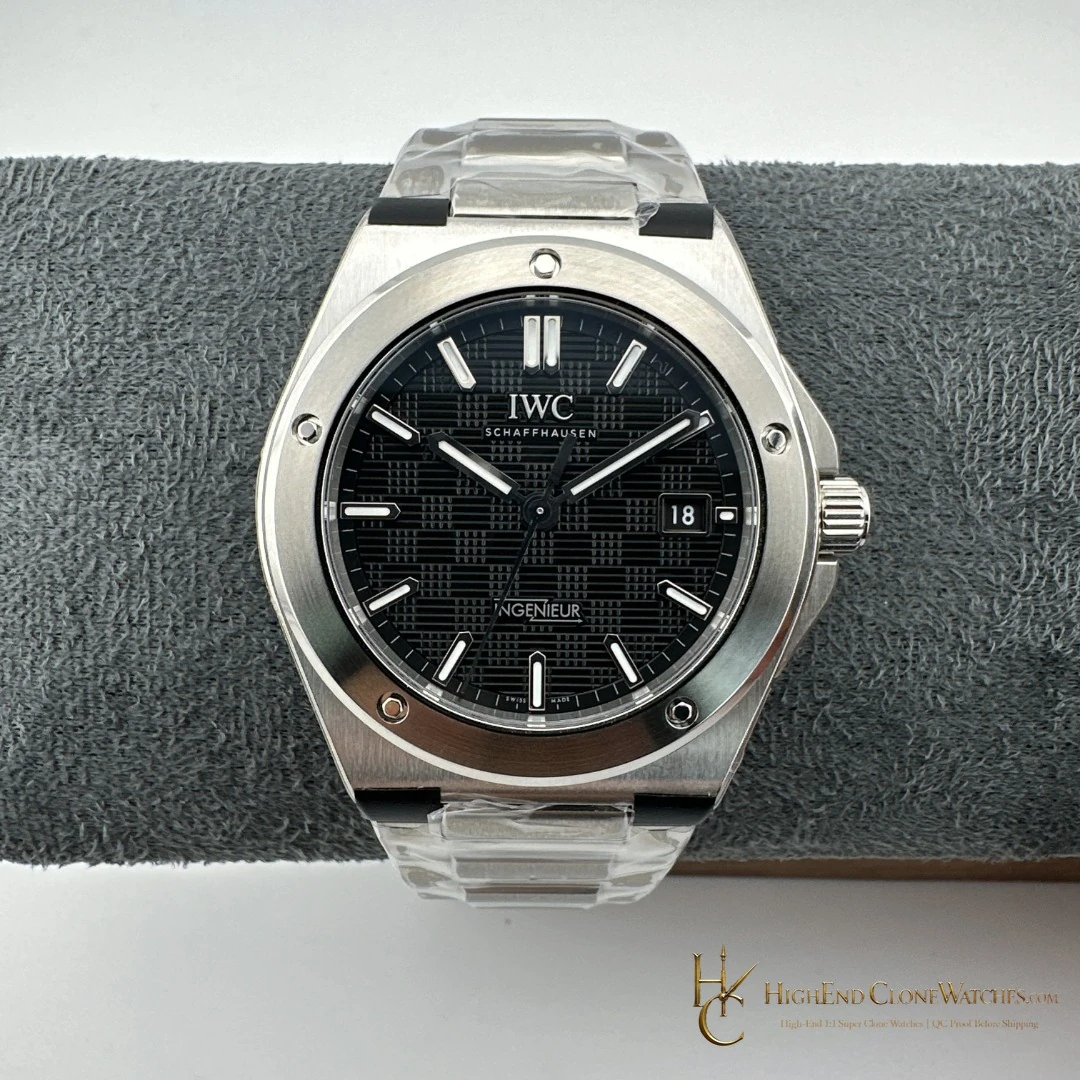
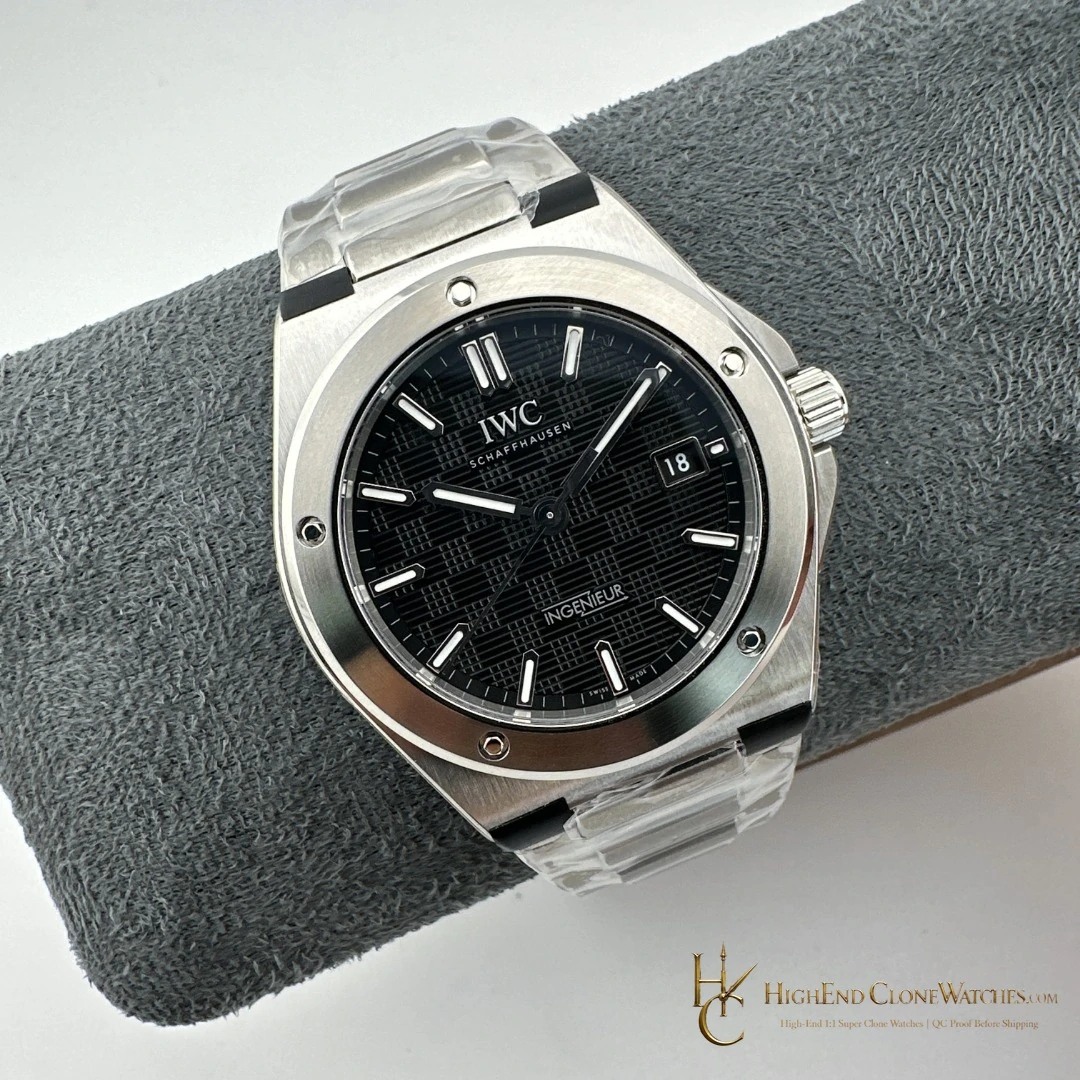
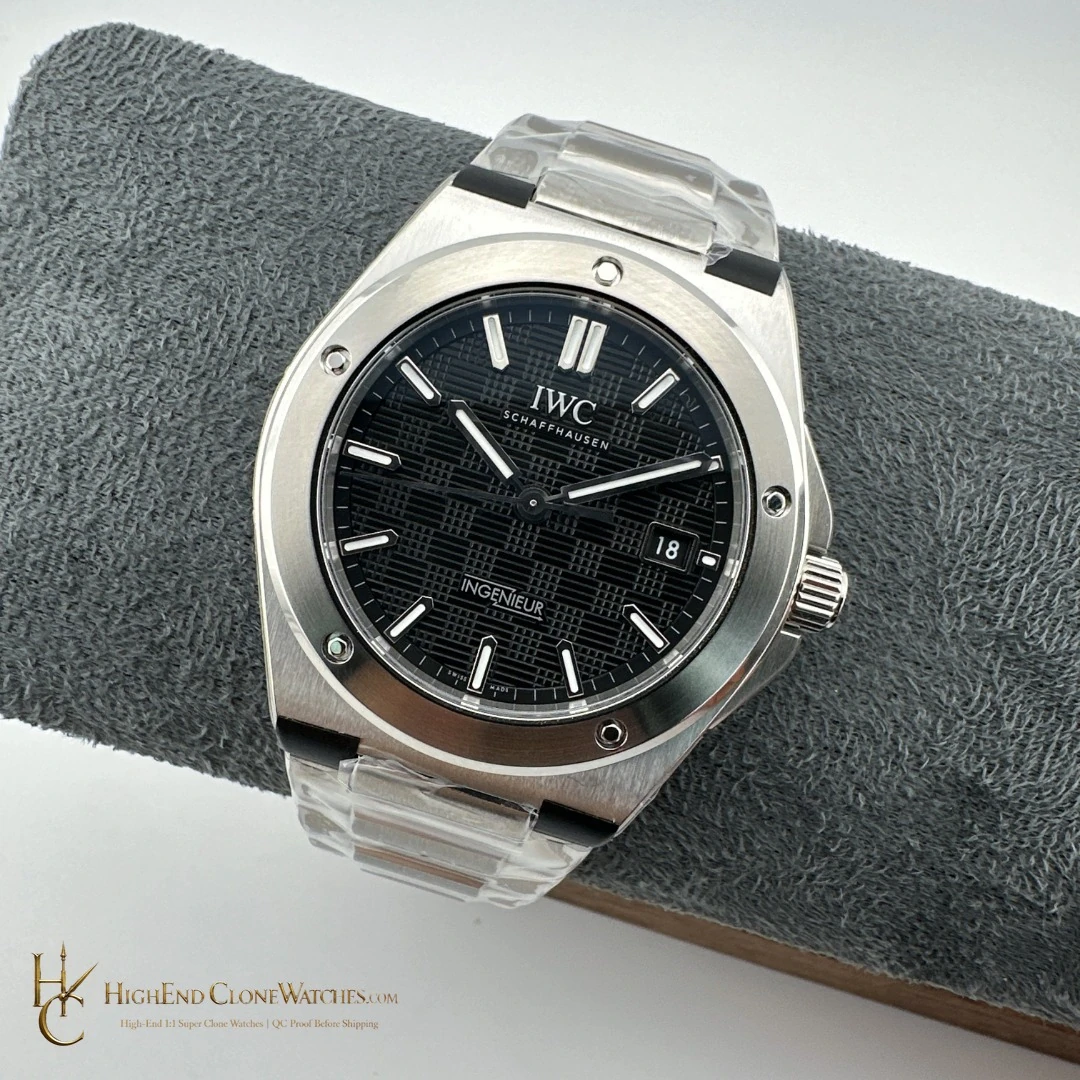
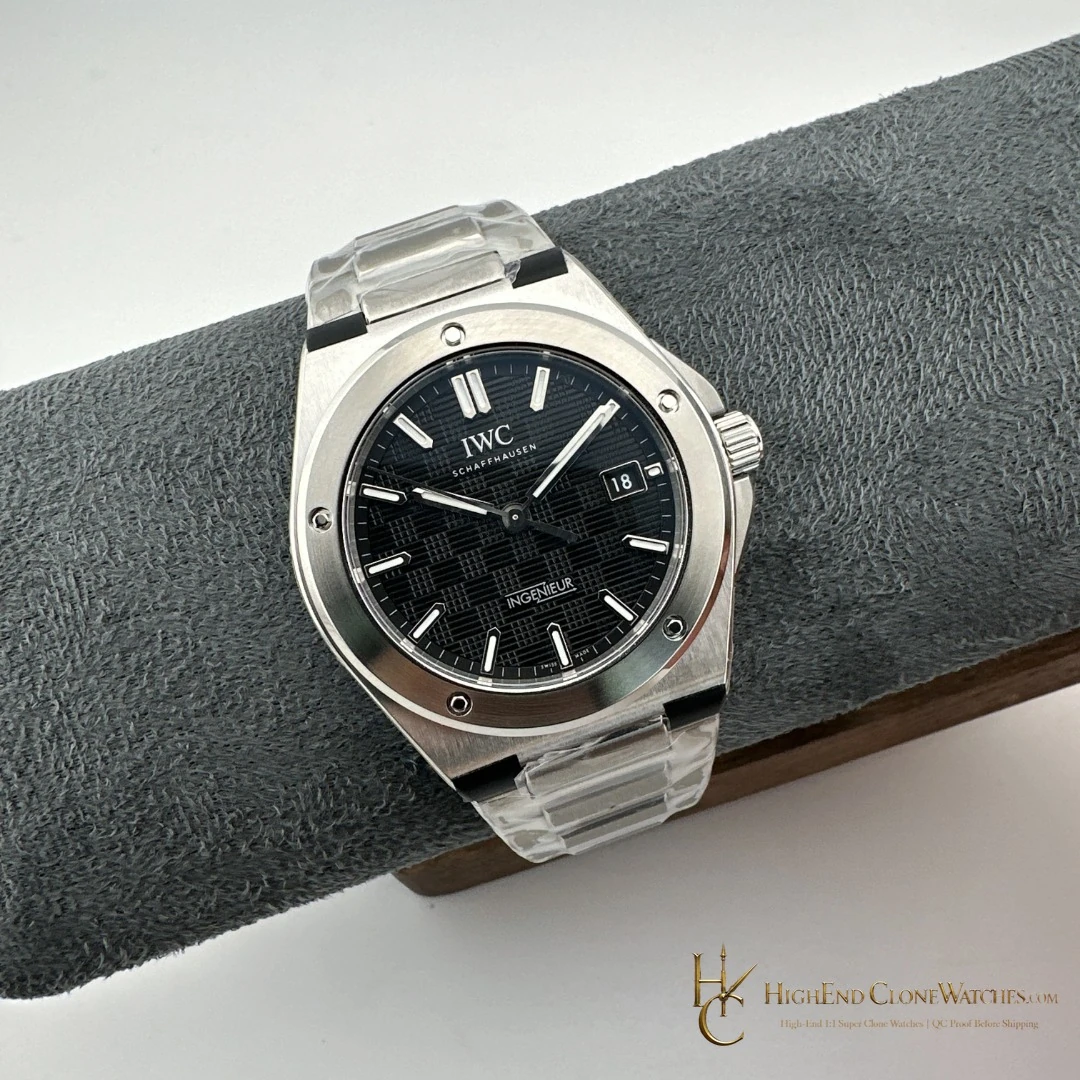
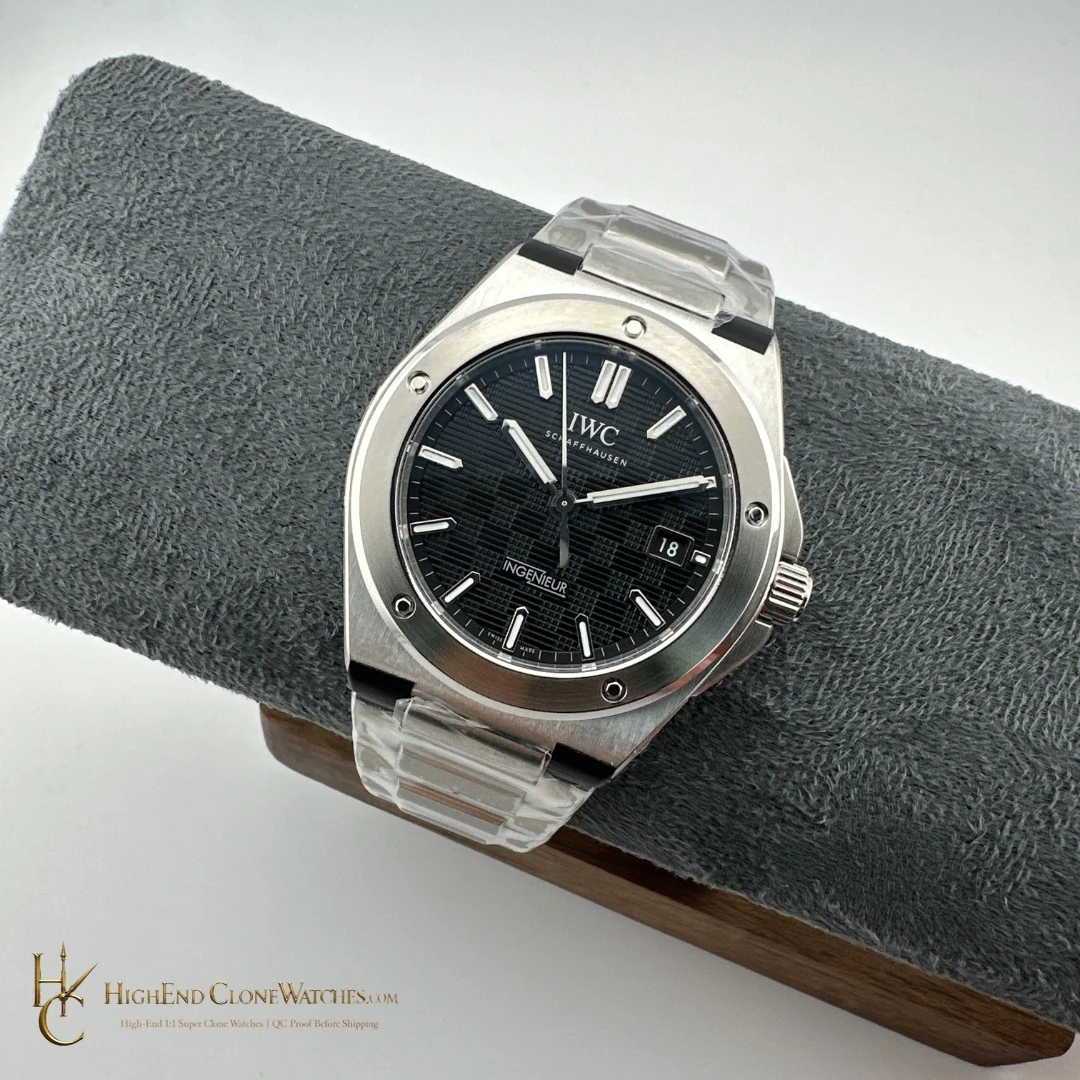
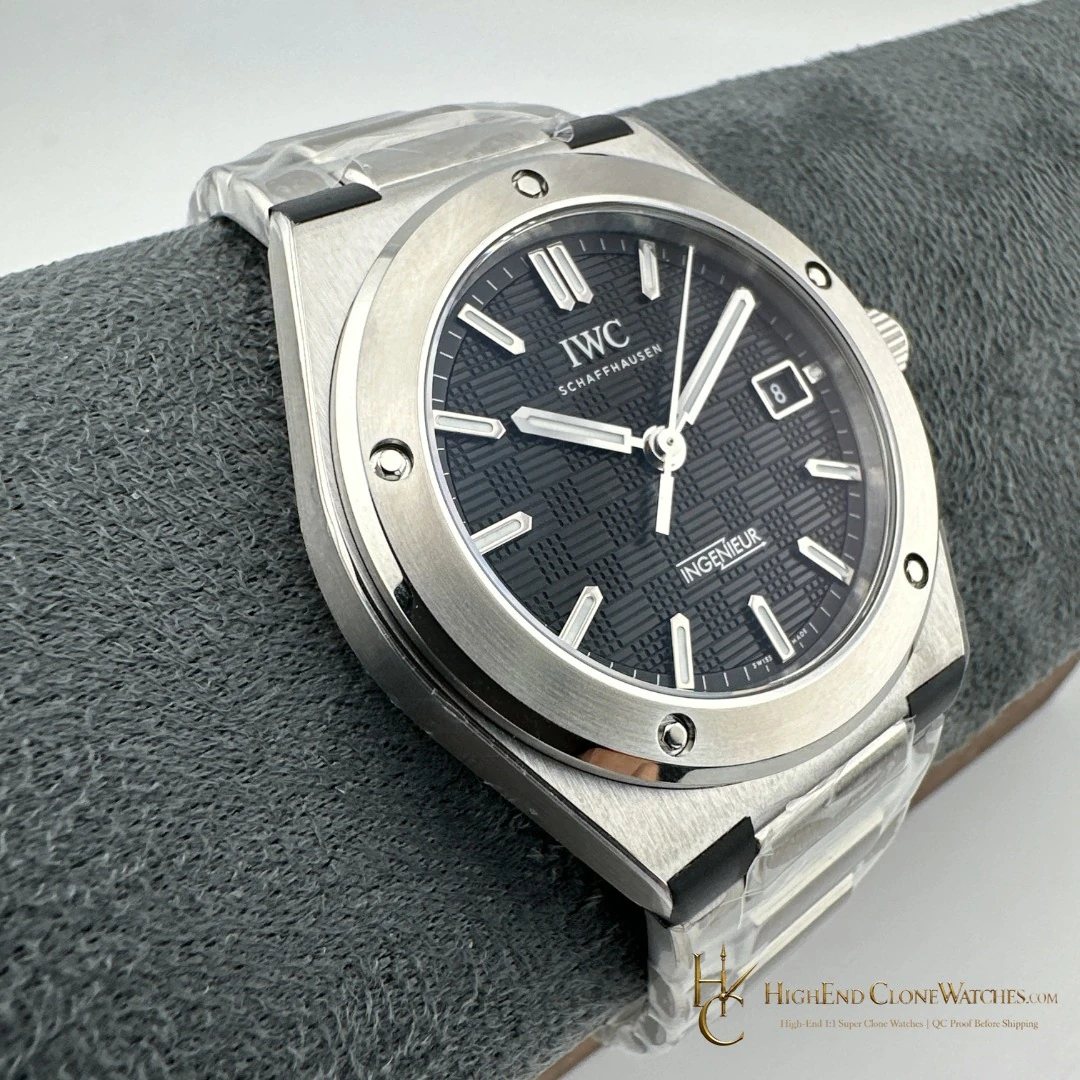
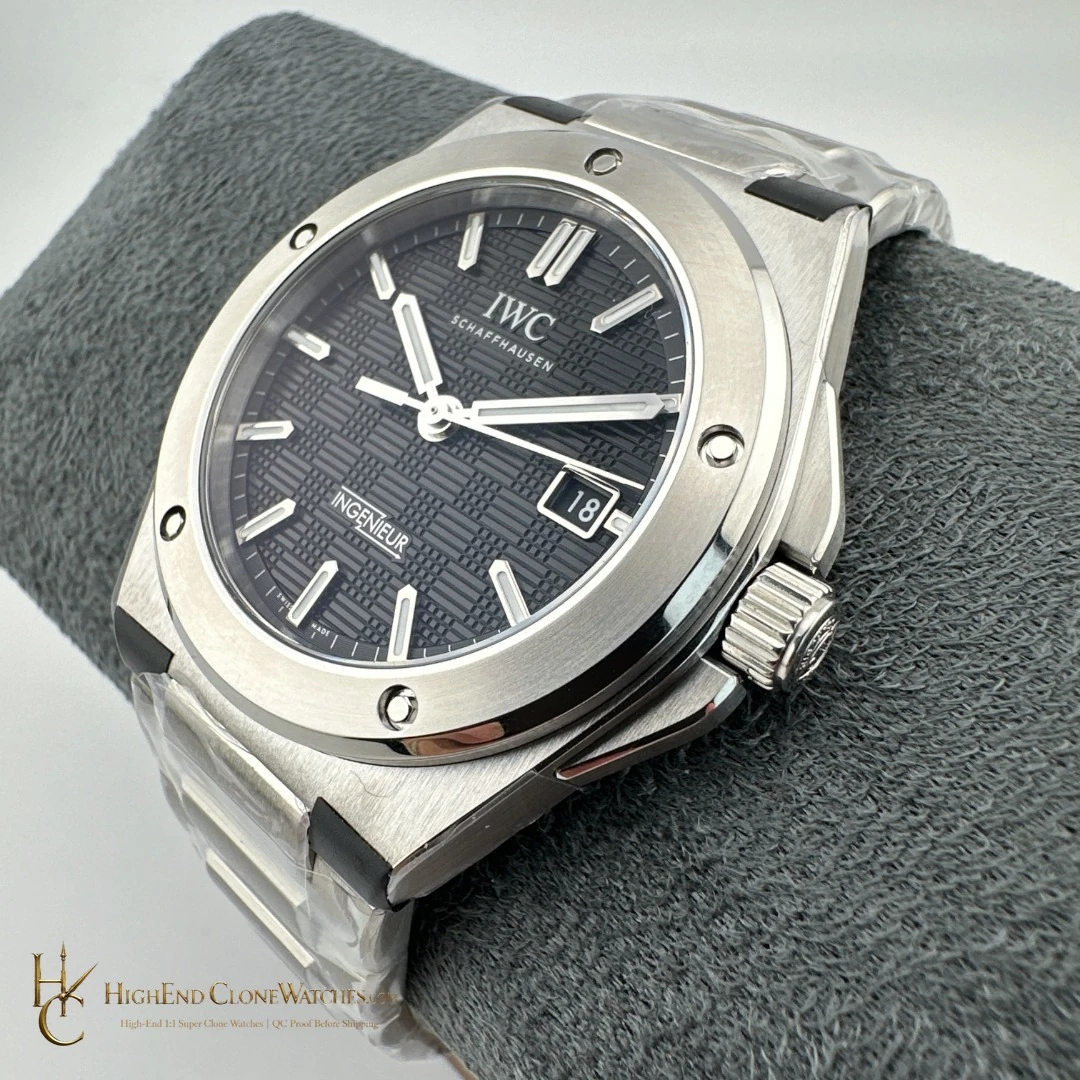
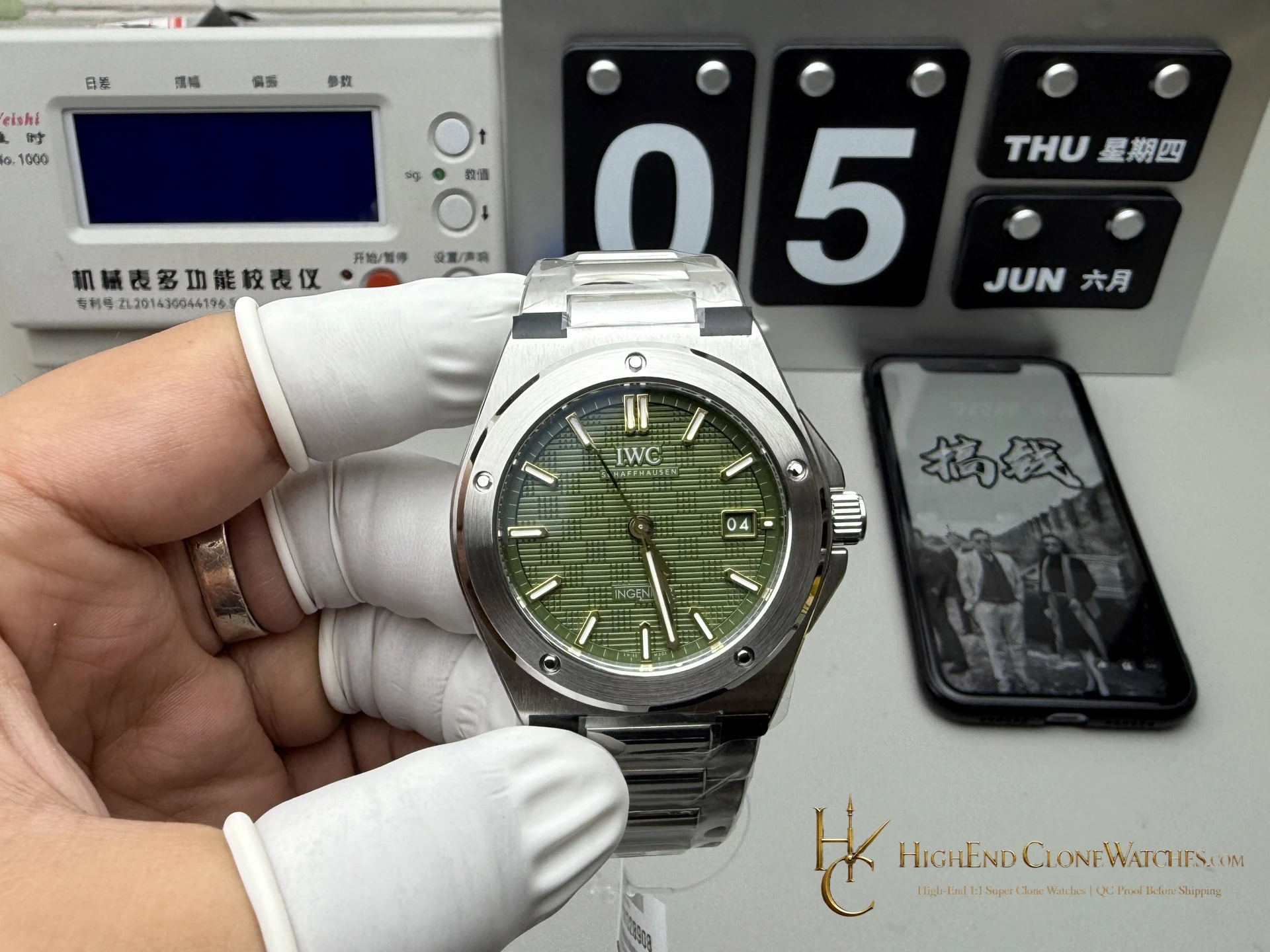
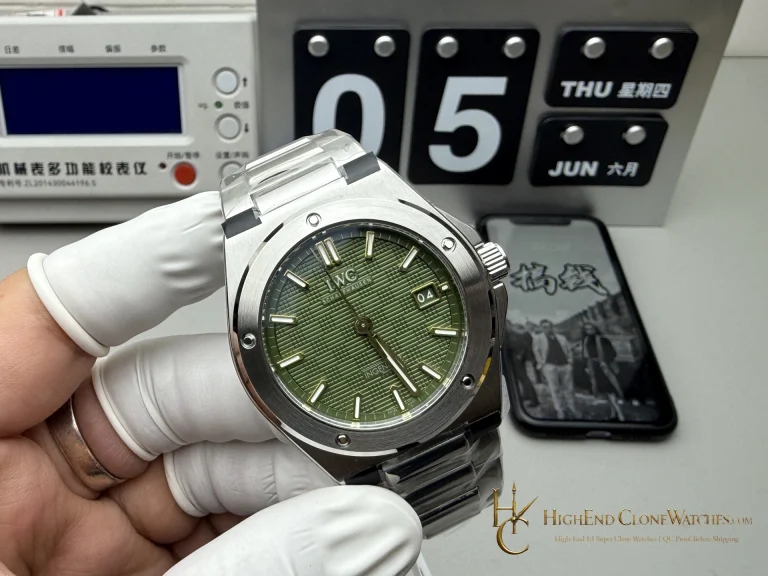
The case and H-link bracelet read as one structure, with brushed planes and polished transitions breaking up the steel. The low profile works under a cuff, while the date display adds daily utility. This is the Ingenieur for a buyer who wants the design language first and a neutral palette around it.
GH Factory identifies an Asian ETA-2892 clone for this version. Its slim architecture is part of the reason the case can keep a low profile, but the effect a buyer notices first is the continuous line from case to bracelet. The dark dial tempers the steel, so the five bezel details and the alternating finishes can register without a bright color competing for attention. A date opening adds utility to the otherwise spare face. This is a practical way into the modern Ingenieur shape when one watch needs to move between a workday and a weekend.
The black Ingenieur works because each part supports the same visual idea. The relief grid provides texture at close range, but the dark base keeps the dial from becoming busy across a room. Brushed links take over from the case without a visual break, and the polished transitions keep the profile from looking flat. That balance makes the watch easy to rotate with denim, knitwear and tailoring. It also gives the date a useful role rather than letting it dominate the face. Buyers who want a steel sports watch with a strong silhouette and a quiet color usually land on this configuration.
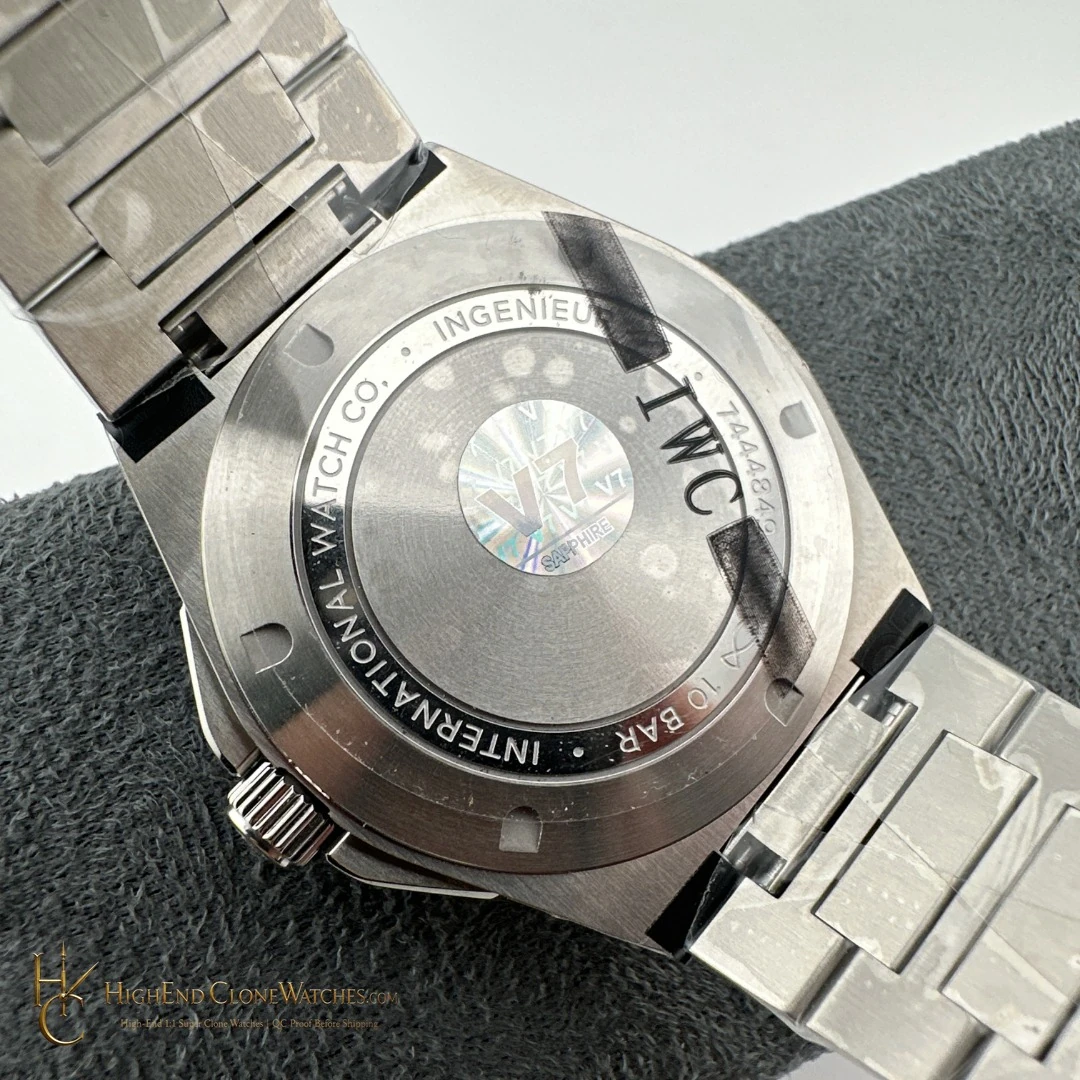
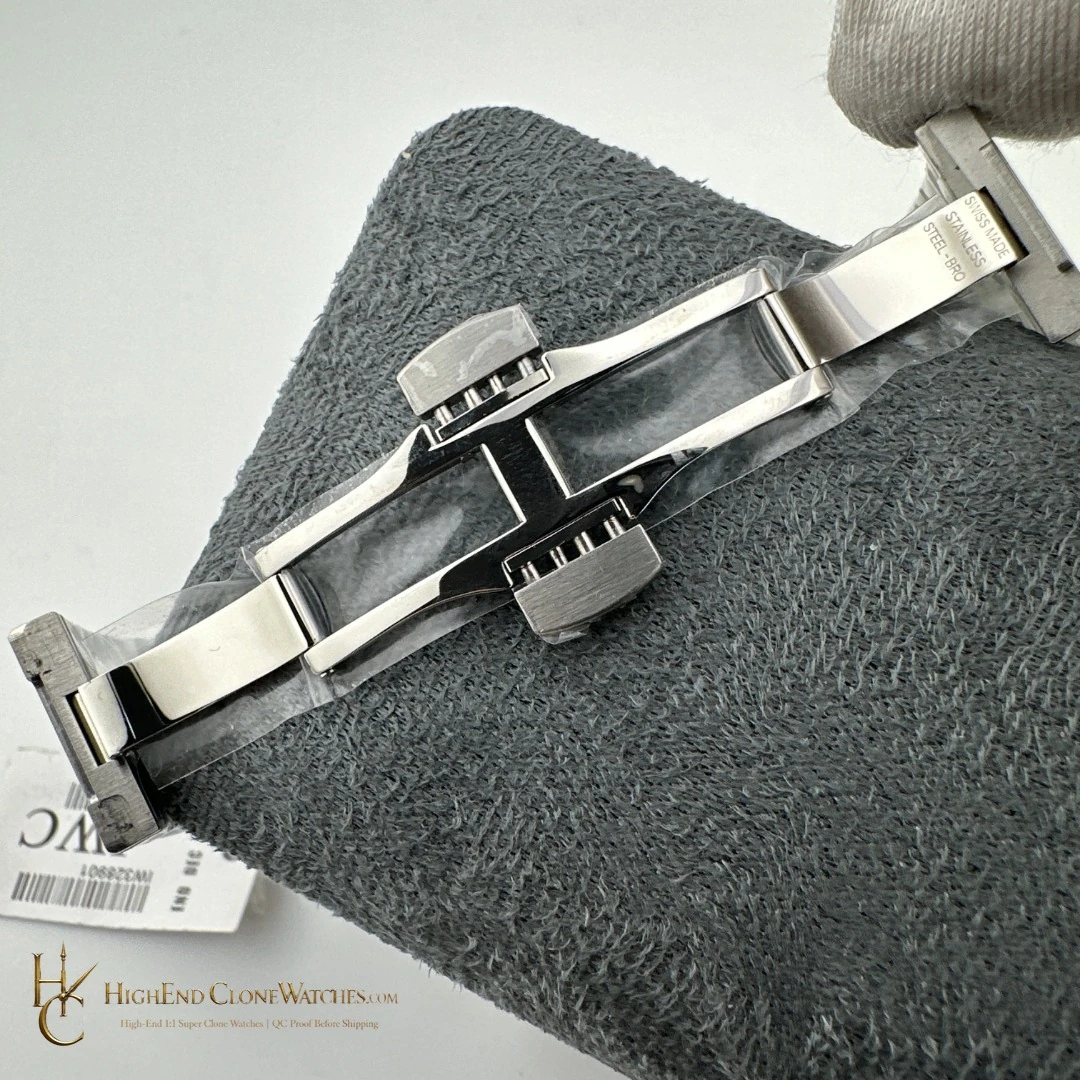
The butterfly clasp closes the bracelet without interrupting its line. That matters on an integrated design because the watch is seen as a single piece of steel, from the bezel edge to the final links at the wrist.
Before dispatch, our QC team reviews the black grid texture, date opening, hand clearance, screw position, case transitions, bracelet articulation and clasp engagement.