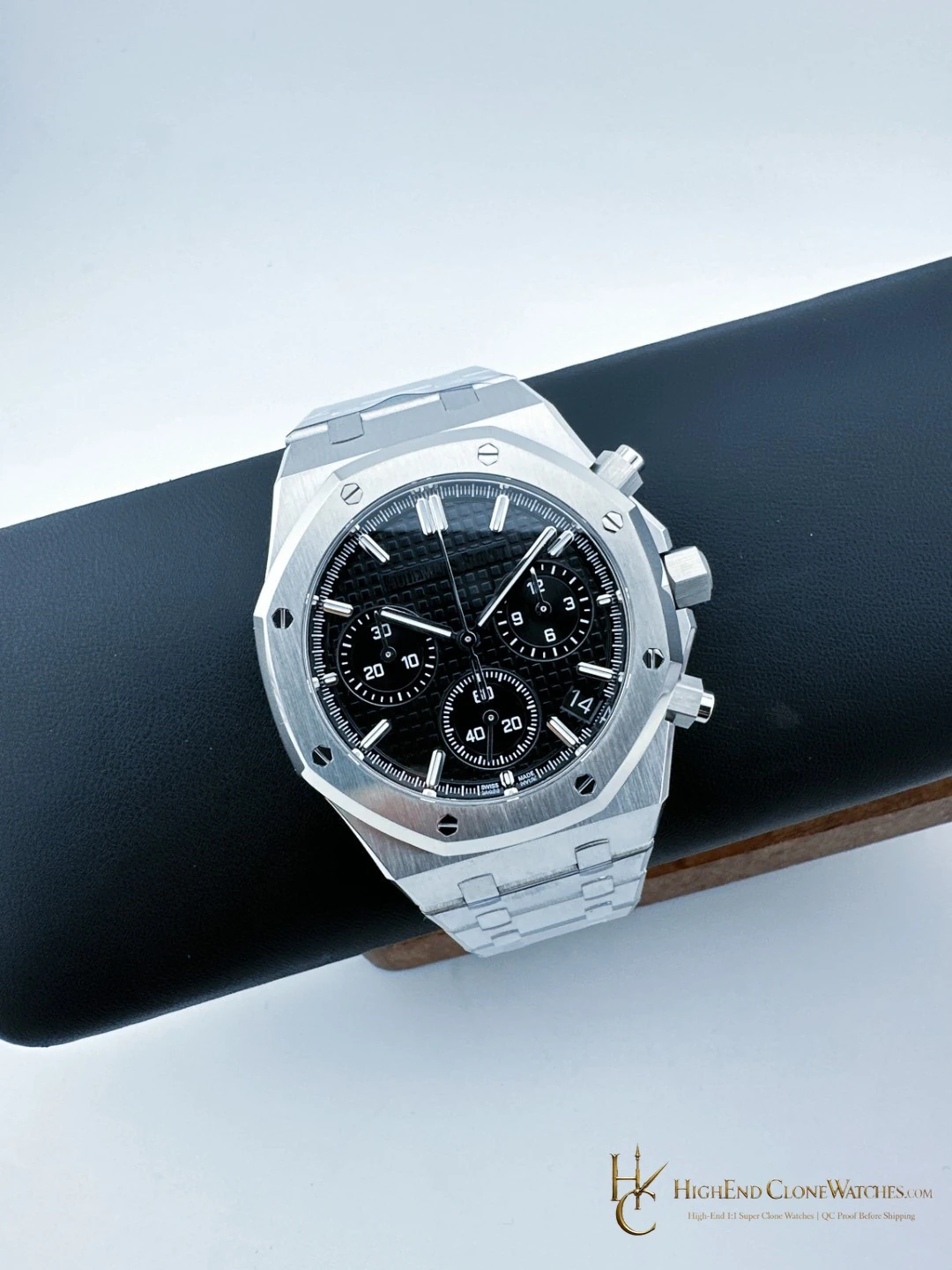
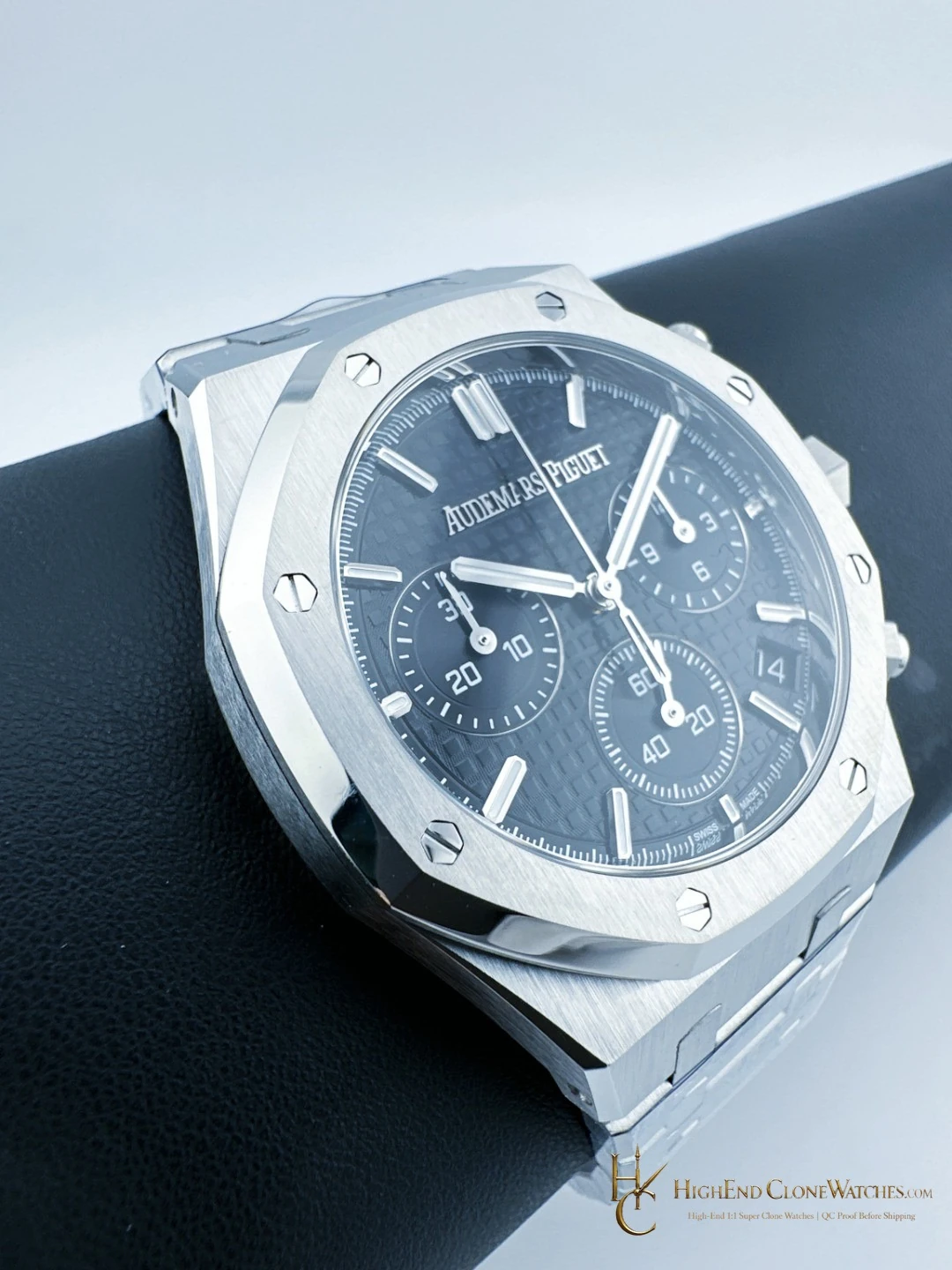
The buying decision is less about adding another black chronograph and more about choosing the steel execution of this exact Royal Oak. The all-black 26240CE is the closest alternative: it removes the bright metal contrast and creates a more unified ceramic profile. Select the 26240ST when the bezel edges, bracelet links, and case finishing should remain part of the visible character.
This is an adaptable choice for a collector who wants one Royal Oak chronograph to work across more settings. The black dial keeps the face restrained, while steel gives enough reflection and texture for daylight. That makes it easier to pair than the burgundy tourbillon or rose-gold 26239OR, but it still has a clear identity through the chronograph layout and Grande Tapisserie pattern.
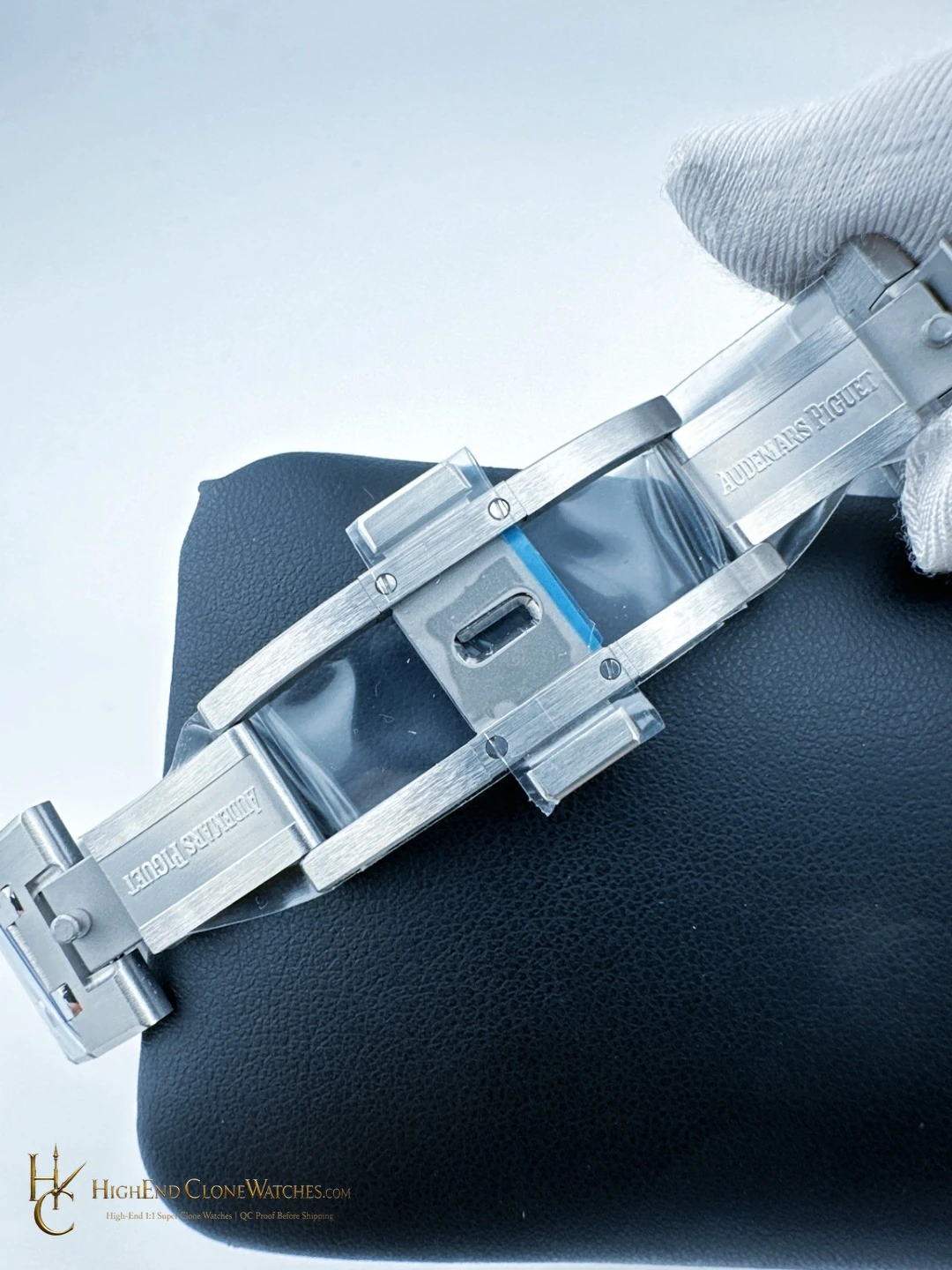
QC should begin with the dial: confirm the three-register arrangement, hand alignment, marker placement, and even texture. Then inspect the vertical brushing on the bezel, the polished chamfers, and the alignment and seating of all eight screws. The case-to-bracelet transition, end-link articulation, clasp engagement, crown, and chronograph pushers deserve a separate pass. These checks are specific to the reason to buy this model: a black chronograph whose steel architecture remains visible and correctly finished rather than being hidden by a monochrome treatment.
Steel gives this black-dial chronograph more range than the ceramic alternative. Daylight reveals the brushed bezel and polished chamfers, while the dial remains quiet enough for tailored clothing. The balance of dark face and bright frame is the practical reason to keep this reference distinct in a Royal Oak collection.